


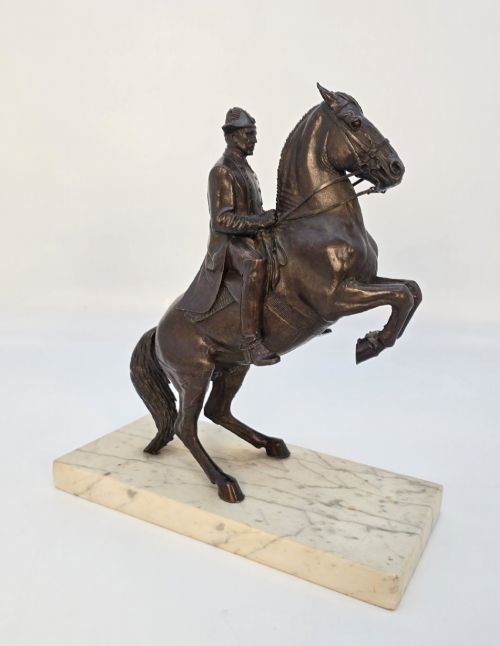


Bronze Rider Statues
These bronze rider statues capture human and animal energy in motion, offering tactile presence and historical character for any room.
Bronze Rider Statues
Bronze rider statues represent mounted figures across various subjects, ranging from historical rulers and literary characters to sportsmen and pastoral riders. These sculptures span the nineteenth century, the Edwardian era, and the early decades of the twentieth century, reflecting diverse artistic movements from Academic Realism to Art Deco.
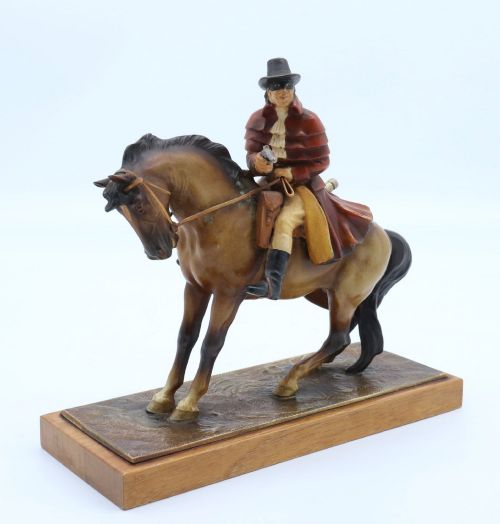
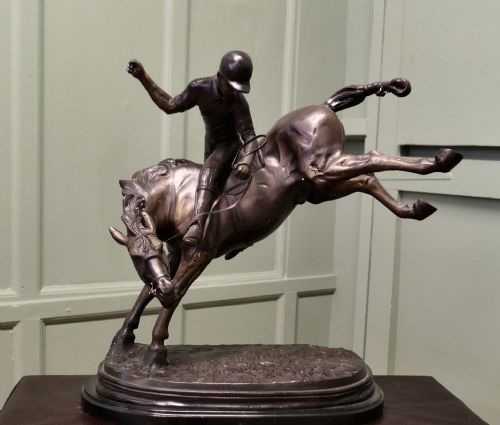
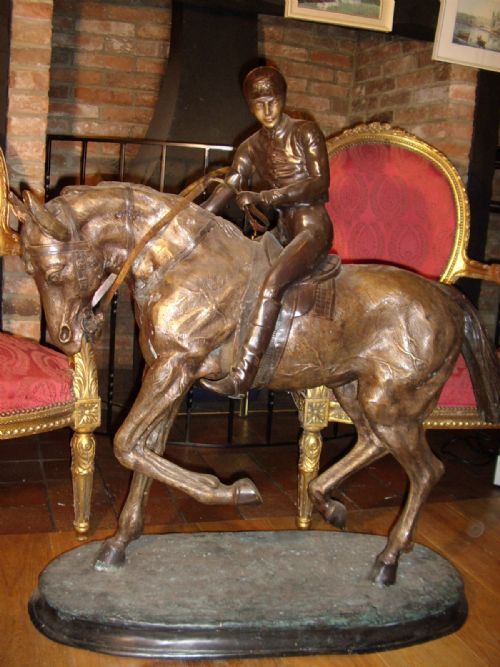
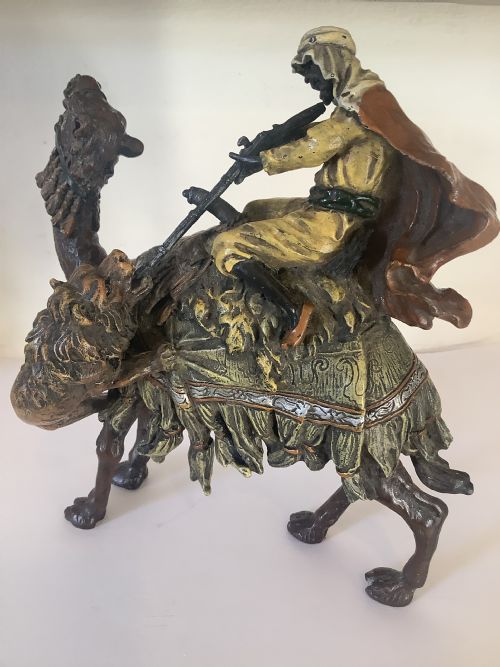
Collectors frequently encounter figures depicting jockeys, polo players, huntsmen, and cowboys alongside Orientalist subjects like Arabic men on camels. Materials extend beyond pure metal to include marble, wood, slate, and cold-painted finishes, sometimes incorporating functional elements such as table lighters.
Origin points visible in the pieces include French workshops, Spanish schools, and Grand Tour souvenirs referencing earlier classical works. Buyers select these sculptures to bring dynamic equestrian forms and classical craftsmanship into interior spaces.
How they were made
The primary material across these works is bronze, often cast using traditional foundry methods to capture fine muscular detail in both horse and rider. Bases frequently utilise contrasting materials such as marble or slate to provide stability and visual weight to the composition.
Surface treatments vary from polished patination to cold-painted metal and enamel paint, adding colour and textural depth to garments and harness details. Wood components also appear in specific sculptural bases, grounding the metal figures.
Bronze Rider Statues Retail Price Guide 2026
Typical asking prices for bronze rider statues among the pieces listed under this phrase on Sellingantiques today, from the lower quarter to the upper quarter. They describe what is for sale here now, not the wider market.
Listings span periods from the nineteenth century through the Edwardian era up to nineteen-fifty, featuring bronze, marble, wood, and cold-painted metal.
What varies in quality
Quality reveals itself in the anatomical accuracy of the horse and rider, where superior casting preserves tension in limbs and natural movement under strain. Finer examples display meticulous chiselling after the cast emerges, sharpening facial expressions, drapery, and tack.
The integrity of the patination and the quality of the mounting base contribute significantly to the overall presence of the piece. Foundational signatures and attribution to known workshops or sculptors further elevate the standing of an individual bronze.
Pierre Jules Meme·Bergman·Remington·Verrocchio·Isidore Bonheur
The Bronze Rider Statues Glossary
- Bronze
- An alloy of copper and traditional metals used for casting durable sculptures with rich patination. It allows for intricate detail work in sculptural forms.
- Animalier
- A nineteenth-century artistic style focusing on the realistic depiction of animals, frequently horses in motion. French workshops produced notable examples within this tradition.
- Cold-painted
- A technique where paint is applied to metal objects without subsequent kiln firing. This method was often utilised on Viennese bronzes to achieve vibrant polychrome effects.
- Grand Tour
- A traditional trip through Europe undertaken by upper-class scholars and collectors to acquire cultural artefacts. Souvenirs from these journeys often included small-scale bronze copies of famous monuments.
- Patina
- A surface sheen or colour achieved through age, chemical treatment, or oxidation on bronze. It protects the metal while enhancing visual depth.
Bronze Rider Statues: Frequently Asked Questions
What subjects do these bronze rider statues depict?
The subjects range widely from historical monarchs and literary outlaws like Dick Turpin to sportsmen engaged in polo, racing, and hunting. Other recurring themes include cowboys on bucking horses and Orientalist camel riders.
These diverse figures reflect the interests of various European and American schools from the nineteenth and early twentieth centuries.
How do I distinguish nineteenth-century pieces from later ones?
Distinguishing the periods relies on observing stylistic markers, casting techniques, and the materials used for the base. Nineteenth-century pieces often lean toward Academic Realism or Grand Tour classical revivals, whereas later works frequently adopt Art Deco lines.
Examining the patination and foundry marks also provides clues regarding the date of production.
Where should I display a bronze sculpture at home?
These sculptures suit stable, level surfaces such as desks, mantelpieces, or dedicated display cabinets where their three-dimensional forms can be viewed from multiple angles. Placing them away from direct moisture helps preserve the metal patination and any supplementary marble or wooden bases.
Consider the lighting in the room to highlight the metallic sheen and fine anatomical details.
Are all these pieces pure solid bronze?
While bronze is the primary structural metal, many pieces incorporate other materials to complete the composition or base. You will frequently find sculptures mounted on marble, slate, or wood plinths.
Additionally, some works feature cold-painted metal surfaces or enamel paint details rather than a traditional chemical patina.