
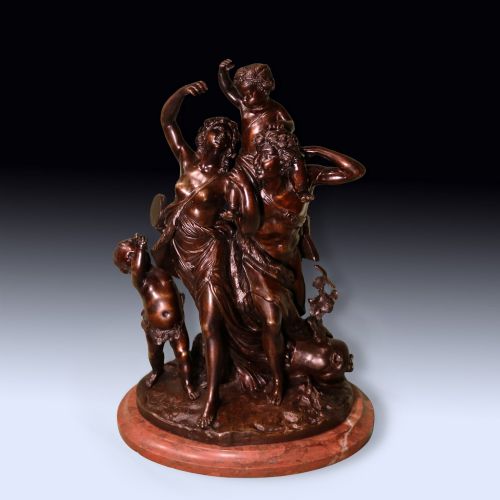
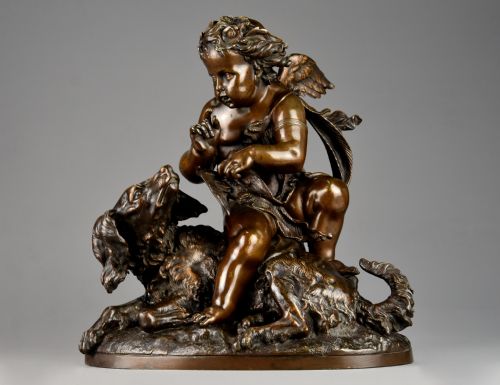


Bronze Putti Group
A bronze putti group brings sculptural French classicism and lively mythological figures into a room.
Bronze Putti Group
A bronze putti group depicts winged infants or cherubs engaged in mythological, musical, or bacchanalian pursuits. These sculptural compositions frequently draw upon the designs of classical antiquity and the models of Clodion.
Most examples found here date from the nineteenth century, reflecting the enduring popularity of French neoclassical and rococo revival styles during that era. They appear both as standalone figures and mounted upon marble bases.
How they were made
Foundry workers cast these figures in bronze, frequently applying a dark patination to emphasise muscular definition and drapery. Some works receive a silvered finish or gilding to alter the surface reflection.
Many of these sculptural groups incorporate bases of contrasting materials, including veined marble or turned wood, to provide weight and elevation to the composition.
Listings feature nineteenth-century French bronzes alongside works mounted on marble and wood bases.
What varies in quality
Quality rests upon the crispness of the chasing and the liveliness of the modelling in the figures. Superior castings retain sharp details in the hair, facial expressions, and surrounding elements like grapes or musical instruments.
The sophistication of the casting finish dictates the visual success of the piece. Subtle patination and well-fitted marble mounts distinguish the finer studio productions from simpler commercial work.
Charles Cumberworth·Carrier
The Bronze Putti Group Glossary
- Putto
- A chubby male infant, frequently winged, appearing in classical and neoclassical art. They often take part in mythological scenes involving wine, music, or play.
- Patination
- The chemical treatment or natural oxidation applied to the bronze surface to alter its colour. This process enhances depth and protects the metal.
- Grand Tour
- A nineteenth-century journey through Europe undertaken by collectors to acquire classical antiquities and high-status art. Sculptures purchased on these travels often replicated famous classical models.
- Neoclassical
- A style drawing inspiration from the art and culture of classical antiquity. It values symmetry, restraint, and mythological themes.
- Rococo Revival
- A nineteenth-century artistic movement reviving the ornate, asymmetrical, and playful forms of the eighteenth-century French court. It favours scrollwork and dynamic figure groups.
Bronze Putti Group: Frequently Asked Questions
What is a putto?
A putto is a representation of a small child, often winged, derived from classical art. In these sculptures, they enact playful or mythological narratives.
They appear singly or in groups, frequently interacting with animals, instruments, or symbols of Bacchus.
Where were these bronzes made?
The majority of these sculptural groups originate from French foundries working in the nineteenth century. Makers drew heavily upon earlier models by artists such as Clodion.
Some pieces reflect the taste for classical copies acquired during European travels.
How do I clean a bronze sculpture?
Dust the surface gently with a soft, dry brush to prevent particle accumulation. Avoid using water, oils, or commercial metal polishes.
Harsh cleaning agents can strip away the original patination and damage the bronze.
Why are some figures mounted on marble?
Marble bases provide structural stability and visual weight to compositions featuring active child figures. Rouge and other decorative stones complement the dark tones of the cast metal.
This presentation was characteristic of nineteenth-century display practices.