

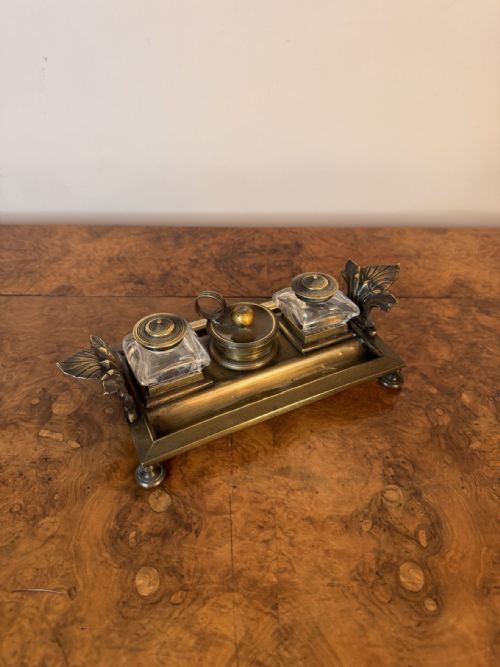

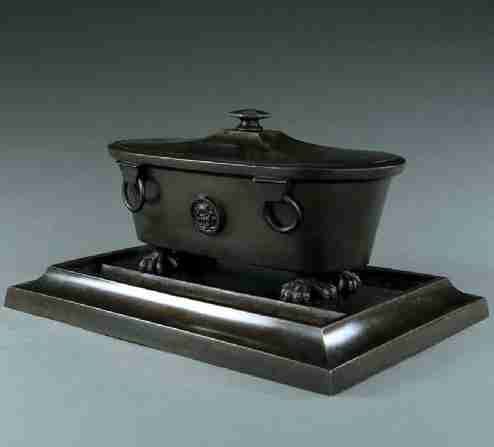
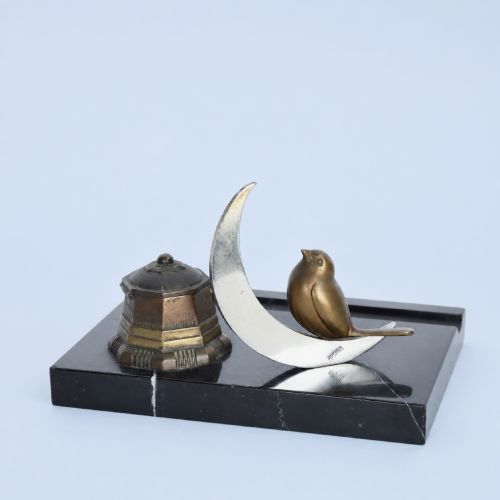


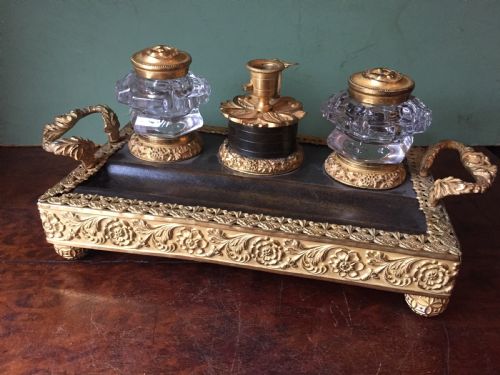


Bronze Pen Tray Inkwell
These bronze pen tray inkwells combine writing storage and metalwork, bringing nineteenth-century desk organisation into the modern study.
Bronze Pen Tray Inkwell
When searching for a bronze pen tray inkwell, you examine desk accessories designed to hold writing instruments alongside ink reservoirs. These pieces range from compact single inkwells to elaborate desk sets featuring marble bases and figural groups.
The versions most commonly found here date from the nineteenth century into the early twentieth century, spanning Victorian, Art Nouveau, and Art Deco styles. Makers utilised diverse influences, from Neoclassical severity to playful animal subjects like cats or owls.
How they were made
Foundry workers cast metal components in bronze, ormolu, or gilt bronze, sometimes applying silvered finishes or champlevé enamel decoration. These metal elements were then mounted onto substantial stone supports, including Sienna, black, and green marble or onyx.
Artisans combined metal casting with stone masonry, securing inkwell inserts and pen rests into carved mineral bases. Cabinets and stands also incorporated woods such as coromandel to frame the metal fittings.
Bronze Pen Tray Inkwell Retail Price Guide 2026
Typical asking prices for bronze pen tray inkwell among the pieces listed under this phrase on Sellingantiques today, from the lower quarter to the upper quarter. They describe what is for sale here now, not the wider market.
Cats and owls occasionally supervise your ink supply from the edge of the tray.
What varies in quality
The selection of the marble base also distinguishes the work, with richly variegated stones and heavy mountings indicating higher production standards. Integrated pen trays that balance proportion with utility separate standard desk items from exceptional examples.
Lefebvre of Belgium·A. Marionnet·Maurice Dufrene·Bergmann
The Bronze Pen Tray Inkwell Glossary
- Encrier
- A French term for an inkstand or inkwell, often incorporating a tray for pens. These items formed part of a gentleman's or lady's writing desk.
- Ormolu
- Gilded brass or bronze applied to furniture and decorative objects. The technique involves coating base metal with a mercury-gold amalgam.
- Champlevé
- An enamelling technique where troughs are carved into the metal surface and filled with vitreous enamel. The piece is then fired and polished flat.
- Grand Tour
- A cultural journey undertaken by nineteenth-century Europeans visiting classical sites. Souvenirs from these trips often included patinated bronze antiquities and marble desk pieces.
- Patinated
- The surface colour achieved on metal through age or chemical treatment. This finish protects the bronze while giving it a darker, aged tone.
Bronze Pen Tray Inkwell: Frequently Asked Questions
How do I clean a bronze inkwell?
Dust metal surfaces gently with a soft brush to protect the patination and any gilding. Avoid using chemical polishes that strip historical finishes.
Keep marble bases wiped with a dry cloth and prevent liquid ink from sitting on stone surfaces during use.
Are these inkwells missing glass inserts?
Many desk stands retain their original ceramic or glass ink liners inside the metal collars. Some pieces appear without liners due to loss over time.
Check the internal dimensions if you intend to source a replacement liner for practical writing use.
How do I date a desk set?
Examine the stylistic motifs, such as flowing organic lines for Art Nouveau pieces or geometric angles for Art Deco designs. Material choices like green marble or ormolu also point toward specific nineteenth-century decades.
Maker signatures or foundry marks stamped into the bronze provide the clearest indication of production date.
Can I use these for fountain pens?
Pen trays on these stands were originally scaled for dip pens and feathered quills. Modern fountain pens may exceed the length or width of vintage rests.
Ensure the pen sits securely across the bronze support without sliding into the ink aperture.
Why do some have marble bases?
Stone bases added necessary weight to anchor the stand while writing and dipping pens. Heavier marble also protected desks from accidental ink spills.
Different stone varieties, including Sienna and black marble, indicated the cost and decorative ambition of the desk accessory.