




Bronze Mantle Figures
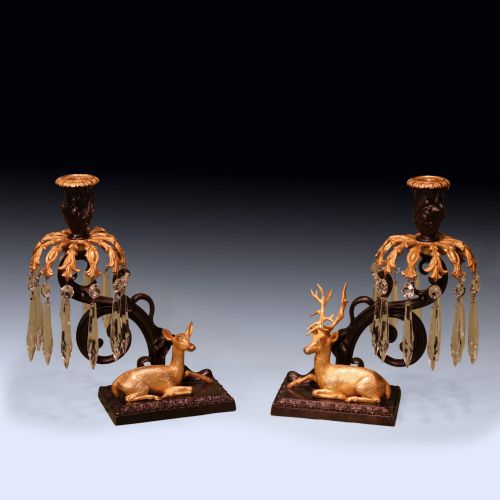
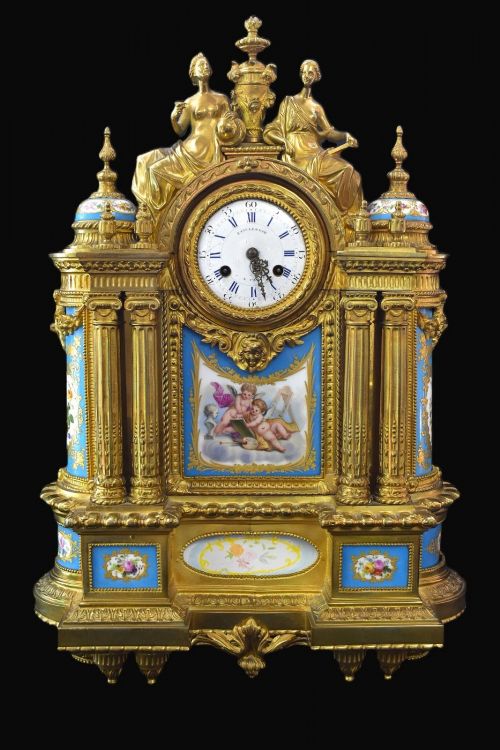
Bronze mantle figures anchor a room with weighty presence, pairing classical subjects or animal studies with the steady tick of a clock or the warm glow of candelabra.
Bronze Mantle Figures
When you search for bronze mantle figures, you encounter a diverse collection of sculptural works that typically sit upon a fireplace surround, often taking the form of mantel clocks, candelabra, or standalone decorative figures. The pieces on this page span the nineteenth century through the art deco period of the nineteen-thirties, reflecting changing domestic tastes across European makers.
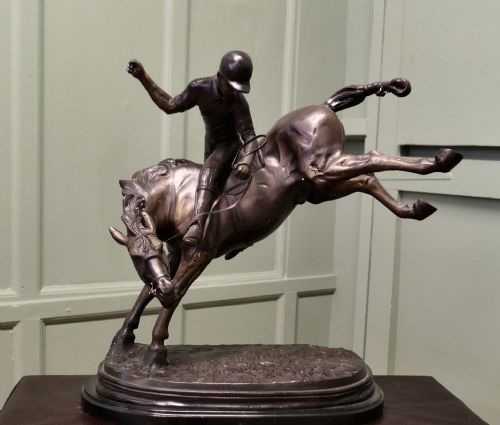
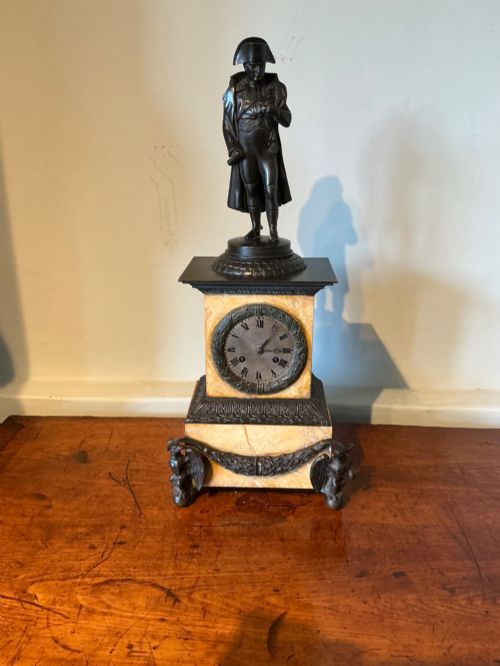
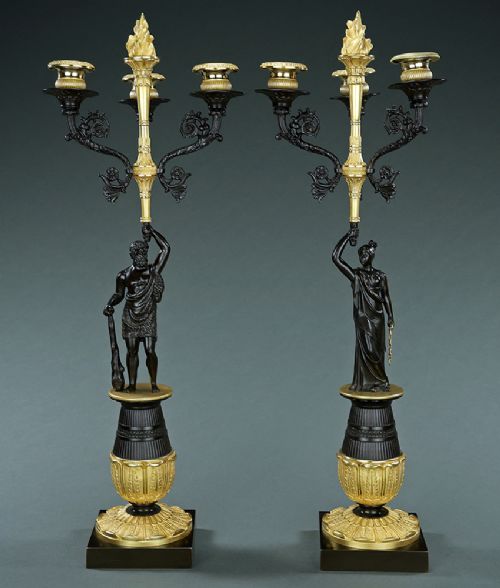
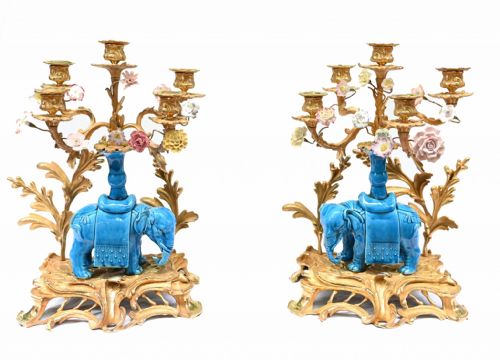
The dominant forms you will meet combine utilitarian function with decorative ambition, such as French clock garnitures featuring mythological or historical subjects alongside architectural marble cases. Alongside timepieces, matched pairs of candelabra or individual animal sculptures frequently appear, serving as focal points for a mantelpiece or sideboard.
The cultural origins lean heavily toward French workshops and schools, encompassing styles from French Empire and Rococo Revival to Neoclassical and Art Deco designs. Whether depicting Napoleon, literary allegories, or a hunting dog, these objects capture the sculptural ambitions of their respective eras.
Materials and construction methods
Foundry work relied heavily on casting bronze, often enhanced through fire gilding to create rich ormolu surfaces, or treated with patination to achieve deep brown and black tones. Alongside genuine bronze, many figures utilise spelter as a more accessible metallic alternative, particularly in later nineteenth-century and art deco examples.
Stonework and ceramics provide essential structural support and visual contrast, with heavy marble and onyx bases grounding the metal sculptures, while Sevres porcelain inserts occasionally enrich clock faces and garniture urns. Glass and enamel elements further detail the dials and decorative highlights of the period timepieces.
Bronze Mantle Figures Retail Price Guide 2026
Typical asking prices for bronze mantle figures among the pieces listed under this phrase on Sellingantiques today, from the lower quarter to the upper quarter. They describe what is for sale here now, not the wider market.
The listings span nineteenth-century Victorian pieces and early twentieth-century art deco works, utilising bronze, spelter, marble, and ormolu.
Distinctions in craftsmanship
The distinction between ordinary production and superior execution lies in the crispness of the chasing and the depth of the metal finishing. Master founders and known sculptors achieved intricate detail in hair, drapery, and facial expression that lesser workshops simply smoothed over.
Material integration also separates tiers of quality, seen in the solidity of the underlying marble, the weight of the cast metal, and the precision with which decorative mounts align with the primary case. A balanced composition where every bronze, marble, and ormolu component feels deliberate marks the superior work.
Etienne Lenoir·Ugo Cipriani·Jean Jacques Pradier·Victor Paillard·Charles Anfrie·Phillipe H. Mourey·Henri Ple
The Bronze Mantle Figures Glossary
- Ormolu
- Gilded bronze produced by applying a mercury and gold amalgam to the metal surface and heating it until the mercury vaporised. This technique creates a rich, lasting golden sheen characteristic of French decorative arts.
- Spelter
- A zinc alloy commonly used as a cost-effective substitute for bronze in nineteenth and twentieth-century figures. It is softer than bronze and typically wears a painted or faux-bronze finish.
- Garniture
- A coordinated set of decorative objects for a mantelpiece, usually consisting of a central clock flanked by matching candelabra, vases, or urns. They gained immense popularity in nineteenth-century interiors.
- Patination
- The natural or chemical process that alters the surface colour of bronze over time. Makers deliberately induced patination to highlight sculptural contours and create subtle tonal variations.
- Caryatid
- A sculpted female figure serving as an architectural support in place of a column or pilaster. They frequently appear on the sides of clocks and candelabra from the neoclassical and empire periods.
Bronze Mantle Figures: Frequently Asked Questions
What is a clock garniture?
A clock garniture is a matched set designed to sit together on a mantelpiece, consisting of a central clock accompanied by matching side pieces such as candelabra or vases. These sets created a balanced, symmetrical display that anchored the fireplace in formal nineteenth-century rooms.
Makers often used identical materials, such as marble, bronze, and ormolu, across all pieces in the garniture to tie the decorative scheme together. The side pieces often served a practical function for lighting alongside the decorative clock.
Where were these figures made?
The majority of these pieces originated in France, spanning major production centres in Paris where skilled bronze founders and clockmakers collaborated. Workshops produced everything from neoclassical empire candelabra to art deco animalier sculptures.
These French items found a ready export market across Britain and Europe, becoming staple decorative items in Victorian and Edwardian domestic interiors.
How should I clean a bronze figure?
Cleaning requires only gentle dusting with a soft, dry cloth to remove airborne particles without disturbing the underlying patination or gilding. Avoid chemical polishes, abrasives, or water, as these can strip historical patinas and damage delicate metal surfaces.
For ormolu mounts, a very light touch with a dry microfibre cloth helps maintain the golden finish without wearing away the microscopic layer of mercury-gilding.