



Bronze Inkstand Tray
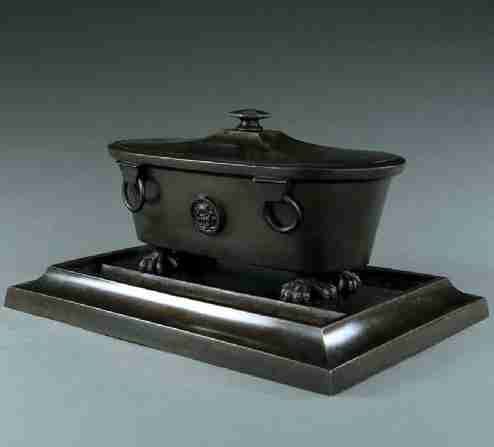
A bronze inkstand tray brings classical weight and daily utility to a desk, holding ink and pens in cast metal and stone.
Bronze Inkstand Tray
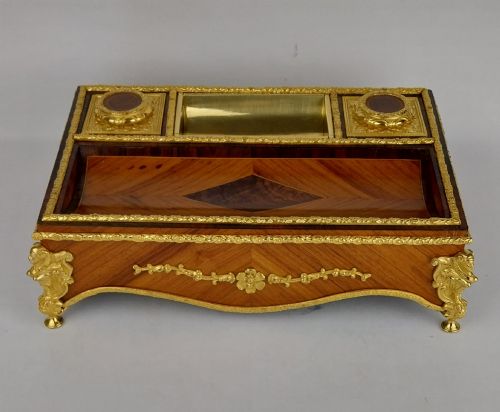
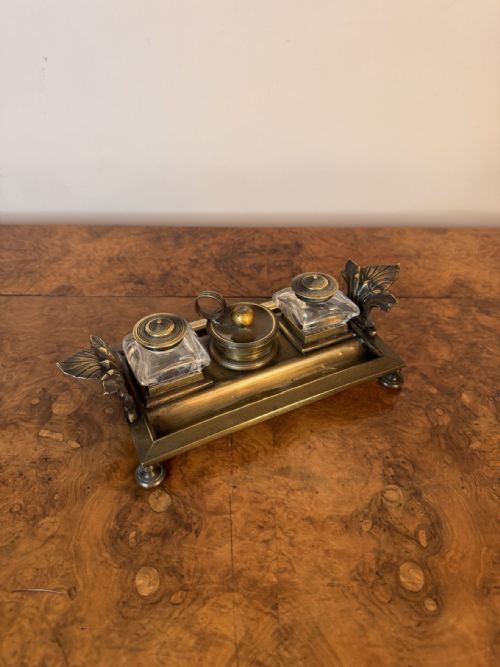
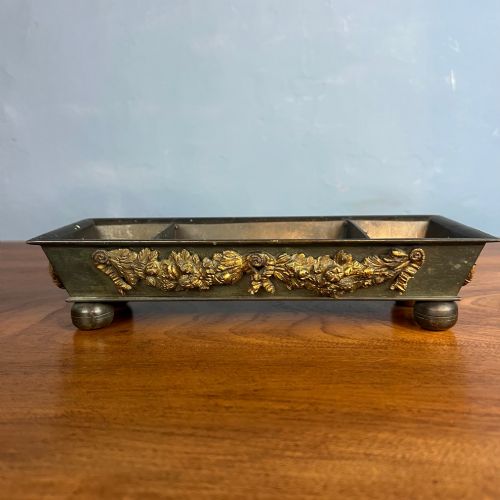
When you search for a bronze inkstand tray, you are looking at heavy desk accessories designed to hold writing materials securely. These pieces combine cast metal trays with integrated inkwells, often incorporating pen rests and stone bases.
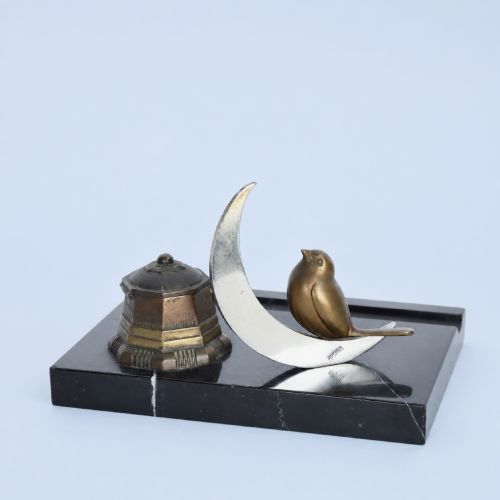
You are most likely to meet 19th century and Victorian examples on this page. These range from Neoclassical and French Empire designs to fluid Art Nouveau and geometric Art Deco pieces.
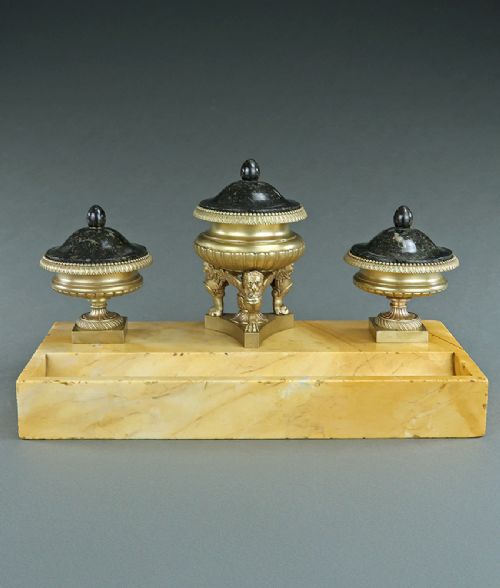
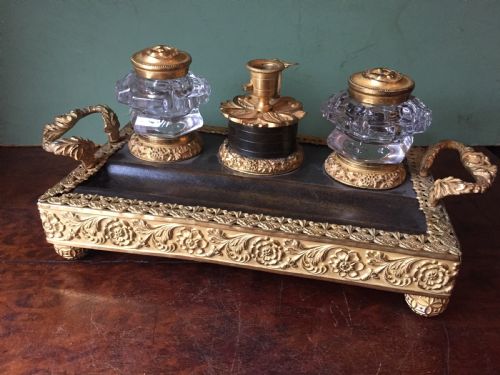
The forms vary from simple marble bases mounted with gilt ormolu to elaborate figural groupings and champleve enamel work. Each serves the dual purpose of protecting the desk surface and presenting a refined decorative object.
How they were made
The construction relies on casting metals such as bronze, brass, and ormolu, often paired with carved natural stones like Sienna marble, black marble, and onyx. Artisans cast the metal components using traditional foundry methods before applying patination, gilding, or silvering.
Stone bases provide substantial weight to anchor the desk set during use. Metal mounts, feet, and inkwell lids are then secured to the marble bodies using threaded pins and screws.
Bronze Inkstand Tray Retail Price Guide 2026
Typical asking prices for bronze inkstand tray among the pieces listed under this phrase on Sellingantiques today, from the lower quarter to the upper quarter. They describe what is for sale here now, not the wider market.
Listings feature materials such as green marble, Sienna marble, coromandel-wood, and champleve enamel.
What varies in quality
Quality depends upon the crispness of the metal casting and the depth of the chasing work on the bronze or ormolu. Finer examples show sharp detail in figural elements, decorative borders, and hinges.
The selection of materials also dictates quality, particularly the choice of variegated marble and the purity of the gilding. Heavier stones and thicker applications of gold or silver wash separate standard desk accessories from superior pieces.
Lefebvre of Belgium·A. Marionnet·Maurice Dufrene·Bergmann
The Bronze Inkstand Tray Glossary
- Ormolu
- Gilded bronze, where a layer of gold is applied to a bronze base using mercury amalgamation or electrochemical techniques. This finish gives the metal a warm, bright yellow sheen that resists tarnishing.
- Encrier
- A French term for an inkstand or inkwell. Collectors use this word specifically for desk containers designed to hold writing fluid and accessories.
- Champleve
- An enamelling technique where troughs or cells are sunk into the surface of the metal and filled with vitreous enamel powder before firing. The piece is then ground smooth and polished.
- Grand Tour
- A cultural journey undertaken by wealthy Europeans in the 18th and 19th centuries to collect art and antiquities. Souvenirs from these trips often included miniature bronzes and architectural marbles.
Bronze Inkstand Tray: Frequently Asked Questions
What is a bronze inkstand tray used for?
These trays were placed on writing desks to hold inkwells, blotters, and pens in one orderly place. They kept ink from spilling onto fine wooden furniture.
Today, they serve as decorative desk accessories or valet trays for small daily items like keys and coins.
How do I clean a bronze inkstand tray?
Dust the metal and stone gently with a dry, soft cloth to remove surface particles. Avoid chemical polishes, especially on gilt or patinated surfaces, as they remove the historic finish.
Marble bases can be wiped with a barely damp cloth and dried immediately to prevent water marks.
How can I tell the period of an inkstand tray?
Examine the decorative style, such as Neoclassical symmetry or Art Nouveau flowing lines, which reflect the prevailing taste of their manufacturing era. Material combinations, such as specific coloured marbles paired with cast bronze, also point toward nineteenth or early twentieth-century workshops.
Maker signatures and foundry marks stamped into the metal provide the most direct evidence of origin and date.
Are the inkwells usually removable?
Many inkstands feature removable glass or ceramic liners inside the bronze collars to allow for easy cleaning and refilling. The metal lids and hinged caps lift off or swing open independently from the stone or metal base.
Some smaller desk tidies integrate fixed ink wells directly into the cast metal tray.