






Bronze Ink Stand
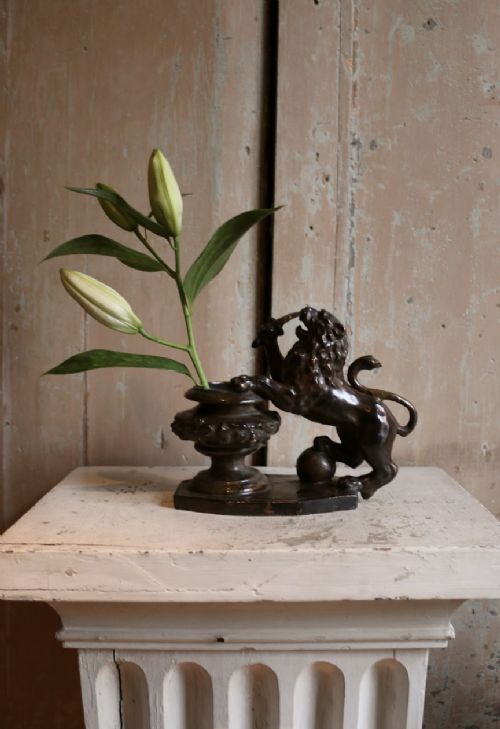
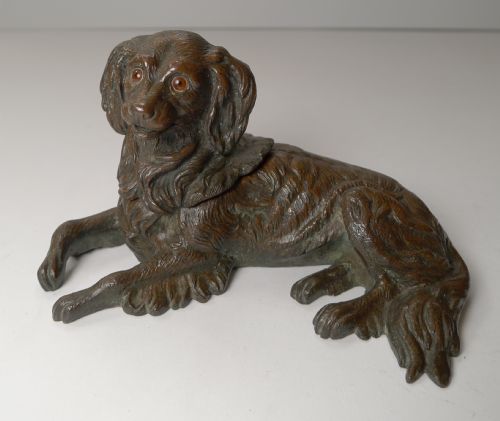
These bronze ink stand pieces are heavy desktop vessels designed for holding ink and pens, offering a tactile connection to historical writing habits.
Bronze Ink Stand
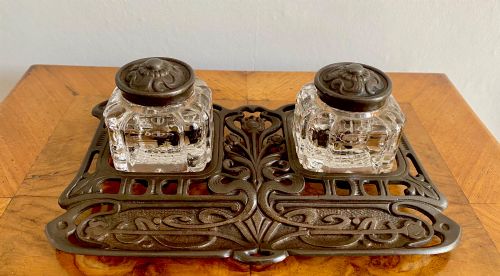
A bronze ink stand is a desk accessory designed to hold inkwells and writing implements, forming a solid centrepiece for historic writing desks. When searching for a bronze ink stand, a buyer encounters forms ranging from simple lidded vessels to elaborate multi-piece desk sets incorporating pen trays and bell components.
The pieces listed on this page span the seventeenth, nineteenth, and early twentieth centuries, drawing on Victorian, Edwardian, Art Nouveau, and French Empire styles. Buyers are most likely to meet nineteenth-century examples and turn-of-the-century designs, often featuring patinated bronze, ormolu, marble, or brass.
Object types frequently group under inkstands, desk accessories, and inkwells with integrated stands. These items combine utility with decorative metalwork, reflecting the shifting tastes of domestic and official writing spaces across different periods.
How they were made
These items rely on casting techniques using bronze, ormolu, brass, and cast metal to shape the structural stands and decorative mounts. Artisans cast these metals to achieve intricate relief details, figures, and architectural motifs characteristic of periods like the French Empire and Baroque styles.
Combinations of mixed media define many pieces, pairing metal frames with marble, onyx, glass bottles, and champlevé enamel. Artisans secured fitted glass inkwells and ceramic vessels within metal mountings, sometimes adding silvered or gilt finishes to the primary bronze surfaces.
Bronze Ink Stand Retail Price Guide 2026
Typical asking prices for bronze ink stand among the pieces listed under this phrase on Sellingantiques today, from the lower quarter to the upper quarter. They describe what is for sale here now, not the wider market.
Listings feature items spanning from the seventeenth century through the Edwardian period, incorporating materials like marble, glass, enamel, and gilt bronze.
What varies in quality
The integration of materials also distinguishes the work, seen in the harmonious fit of marble or onyx bases with heavy metal mounts and original glass bottles. Pieces bearing named makers or distinct regional characteristics demonstrate superior design cohesion compared to unmarked commercial work.
Maurice Dufrene
The Bronze Ink Stand Glossary
- Ormolu
- Gilded bronze, where a finely ground high-carat gold-mercury amalgam is applied to a bronze object and heated. This technique creates a durable, luminous golden finish seen on French Empire and Victorian pieces.
- Patinated bronze
- Bronze treated with chemical solutions to produce a specific surface colour and tone. This process protects the metal while enhancing the visual depth of figures and cast ornament.
- Champlevé enamel
- A technique where troughs or cells are hollowed out of a metal surface and filled with vitreous enamel paste before firing. The piece is then ground smooth and polished flush with the metal partitions.
- Art Nouveau
- A decorative style prominent around nineteen hundred, characterised by sinuous plant-like lines, asymmetrical forms, and stylised natural motifs. This aesthetic appears frequently in silvered and cast bronze desk pieces.
Bronze Ink Stand: Frequently Asked Questions
What is a bronze ink stand?
A bronze ink stand is a desk accessory made to hold inkwells and writing tools, serving as a stable writing base.
These items range from single lidded vessels to large desk sets made of metal, marble, and glass.
How do you date a bronze ink stand?
Dating relies on stylistic markers such as Art Nouveau curves, Neoclassical symmetry, or Victorian heavy ornamentation.
Materials like champlevé enamel, onyx, ormolu, and specific casting techniques also help place pieces within the seventeenth, nineteenth, or early twentieth centuries.
Were these pieces used for writing?
Yes, they were functional desk equipment used in homes, offices, and studies for holding liquid ink and dip pens.
The integrated trays and lidded wells kept ink accessible while preventing rapid evaporation or spills.
How do you clean antique bronze?
Cleaning antique bronze requires minimal intervention to preserve the historic patina and surface finish.
Dusting with a soft dry cloth is usually sufficient, avoiding harsh chemical polishes that remove original patination.