








Bronze Grand Tour Warriors
Bronze grand tour warriors are classical and Renaissance figures brought home by travellers, offering a tangible piece of European heritage.
Bronze Grand Tour Warriors
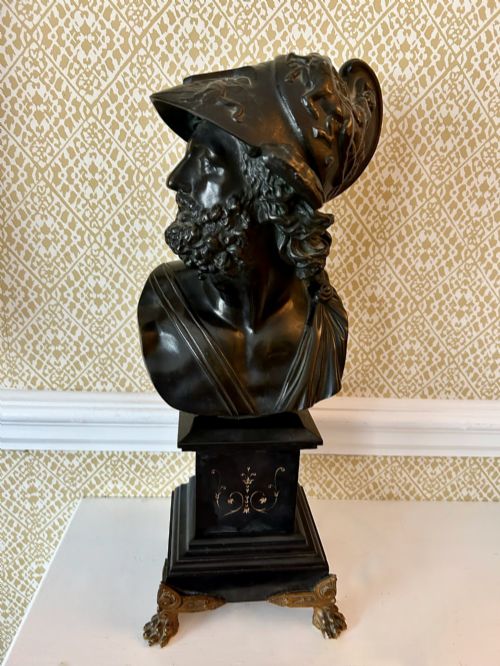
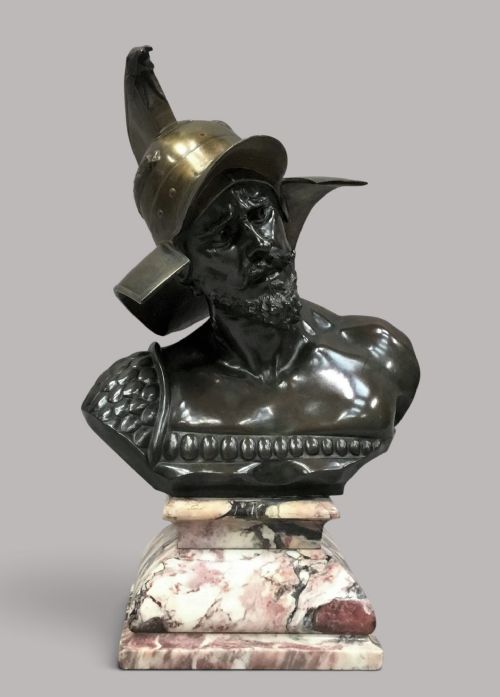
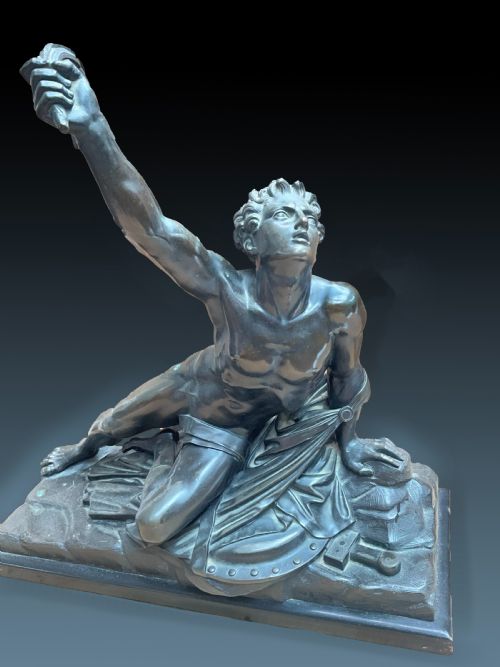
Bronze grand tour warriors represent classical heroes, gladiators and Renaissance figures cast as sculptures, statues and busts during the nineteenth century. These works derive from antique and Renaissance prototypes encountered by travellers on the Grand Tour across Italy and France.
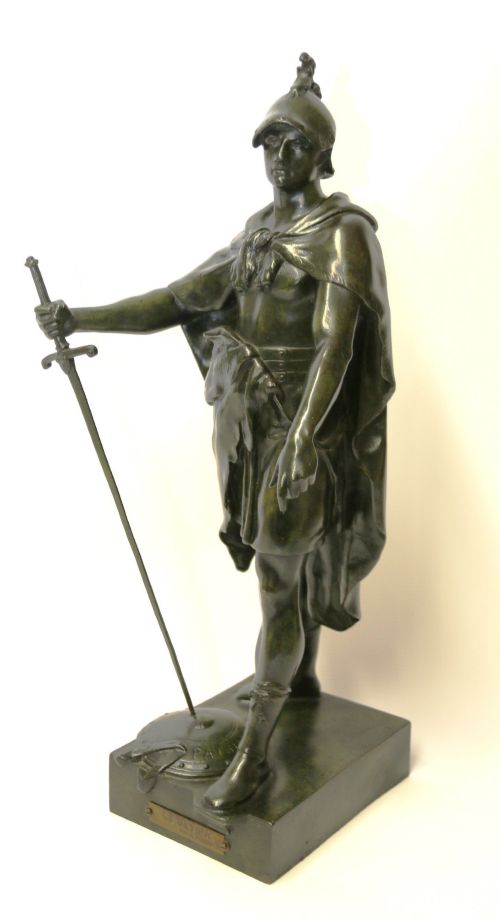
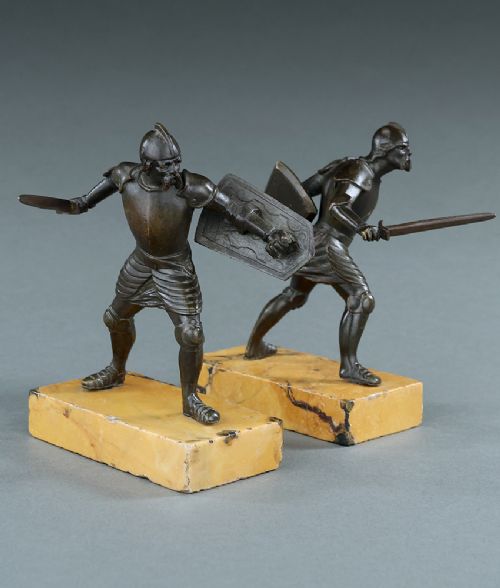
The selections available here range from large-scale depictions of the Borghese Gladiator and Ajax to intimate cabinet figures of Roman soldiers, Spartan warriors and duelling knights. Figures such as Athena, Zeus, Hannibal and King Menelaus appear frequently among these nineteenth-century castings.
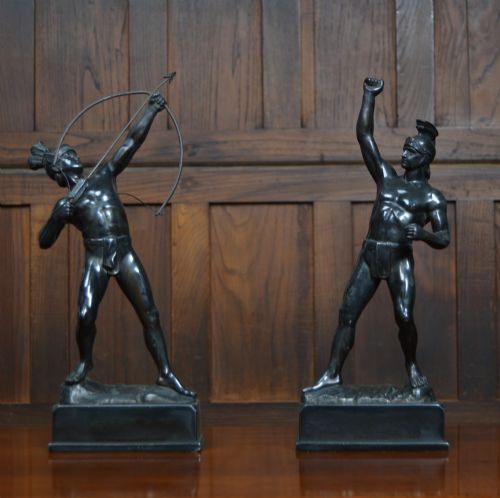
Most pieces date from the Victorian era, specifically spanning the mid to late nineteenth century, including works associated with French academic sculpture and Italian souvenir workshops. Buyers encounter both single cabinet statues and matched pairs representing classical counterparts.
Materials and casting methods
Foundries utilised traditional metalcasting techniques to produce these reductions and free-standing figures, predominantly employing bronze alongside patinated bronze and brass. Alternative metal alloys such as spelter and zinc alloy also appear in nineteenth-century interpretations of these subjects.
Bronze Grand Tour Warriors Retail Price Guide 2026
Typical asking prices for bronze grand tour warriors among the pieces listed under this phrase on Sellingantiques today, from the lower quarter to the upper quarter. They describe what is for sale here now, not the wider market.
Spartan warriors and Roman gladiators stand ready on marble plinths, having completed their grand journey from nineteenth-century parlours to modern mantelpieces.
Factors determining quality
Quality rests primarily on the crispness of the chase-work and the fidelity of the casting to the original antique source. Finer reductions preserve intricate muscular detail, facial expression and armour ornamentation without softening the underlying forms.
The choice of base materials and the depth of the metal patination contribute significantly to the overall presence of the piece. Heavier bronze castings paired with high-grade Sienna marble plinths generally indicate a higher standard of nineteenth-century workshop production.
Émile Louis Picault·Eugene Barillot·Richard Aurili·Eden Antony Paul Noel
The Bronze Grand Tour Warriors Glossary
- Grand Tour
- A traditional trip through Europe undertaken by upper-class Europeans, particularly in the eighteenth and nineteenth centuries, to study classical art and architecture.
- Patination
- The surface coloration and treatment applied to bronze sculpture, either chemically induced or occurring naturally through age and exposure.
- Reduction
- A scale copy of a larger sculpture, often produced in bronze as a souvenir during the nineteenth century.
- Spelter
- A zinc alloy commonly utilised as a less expensive alternative to bronze for nineteenth-century decorative figures and statues.
- Neoclassical
- A style reviving the decorative and structural characteristics of classical Greece and Rome, prevalent throughout the nineteenth century.
Bronze Grand Tour Warriors: Frequently Asked Questions
What periods do these bronzes come from?
The pieces available date primarily from the nineteenth century, encompassing the Victorian era and mid-to-late nineteenth-century European production.
Foundries and workshops across France and Italy created these souvenir sculptures between eighteen-twenty and nineteen-hundred.
How were grand tour bronzes displayed?
Travellers placed these sculptures upon library tables, mantelpieces and dedicated pedestals within nineteenth-century homes to signal erudition and cultural refinement.
Pairs often flanked doorways or occupied symmetrical positions on cabinets and bookshelves.
How do I distinguish bronze from spelter?
Bronze offers greater weight, distinct ring when tapped, and takes a richer, more stable chemical patina than zinc-based alloys.
Spelter figures often reveal a greyish metal beneath chips in the surface coating and feel lighter in the hand.
Are these figures copied from specific monuments?
Many works replicate famous ancient sculptures seen in European museums, such as the Borghese Gladiator and the Dying Gaul.
Others interpret Renaissance masterpieces by sculptors like Michelangelo for the nineteenth-century collector market.