

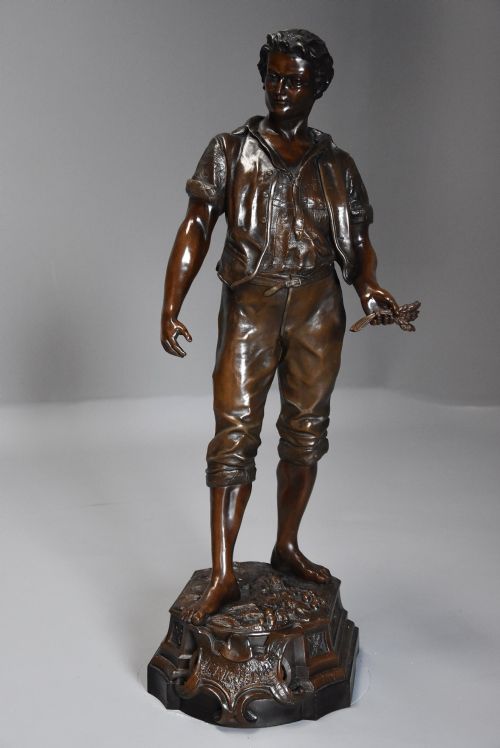


Bronze Finish Metal Sculpture
A bronze finish metal sculpture delivers the weighty presence of traditional cast bronze through accessible patinated zinc alloys.
Bronze Finish Metal Sculpture
When you search for a bronze finish metal sculpture, you encounter figural works, candlesticks, and desk ornaments cast primarily from spelter or iron rather than solid bronze. These pieces range from late nineteenth century French agricultural and military subjects to early twentieth century Art Nouveau and Art Deco female figures.
The objects frequently rest on marble or onyx bases and often pair with materials like wood to provide stability for the softer metal alloys. Grand Tour models and animalier studies also appear, reflecting nineteenth century taste for classical and naturalistic subjects.
Makers such as Jennings Brothers, F. Milliot, and Moreau contributed to this category, creating works that bridge utilitarian desk accessories and pure sculptural display. Buyers on this page will most commonly meet spelter statues finished with a bronze patination to mimic more expensive foundry casts.
Materials and casting methods
The pieces rely heavily on spelter, a zinc-based alloy, cast into moulds to capture fine decorative detail before receiving a surface patina. This metal provides a lighter and softer alternative to copper alloys while accepting chemical finishes that simulate aged bronze or iron.
Makers combined these metal figures with dense supporting elements like Verdi green marble, onyx, and wood plinths to anchor the lighter alloy sculptures. Cold painted finishes and applied bronze patinas added surface colour and visual depth to the finished items.
The listings span utilitarian desk accessories and candlesticks alongside decorative figural statues from French and American workshops.
Judging the standard of execution
The integrity of the mounting matters significantly, particularly how securely the metal figure integrates with its marble, onyx, or wooden base. Superior pieces maintain harmonious proportions between the patinated sculpture and its architectural support.
Jennings Brothers·F. Milliot·Moreau
The Bronze Finish Metal Sculpture Glossary
- Spelter
- A zinc-based white metal alloy commonly utilised for nineteenth and twentieth century decorative sculptures. It provides an economical alternative to bronze while accepting patination well.
- Patina
- The surface coloration and finish applied to metal to simulate age or create specific visual effects. Chemical treatments achieve bronze patinas on base metals.
- Cold painted
- A technique where paint is applied to a metal sculpture without the application of heat after the initial casting. This method adds vibrant surface detail to figures.
- Grand Tour
- Souvenirs and miniature replicas of classical antiquities collected by travellers in Europe during the nineteenth century. These models often depict famous sculptures or architectural elements.
- Animalier
- A nineteenth century artistic focus on the realistic portrayal of animals in sculpture. These works capture creatures in dynamic or naturalistic poses.
Bronze Finish Metal Sculpture: Frequently Asked Questions
What is spelter?
Spelter is a zinc-based alloy utilised extensively in the manufacture of decorative figures and lamps as a more affordable substitute for solid bronze. It offers a receptive surface for various patinas and cold painted colours.
Because the alloy is softer than bronze, these sculptures require careful handling to avoid bending or surface damage over time.
How do I clean patinated metal?
Maintenance requires only a gentle dust with a soft, dry cloth to protect the delicate surface patination. Liquid cleaners and abrasive polishes strip the finish.
Keep these objects away from direct moisture and humid environments to preserve the integrity of the metal and any attached stone bases.
Why are marble bases used?
Marble and onyx bases provide essential weight and structural stability to balance taller or heavier spelter figures. They also elevate the sculpture visually.
These stone plinths are characteristic of the period and contribute to the overall aesthetic of Art Nouveau and Art Deco designs.
How do I date these sculptures?
Dating relies on stylistic indicators such as Art Nouveau curves, Art Deco geometric forms, or nineteenth century historicism, alongside any visible signatures or foundry marks. Clothing styles and base materials also offer clues.
Comparing the mounting techniques and the character of the patina helps distinguish late nineteenth century pieces from later twentieth century reproductions.