

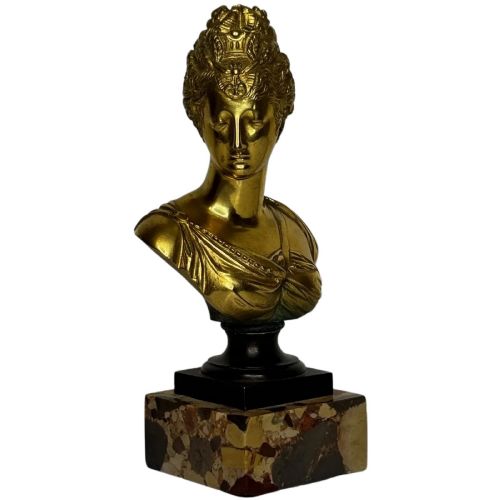


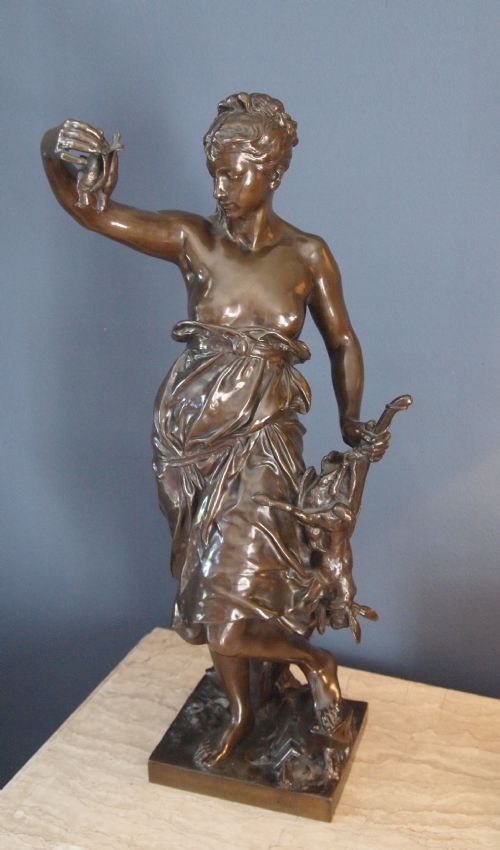


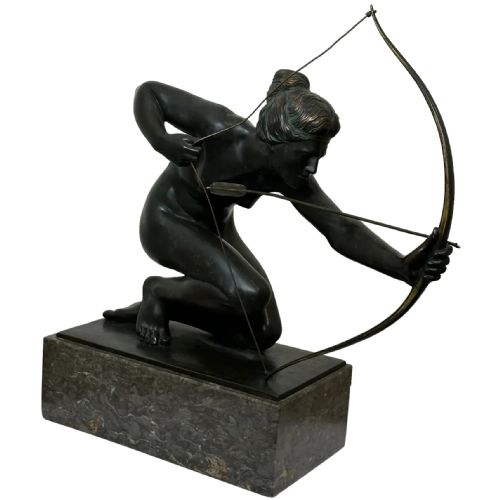


Bronze Diana Figure
A bronze diana figure brings classical mythology into the home, capturing the goddess of the hunt in metal through various historical periods.
Bronze Diana Figure
When you search for a bronze diana figure, you encounter sculptural works depicting the goddess in dynamic poses, often holding a bow and arrow or accompanied by hounds. These pieces span several distinct historical periods, reflecting how different eras reinterpreted the classical huntress.
The selections on this page are most commonly found in nineteenth-century interpretations, including Grand Tour souvenirs and French academic studies. Alongside free-standing sculptures, the listings include wall reliefs and clock mounts incorporating the figure.
Originating largely from French workshops and foundries, these works range from cabinet bronzes to larger mantel pieces. Buyers encounter various styles from the neoclassical tradition to Art Deco streamline aesthetics.
How they were made
Surface treatments vary from polished patinas to gilt bronze and ormolu finishes, which catch the light and accentuate the contours of the sculpture. In some instances, bronzed copper or enamel elements were employed to add texture and colour variation to relief panels and clock surrounds.
Bronze Diana Figure Retail Price Guide 2026
Typical asking prices for bronze diana figure among the pieces listed under this phrase on Sellingantiques today, from the lower quarter to the upper quarter. They describe what is for sale here now, not the wider market.
Listings feature materials such as bronze, marble, gilt bronze, wood, onyx, copper, ormolu, and enamel across various periods.
What varies in quality
The distinction between average and exceptional examples lies in the crispness of the chasing and the subtlety of the patina. Superior castings retain sharpness in facial expressions, hair strands, and equipment like bows and arrows without relying on post-cast filing.
The quality of the secondary materials, such as heavy veined marble plinths or finely tooled ormolu mounts, elevates the overall piece. Signed works by recorded sculptors generally exhibit superior anatomical proportion and compositional balance compared to anonymous foundry editions.
Pierre Le Faguays·Louis Ernest Barrias
The Bronze Diana Figure Glossary
- Grand Tour
- A nineteenth-century tradition where wealthy travellers collected classical antiquities and bronze reductions of famous statues in Italy. These souvenirs brought classical mythology into European drawing rooms.
- Patina
- The surface coloration and sheen developed naturally over time or applied chemically by the foundry. It protects the metal and defines the visual depth of the sculpture.
- Ormolu
- Gilt bronze ornamentation applied to furniture, clocks, and sculptural bases. The technique involves fusing an amalgam of mercury and gold to a bronze substrate.
- Relief
- A sculptural technique where figures project from a flat background rather than existing in the round. Wall reliefs in copper and bronze often depict narrative scenes of the hunt.
- Lost-wax casting
- A metalworking process where a molten metal is poured into a mould that has been created by means of a wax model. This method allows for intricate undercut details and fine textures.
Bronze Diana Figure: Frequently Asked Questions
How do I identify a Grand Tour bronze?
Grand Tour bronzes typically date from the nineteenth century and represent famous antique sculptures seen during travels in Italy. They are usually smaller scale reductions intended for tabletop display.
Look for fine detail and rich patination that mimics excavated antiquities. Many of these pieces were retailed by specific establishments in Rome, Florence, or Paris.
What is the difference between nineteenth-century and Art Deco figures?
Nineteenth-century bronze Diana figures tend to follow neoclassical or academic traditions, emphasising classical drapery, realistic anatomy, and mythological narrative. They often reference specific antique sculptures like those in European museums.
Art Deco examples from the early twentieth century simplify the form into geometric lines and stylised postures. These modernist pieces frequently incorporate materials like onyx and marble alongside the metal.
Where should I place a bronze sculpture at home?
Bronze figures require a stable, level surface capable of supporting their weight, particularly when mounted on heavy marble or stone bases. Placement should avoid direct, prolonged sunlight to protect the patina and any integrated wooden elements.
Mantelpieces, side tables, and dedicated display cabinets offer suitable environments where the sculpture can be viewed from multiple angles. Ensure the surrounding space allows the dynamic silhouette of the bow and arrow to be appreciated safely.
How should I clean a antique bronze figure?
Dust the surface regularly with a soft, dry, lint-free cloth to prevent particulate buildup in the recessed areas of the casting. Avoid using water, soap, commercial metal polishes, or abrasive cleaners, which can strip the historic patina.
If the piece requires deeper conservation, consult a professional restorer rather than attempting chemical treatments at home. Maintaining the dry surface helps preserve the integrity of the metal.