



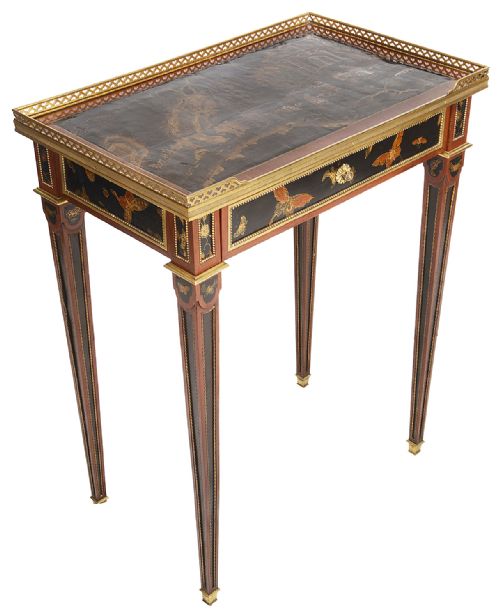

Bronze Coffee Table
These bronze coffee tables bring French revival elegance and gilt warmth to a room.
Bronze Coffee Table
When you search for a bronze coffee table, you are looking at low tables and occasional pieces rooted in nineteenth and twentieth century French design. The pieces available here draw heavily on Louis revival styles, Edwardian adaptations, and later twentieth century interpretations.
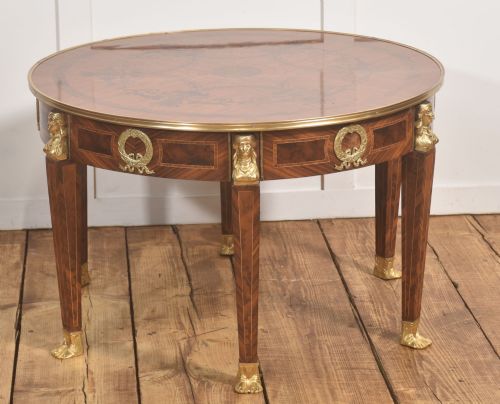
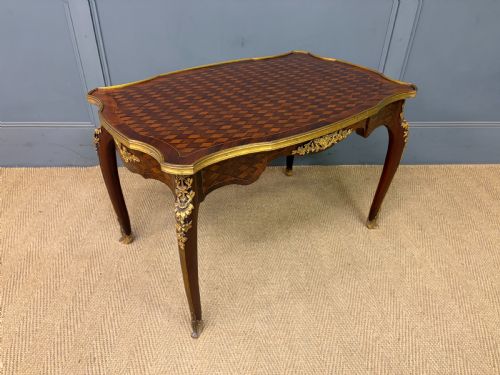
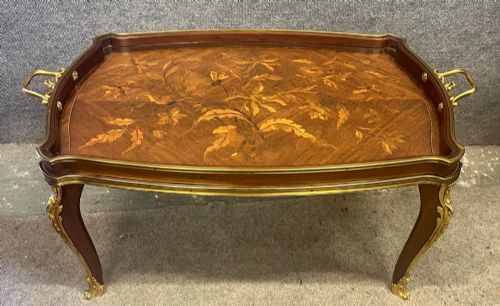
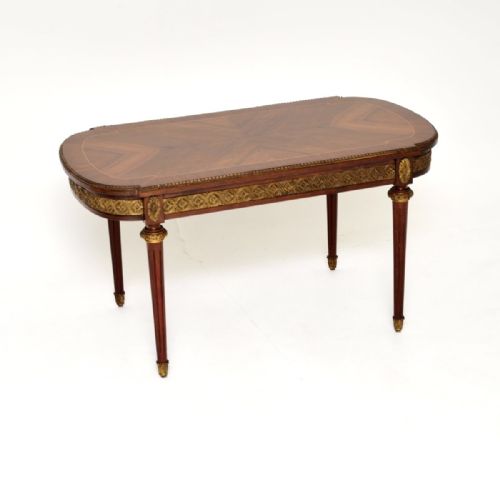
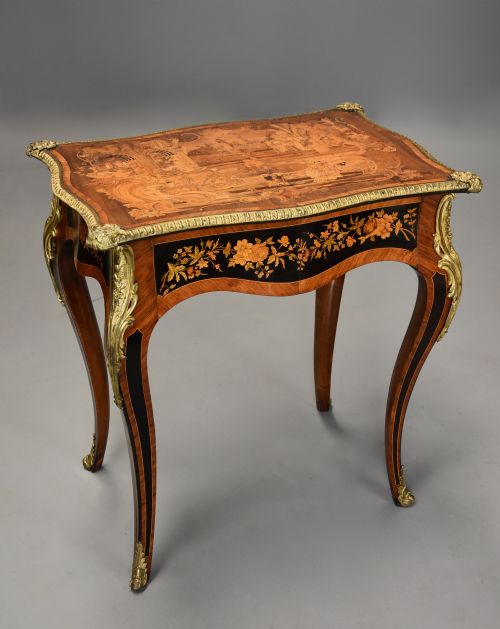
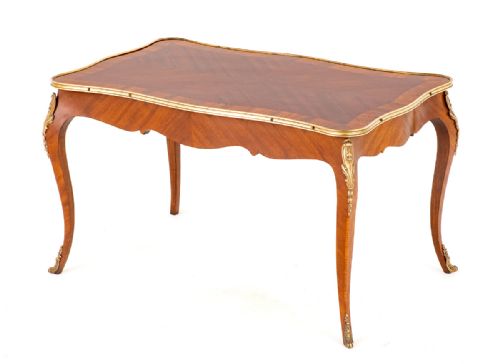
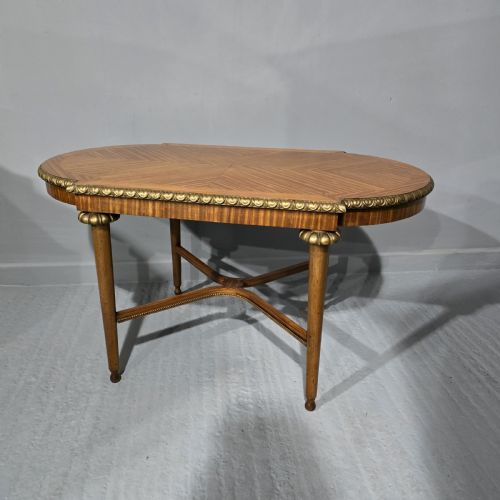
You are most likely to meet low tables featuring gilt brass, ormolu mounts, and timber veneers like kingwood, walnut, and mahogany. Many examples incorporate marble tops, tray top designs, and detailed marquetry or parquetry work.
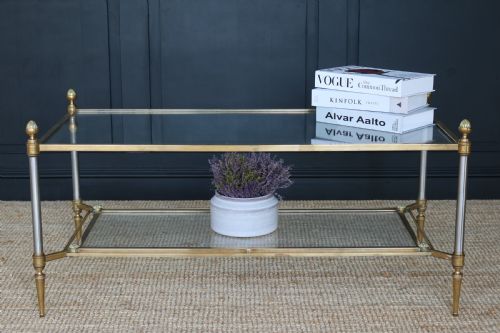
The forms span coffee tables, side tables, and nests of tables originating from workshops influenced by classical French cabinet making. They range from nineteenth century centre tables adapted for low seating to Hollywood Regency and mid twentieth century creations.
How they were made
The construction relies on timber frameworks veneered in exotic woods such as kingwood, rosewood, satinwood, and walnut, often finished with intricate marquetry and parquetry patterns. Cabinet makers shaped these frames into tray tops, rectangular surfaces, and occasional table forms.
Gilt brass, ormolu, and gilt metal mounts provide structural and decorative detailing, fixed to corners, legs, and aprons. Marble inserts are bedded directly into timber frames to create smooth, durable tabletops.
Lacquer work and hand painted Chinoiserie finishes appear on select occasional pieces, demonstrating specialised surface decoration techniques alongside traditional French polishing.
Bronze Coffee Table Retail Price Guide 2026
Typical asking prices for bronze coffee table among the pieces listed under this phrase on Sellingantiques today, from the lower quarter to the upper quarter. They describe what is for sale here now, not the wider market.
Materials recorded on this page include kingwood, mahogany, walnut, marble, and gilt brass.
What varies in quality
Quality rests in the precision of the cabinet work and the crispness of the bronze or ormolu mounts. Finer examples display hand chased metalwork with sharp relief and seamless integration into the timber frame.
The choice and execution of timber veneers define the upper tier of the range. Master makers employed matched kingwood, walnut, and marquetry inlays that remain tight and stable over time.
The weight and thickness of the marble tops, alongside the integrity of the underlying timber structure, separate standard production pieces from exceptional workshop creations.
Maison Jansen·Zwiener
The Bronze Coffee Table Glossary
- Ormolu
- Gilded bronze cast and finished by hand, used extensively for decorative mounts on furniture. It adds bright metallic accents to timber frames.
- Marquetry
- The art of applying pieces of veneer to a structure to form decorative patterns and pictures. Craftsmen use varied woods to achieve naturalistic tones.
- Parquetry
- Geometric mosaic woodwork used for repeating patterns on tabletops and furniture surfaces. It creates a structured, architectural aesthetic.
- Chinoiserie
- European interpretations of Chinese and East Asian artistic traditions applied to lacquer work and furniture. This style brings painted decorative motifs to occasional pieces.
Bronze Coffee Table: Frequently Asked Questions
What is a bronze coffee table?
A low table incorporating bronze, gilt brass, or ormolu mounts, typically styled after French design periods from the nineteenth and twentieth centuries.
These pieces often feature timber veneers, marble tops, and decorative inlay work designed for modern living spaces.
How do I care for marble tops?
Clean marble surfaces with a soft, damp cloth and avoid acidic cleaners that can etch the stone polish. Use coasters to protect against moisture and staining.
Regular dusting keeps the stone and the surrounding metal mounts in good condition without harsh chemicals.
Are these tables French?
Many of these tables originate from France or follow established French revival styles such as Louis XV and Louis XVI. Makers across Europe adopted these classical aesthetics well into the twentieth century.
Details like ormolu mounts, kingwood veneers, and tray top forms reflect this enduring continental influence.