

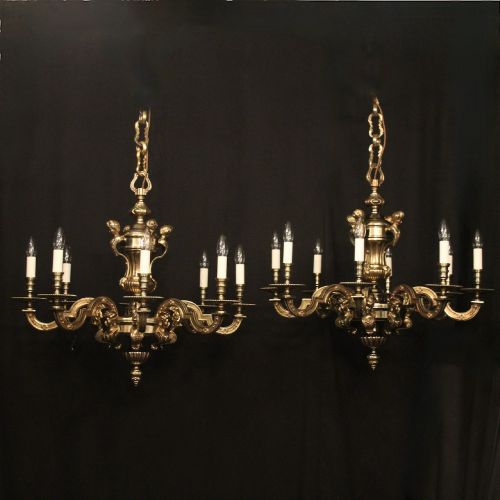
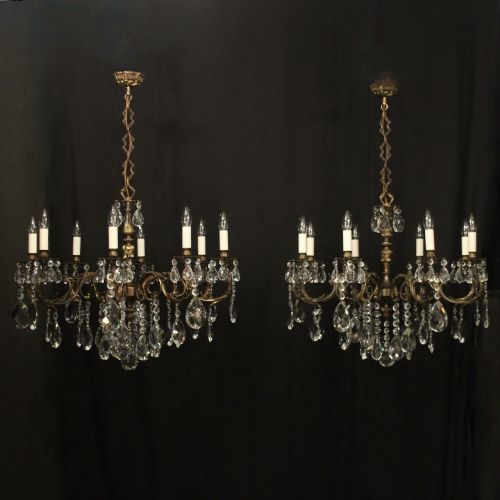
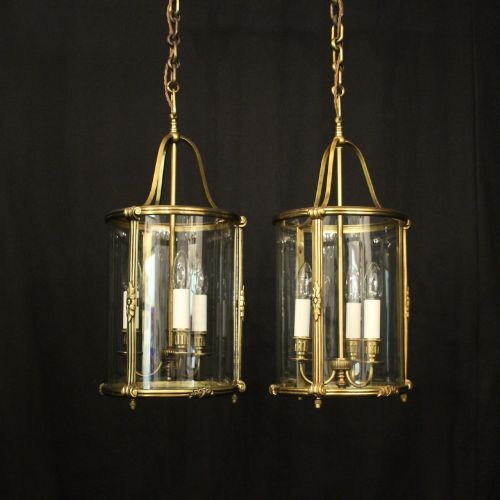
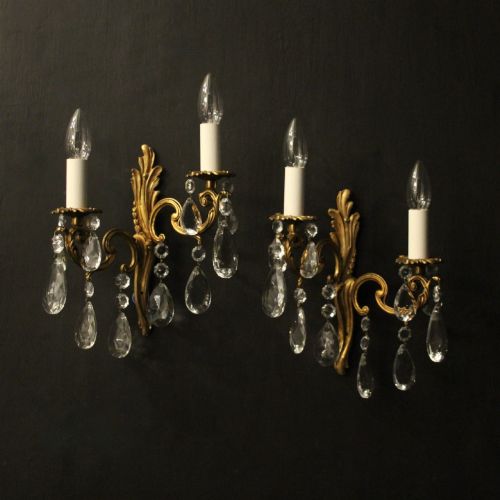
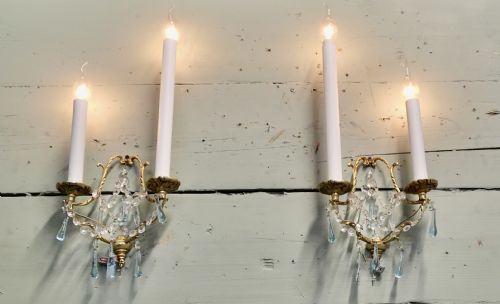


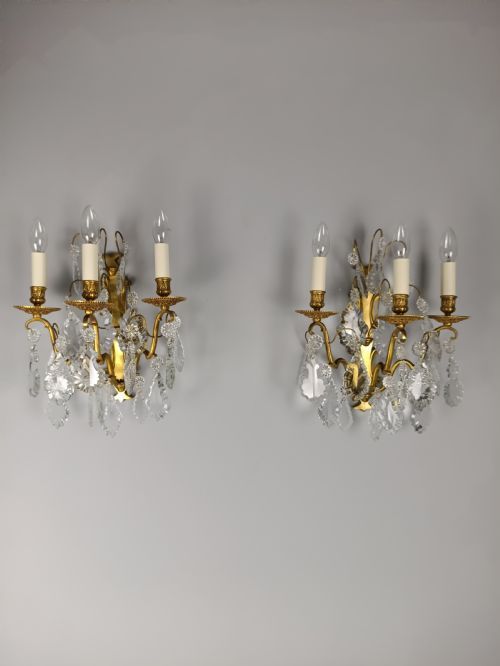
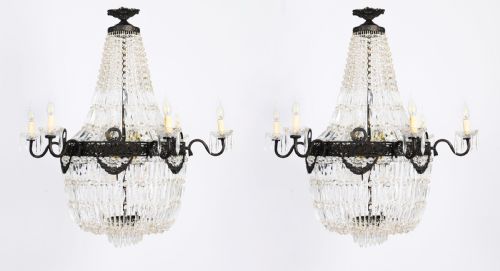


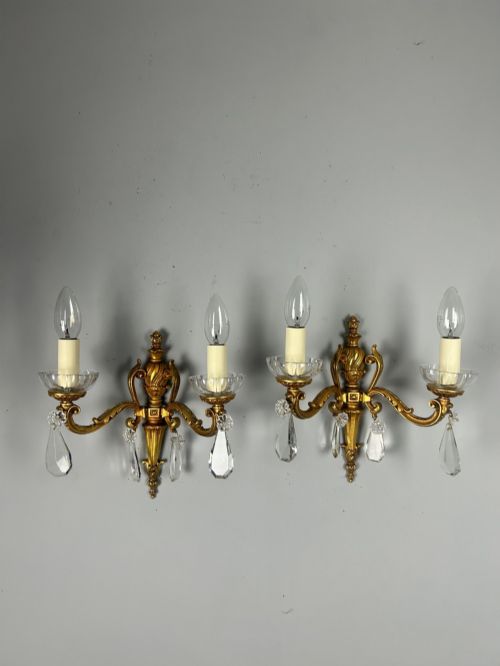


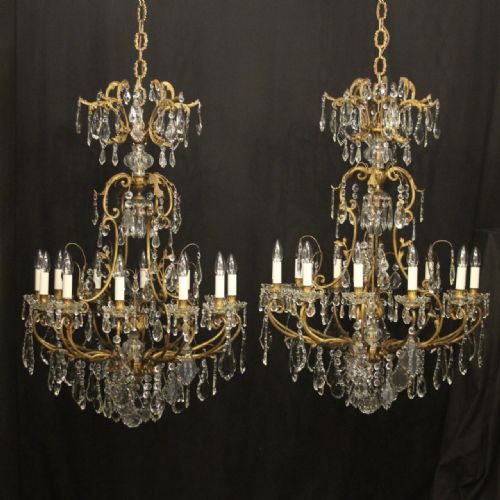
Bronze Chandelier Pair
A bronze chandelier pair brings symmetry and heavy metal presence to high ceilings, drawing the eye with balanced proportion and historic candlelight.
Bronze Chandelier Pair
A bronze chandelier pair consists of matched multi-light ceiling fixtures designed to illuminate grand interiors in unison. These matching assemblies typically emerge from continental workshops during the nineteenth and early twentieth centuries, spanning periods from the eighteen-seventies through the nineteen-thirties. You will most frequently encounter French examples carrying multiple candle arms and crystal drops.
The selections recorded on this page cluster heavily around nineteen-twenty and nineteen-thirty, reflecting an era of revivalism and luxurious interior decoration. Alongside central ceiling suspensions, the category encompasses related paired lighting formats such as wall lights, lanterns, and sconces. Metal frames in dark bronze or gilded brass dominate the configurations, frequently accented with cut crystal elements.
Materials and construction methods
Foundries shaped these fixtures using cast bronze, gilded bronze, brass, and gilt metal, creating robust structural armatures capable of supporting numerous light points. Artisans combined these heavy metallic frameworks with cut crystal drops, glass plates, and suspended beads to amplify the reflection of interior light. Surface treatments range from natural dark bronze patination to applied layers of gold leaf and silver gilt.
Construction relies upon mechanical joints, threaded rods, and pinned connections to secure individual candle arms and bobeches to the central stem. Many pieces integrate elaborate decorative motifs associated with French Rococo, Neoclassical, and Baroque styles, cast in sections and chased by hand. Wiring adjustments often accompany these older assemblies to meet modern electrical standards.
Bronze Chandelier Pair Retail Price Guide 2026
Typical asking prices for bronze chandelier pair among the pieces listed under this phrase on Sellingantiques today, from the lower quarter to the upper quarter. They describe what is for sale here now, not the wider market.
Listings demonstrate a strong preference for French stylistic influences, spanning Rococo, Neoclassical, and Baroque designs executed in bronze, gilded bronze, and cut crystal.
Distinctions in manufacture and design
Quality in a bronze chandelier pair rests upon the crispness of the metal casting and the depth of the chased ornamentation. Superior examples display sharply defined acanthus leaves, figurative elements, and smooth joints that conceal assembly points without excess solder. Lesser pieces feature softer, shallower casting details where repetitive patterns lack individual hand-finishing.
The integration of crystal components also dictates the standing of a piece, separating standard production from exceptional work. High-grade fixtures utilise heavy, hand-cut crystal drops with clean facets that refract light sharply, suspended from secure metal pins rather than crude wire loops. The richness of the original gilding or the stability of the bronze patina further separates ordinary examples from finer specimens.
The Bronze Chandelier Pair Glossary
- Bronze
- A copper and tin alloy prized for its strength and ability to hold fine casting detail. It forms the dark, patinated structural core of many historic light fittings.
- Gilded Bronze
- Bronze coated with a thin layer of gold or gold leaf, providing a brilliant reflective surface. This finish appears frequently on French revival lighting from the nineteenth and early twentieth centuries.
- Bobeche
- A small drip pan fitted beneath the candle nozzle to catch melting wax. In antique fixtures, these circular elements are often cut from matching crystal or cast metal.
- Tent Chandelier
- A lighting form featuring strings of crystal beads draped from a crown ring down to the lower perimeter. This creates a distinctive tent-like silhouette above the main tier of lights.
- Ormolu
- An historical term for applied gold-coloured bronze mounts used extensively in classical decorative arts. It requires careful cleaning to preserve the delicate metallic surface.
- Birdcage Chandelier
- A fixture structured around a skeletal metal framework resembling an aviary cage, densely hung with crystal drops and chains. This open form allows light to radiate through central vertical tiers.
Bronze Chandelier Pair: Frequently Asked Questions
How do I hang a heavy bronze chandelier pair safely?
Suspension of heavy bronze and crystal fixtures requires professional installation directly into ceiling joists or structural nogging using rated steel fixings. The combined weight of cast metal arms and glass components demands robust load-bearing support.
Electrical wiring must also be assessed to ensure the internal harness and ceiling supply can handle the total wattage of multiple light points safely.
Can these antique chandeliers be rewired for modern homes?
Most antique fixtures accept modern electrical cabling, and many have already undergone conversion for contemporary use. Rewiring allows historic pieces to function safely with standard voltage systems while retaining their original aesthetic appearance.
Qualified electricians should thread modern heat-resistant flex through the internal channels without compromising the structural integrity of the antique bronze arms.
What is the difference between bronze and gilt brass?
Bronze is a heavy alloy of copper and tin that develops a dark, warm natural patina over time if left unpolished. Gilt brass utilises a brighter yellow base metal coated with gold leaf or chemical gilding, producing a consistently shiny finish.
Cast bronze typically allows for sharper sculptural detail during the founding process compared to pressed or simpler brass assemblies.
How do I clean crystal drops without damaging the metal?
Crystal elements should be removed individually and washed in warm soapy water, then dried thoroughly before reattachment. Avoid letting harsh chemical cleaners touch the bronze or gilt surfaces, as liquids can strip historic patinas or original gold leaf.
Dust the metal framework gently with a soft dry brush rather than spraying commercial polishes directly onto the antique finish.