

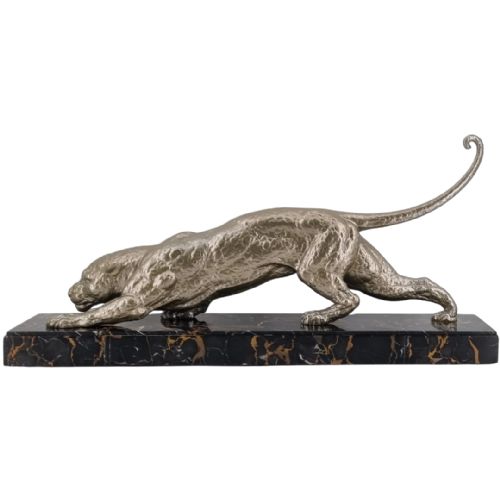
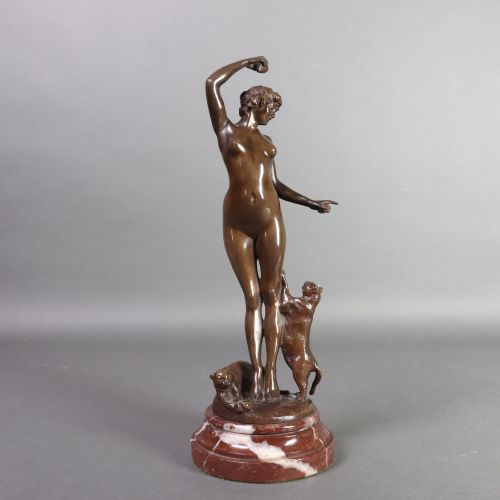
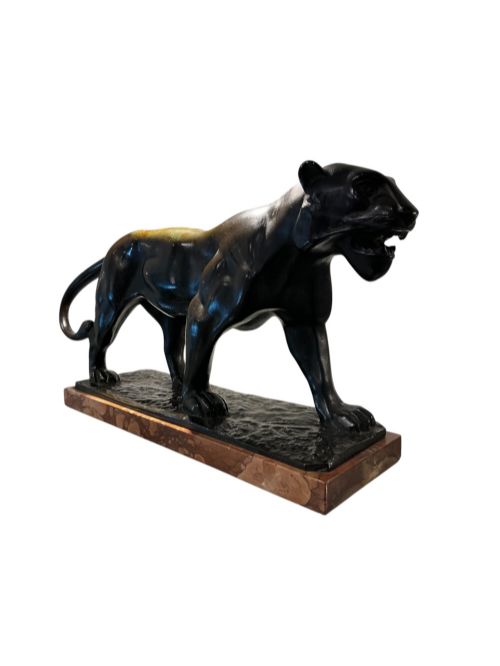
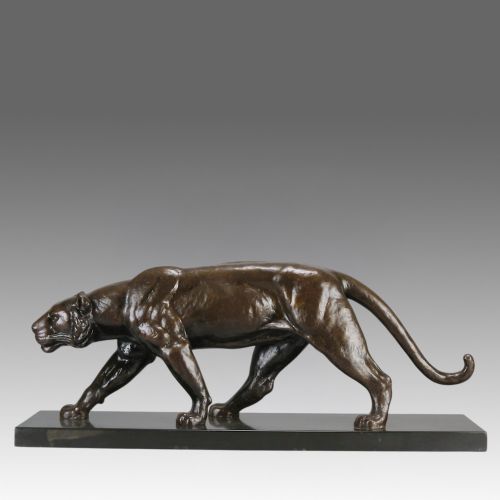




Bronze Cat Sculpture
These bronze cat sculpture pieces span feline and big cat forms in bronze, patinated bronze, cold paint, and spelter, often mounted on marble bases.
Bronze Cat Sculpture
A bronze cat sculpture captures domestic felines and big cats such as panthers, tigers, lions, and jaguars across the nineteenth and twentieth centuries. These works appear in forms ranging from small figurines to large decorative sculptures set on marble bases.
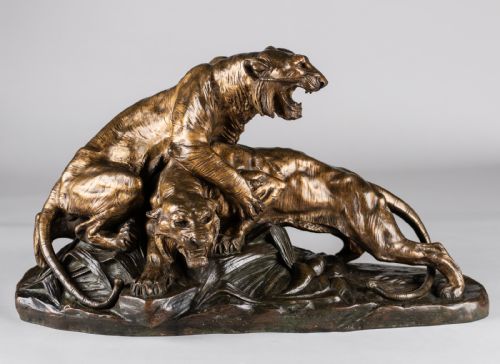
The versions most frequently met on this page include Art Deco panthers from the 1920s and 1930s, alongside nineteenth-century French Animalier studies of tigers and lions. Makers and foundries shaped these animals to reflect naturalism, stylized modernity, and Egyptian revival designs.
Makers approached the subject through distinct regional lenses, producing Austrian cold-painted bronzes alongside French animalier school studies. These pieces function primarily as decorative table sculptures or heavy mantel ornaments.
Materials and construction
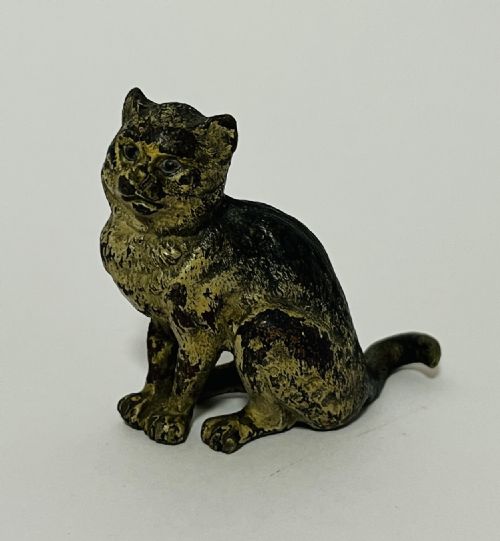
Artisans applied polychrome cold paint to bronze surfaces, particularly within the Austrian school tradition, while French foundries utilised chemical patination to achieve deep brown and black tones. Figures were sometimes signed by the artist and stamped by foundries such as Siot or Barbedienne.
Bronze Cat Sculpture Retail Price Guide 2026
Typical asking prices for bronze cat sculpture among the pieces listed under this phrase on Sellingantiques today, from the lower quarter to the upper quarter. They describe what is for sale here now, not the wider market.
Listings feature works spanning the nineteenth century through the art deco period, utilising bronze, spelter, and marble.
The markers of quality
The quality of the material mounting, such as heavy veined marble bases, and the preservation of original cold-painted surfaces or rich patination dictate the desirability of the piece. Signatures from recognised animalier sculptors elevate the standing of an individual work.
Alexandre Ouline·Franz Bergman·G. Gardet·Vannetti·Anna Vaughn Hyatt Huntington·Clovis Masson·Michel Decoux·Andrey·Georges Gardet·Louis Riche·Barye·Barbedienne·E. Drouot
The Bronze Cat Sculpture Glossary
- Animalier
- A nineteenth-century artistic movement focused on the realistic depiction of animals. Sculptors in this tradition studied anatomy closely through life observation in menageries.
- Cold-Painted Bronze
- A technique where paint is applied to a bronze object without heat-firing the pigment. This method produced vibrant polychrome finishes, particularly in Austrian workshops.
- Spelter
- A zinc alloy frequently utilised as a less costly alternative to bronze during the art deco period. It was often given a dark bronze-like patination and mounted on marble bases.
- Patinated Bronze
- Bronze treated with chemical solutions to produce a specific surface colour or tone. This process protects the metal while enhancing the visual depth of the sculpture.
- Vienna Bronze
- Small, highly detailed bronze figures produced in Austrian workshops during the late nineteenth and early twentieth centuries. These pieces were predominantly cold-painted.
Bronze Cat Sculpture: Frequently Asked Questions
What is an animalier bronze?
An animalier bronze is a nineteenth-century sculpture focused specifically on the anatomical study and realistic portrayal of animals. These works capture wild and domestic creatures in dynamic or resting poses.
French sculptors dominated this movement, working closely with foundries to translate living forms into metal with high precision.
How do I identify art deco cats?
Art deco cat sculptures, particularly panthers and tigers, typically feature clean, streamlined lines and geometric stylisation. They frequently date from the 1920s to the 1930s and are often mounted on polished black marble bases.
These pieces reflect the modern aesthetic of the period, moving away from nineteenth-century naturalism towards bold simplification.
What is cold-painted bronze?
Cold-painted bronze refers to metal figures decorated with layers of paint that are allowed to dry naturally rather than being fired in a kiln. This technique was a speciality of Austrian workshops.
Over time, handling can cause this paint to wear, making the survival of original pigment an important factor for collectors.
How do bronze and spelter differ?
Bronze is a durable copper and tin alloy capable of holding exceptionally crisp detail from the casting process. Spelter is a zinc-based metal that is softer and lighter, used as an economical alternative.
Spelter figures are often found on art deco mantel pieces and are usually given a dark surface finish to imitate solid bronze.