





Bronze Candle Lustres
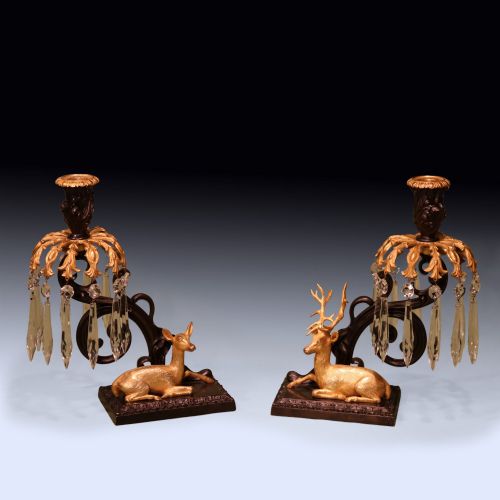
Bronze candle lustres combine patinated and gilt metal with hanging glass drops to catch and reflect the flickering light of a room.
Bronze Candle Lustres
Bronze candle lustres are lighting fixtures designed to hold tapers while suspending crystal or glass prisms from the sconce to multiply the illumination. When buyers search for bronze candle lustres, they encounter pairs and sets produced across the eighteenth and nineteenth centuries.
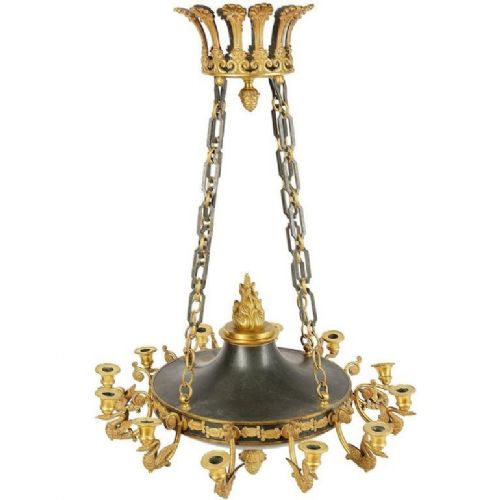
The examples found here span the Regency, William IV, and French Empire periods, alongside later nineteenth-century interpretations of Rococo and chateau styles. These pieces range from simple single-stick candlesticks to multi-branch candelabras and chandeliers.
Makers utilised patinated bronze, ormolu, and gilt bronze for the body, pairing the metalwork with cut glass or crystal drops. The resulting objects function as decorative mantel or table centrepieces as much as functional lighting.
How they were made
Foundry workers cast the structural components in bronze before applying patination or gilding with ormolu to create contrasting surface textures. The metal mounts often incorporate sculptural figures, such as stags, does, or griffins, finished with meticulous hand chasing.
Glasscutters shaped and polished the hanging prisms and crystal drops, which workers then suspended from the sconces using wire or pinned metal loops. These transparent pendants hang in arrangements designed to swing and refract the candlelight.
Bronze Candle Lustres Retail Price Guide 2026
Typical asking prices for bronze candle lustres among the pieces listed under this phrase on Sellingantiques today, from the lower quarter to the upper quarter. They describe what is for sale here now, not the wider market.
Some nineteenth-century makers cast stags, does, and mythological beasts directly into the metalwork to support the candle nozzles.
What varies in quality
The refinement of the cast metalwork defines the upper tier of these pieces, distinguishing crisp, hand-chased surface details from softer, commercially produced contours. The depth and durability of the original gilding and patination similarly mark the skill of the workshop.
The proportion and cut of the glass elements dictate the visual weight of the fixture, with heavier, deeply faceted crystal prisms casting sharper refractions than plain pressed glass. Complete sets retaining matching drops throughout demonstrate greater desirability than assembled groups.
The Bronze Candle Lustres Glossary
- Ormolu
- Gilded bronze produced by applying a mercury and gold amalgam to a bronze base and heating the metal to drive off the mercury. This technique creates a rich, matte gold surface finish.
- Lustre
- A candlestick or candelabrum fitted with hanging glass drops or pendants designed to reflect light. The term also applies to the glass prisms themselves.
- Patinated bronze
- Metal that has been treated chemically or thermally to produce a dark, stable surface coating. This finish contrasts sharply against bright gilt ormolu mounts.
- Regency
- An English design period spanning the early nineteenth century, characterised by classical revival motifs and refined metalwork. Pieces from this era often feature rich combinations of dark bronze and bright ormolu.
- Rococo Revival
- A nineteenth-century style drawing on the asymmetrical scrolls, naturalistic foliage, and ornate flourishes of the eighteenth-century French Rococo movement. Lustres in this style often incorporate elaborate sculptural figures and organic forms.
Bronze Candle Lustres: Frequently Asked Questions
What is a bronze candle lustre?
A bronze candle lustre is a decorative candlestick or candelabrum made from bronze or ormolu and fitted with hanging glass drops. These prisms catch and refract the light from burning tapers.
Craftsmen produced them in various stylistic periods, including the Regency and nineteenth-century revival eras, using cut crystal and patinated metal.
How do you clean bronze candle lustres?
Dust the metal and glass components gently with a soft, dry cloth to prevent the accumulation of grime. Avoid chemical polishes, particularly on ormolu and patinated surfaces, which can strip the historic finish.
Glass drops can be removed carefully and washed in lukewarm water with mild soap before being dried and reattached.
Are these items electrified?
Most antique bronze candle lustres retain their original form designed specifically for wax tapers rather than electrical wiring. Converting them for modern lighting requires careful consideration to preserve the antique metalwork.
Many collectors prefer to use them with traditional candles to maintain their historical integrity and visual appeal.
How do you identify a Regency lustre?
Regency lustres typically feature a combination of dark patinated bronze and bright ormolu mountings. They often incorporate classical motifs, such as griffins or architectural bases, reflecting early nineteenth-century taste.
Examining the construction of the casting and the cut of the glass prisms helps confirm the period of manufacture.
Why do glass drops hang from lustres?
Glass drops hang from the sconces to multiply and scatter the light produced by the candles. The movement of the air causes the prisms to sway, creating a shimmering effect in the room.
This combination of polished metal and cut crystal made them prized table and mantel decorations.