
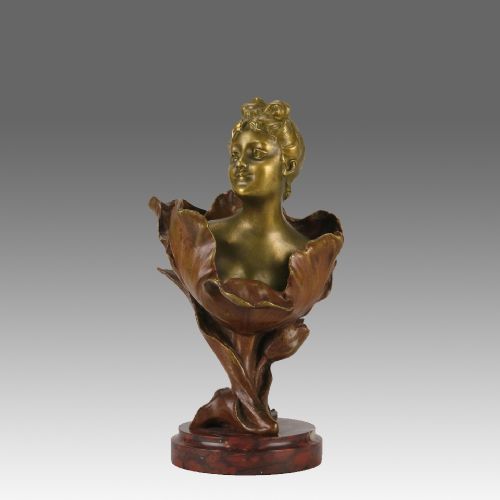
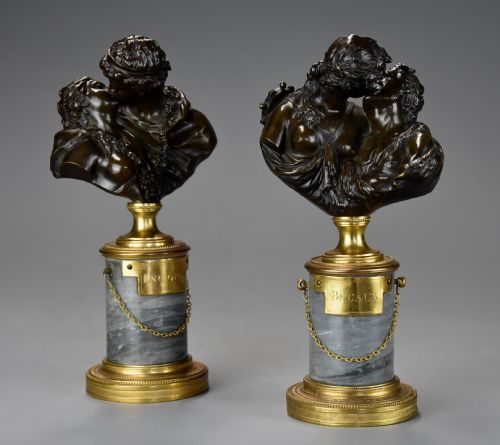


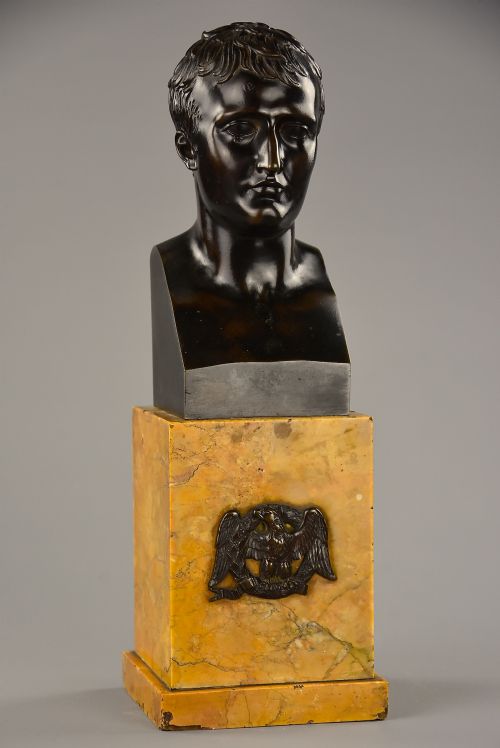


Bronze Bust on Marble
These pieces combine cast metal portraiture with substantial stone plinths, bringing classical subjects and literary figures into domestic interiors.
Bronze Bust on Marble
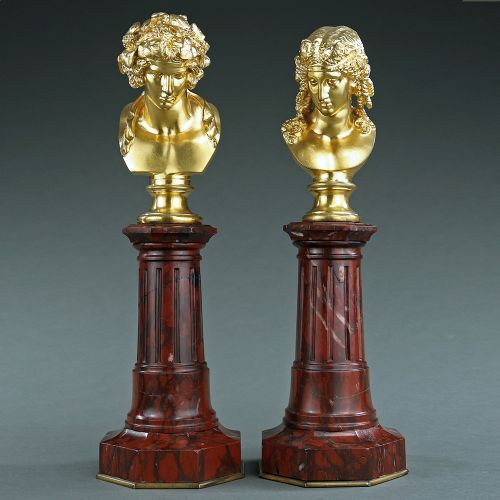
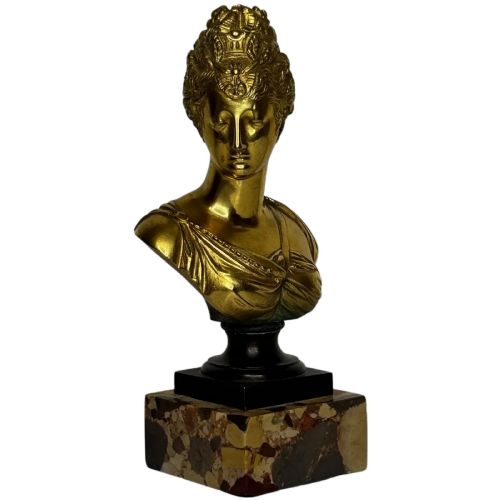
A bronze bust on marble pairs cast metal portraiture with a heavy stone base, creating a balanced sculptural object that sits securely on a desk, mantelpiece or column. Most examples originate from the nineteenth century, encompassing French foundry work, Italian Grand Tour souvenirs and British portrait subjects.
The sculptural subjects range from classical deities and philosophers such as Hippocrates and Hypnos to historical figures like Napoleon and literary icons including Dante and Shakespeare. Many pieces take the form of dedicated portrait studies, while others function as functional desk accessories like inkwells or incorporate decorative elements such as gilt bronze collars and ormolu mounts.
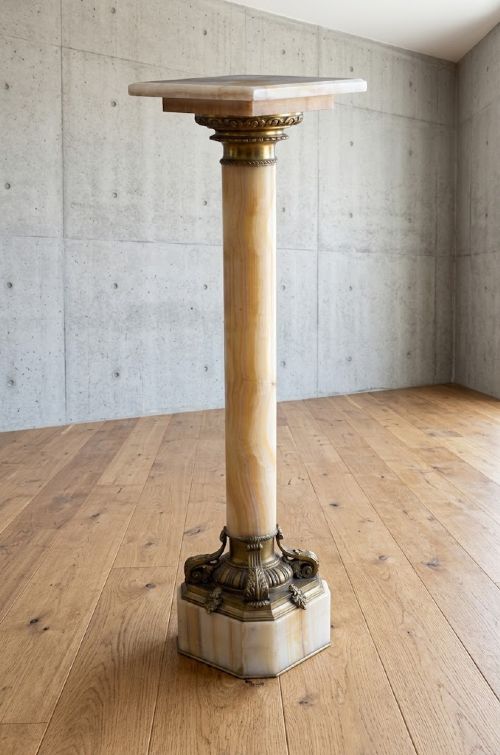
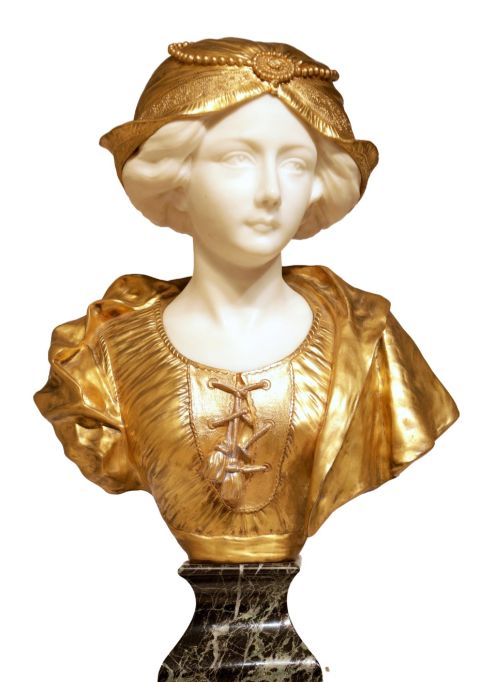
Foundations frequently combine white, black or coloured marble with patinated bronze, gilt bronze or ormolu. Certain pieces integrate alternative stones like onyx and alabaster into the base or column structure, reflecting tastes from the Neoclassical, Art Nouveau and French Empire styles.
Materials and construction
Foundries produced the metal portions using traditional casting methods, subsequently finishing the surface with patination, gilding or verdigris treatments to create tonal depth. Sculptors signed their work directly into the metal matrix before the casting process concluded or inscribed the bronze surface post-casting.
Stonemasons shaped the supporting plinths, bases and columns from solid blocks of marble, onyx or alabaster, turning and polishing the stone to contrast with the matte or polished metal above. Ormolu and gilt bronze mounts were then secured to the stone using threaded pins or hidden fixings, marrying the two distinct materials into a single object.
Several historical figures immortalised in metal include a sleeping god of sleep, a sleepy philosopher, and Shakespeare keeping watch over an inkwell.
Distinctions in craftsmanship
The selection and preparation of the stone base heavily influence the overall refinement of the piece. Dense, evenly veined marble cut with precise geometry and fitted with accurately cast ormolu mounts demonstrates a higher tier of workshop production than plain stone with loose fittings.
Affortunato Gory·Henri Godet·Georges-Charles Coudray·Alajos Strobl·Emmanuel Villanis·Eutrope Bouret
The Bronze Bust on Marble Glossary
- Ormolu
- Gilded bronze produced by applying a mercury-gilding mixture to cast bronze, yielding a rich golden surface that resists tarnish. This technique was widely utilised across French decorative arts during the eighteenth and nineteenth centuries.
- Patination
- The natural or chemically induced surface coloration of bronze that develops over time or through workshop treatment. It ranges from deep brown to dark green and protects the metal while defining sculptural contours.
- Grand Tour
- The educational journey through Europe undertaken by wealthy young men during the eighteenth and nineteenth centuries, who collected miniature bronzes and classical busts as souvenirs. These reduction casts copied famous antiquities seen in Italian museums.
- Verdigris
- A green patina formed naturally on copper, brass and bronze through atmospheric oxidation or applied artificially by artisans to simulate ancient weathering. It appears frequently on classical revival and antique-style bronze studies.
- Plinth
- A heavy rectangular or cylindrical base block that elevates and supports a bust or sculpture. In these pieces, the plinth is typically carved from marble or onyx to provide visual and physical stability.
Bronze Bust on Marble: Frequently Asked Questions
Where should I display these pieces?
Place them on sturdy surfaces such as mantelpieces, sideboards or dedicated marble pedestals that can support the considerable weight of the stone and metal combined. Ensure the display location avoids direct, harsh sunlight and excessive humidity to preserve the bronze patination and stone polish.
Keep them away from heat sources like radiators, which can dry out stone or cause old adhesives in composite assemblies to fail. Adequate clearance allows the sculptural details and chasing to be viewed from multiple angles.
Are these pieces signed by artists?
Many nineteenth-century portrait busts feature signatures, foundry marks or title inscriptions cast directly into the metal or engraved along the truncation line. These signatures attribute the work to specific sculptors who exhibited in European salons and academies.
Unsigned pieces remain common, often representing anonymous workshop production or commercial Grand Tour editions intended for travellers. Both signed and unsigned examples rely on the quality of the casting and stone selection to determine their standing.
What periods do these sculptures date from?
The majority originate from the nineteenth century, drawing heavily on Neoclassical, Art Nouveau and French Empire design vocabularies. This era saw widespread demand for historical portraits, classical revivals and literary figures cast in metal.
Later examples extend into the early twentieth century, reflecting transitional Art Deco tastes and continued manufacturing traditions across French and Italian foundries. The physical materials and casting styles help anchor each piece within this broad timeline.