


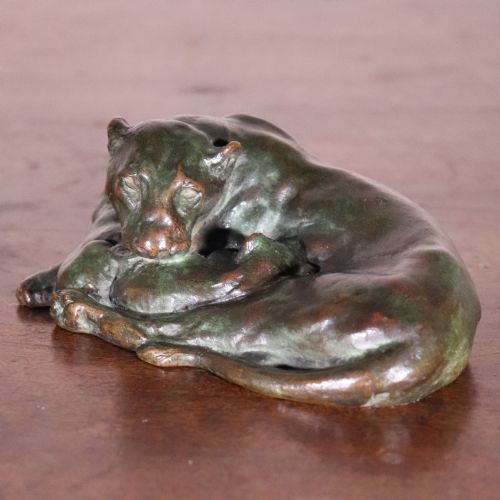


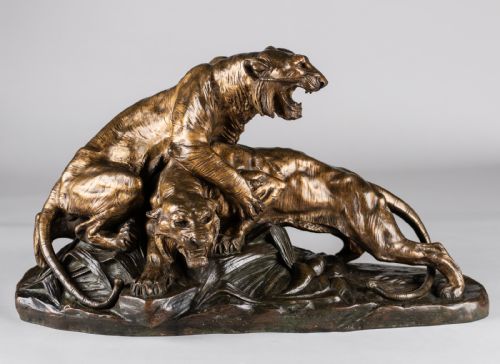


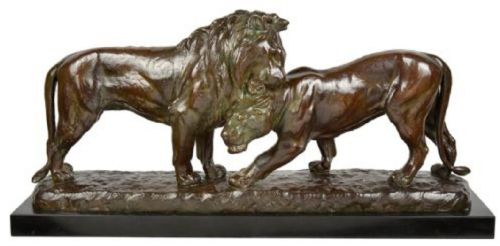


Bronze Big Cat Figure
A bronze big cat figure brings the tension of the wild straight into a room through disciplined metalwork and sculptural weight.
Bronze Big Cat Figure
A bronze big cat figure captures leopards, panthers, tigers and lions in moments of rest or sudden predation. These pieces range from compact desk studies to substantial sculptural groups mounted on stone plinths.
The Animalier tradition dominates the selection, bringing French nineteenth-century realism and later Art Deco stylisation together. Figures frequently pair cast metal with heavy bases of marble or onyx to anchor the dynamic compositions.
Makers such as Barye, Gardet and Bergman shaped this genre, capturing musculature and pelt texture with acute observation. Buyers encounter both hot-cast bronze editions and alternative metal compositions such as painted spelter.
Materials and construction methods
Foundries utilised the lost-wax casting method to render the supple musculature and fine fur details of each animal. Molten bronze filled ceramic moulds, allowing sculptors to capture individual strands and tension in the limbs before cooling.
Surface treatments vary from deep, dark patination to meticulous cold-painting by hand. Artisans mounted many of the heavy metal cats onto shaped bases of carved marble or onyx to provide stability and contrast.
Bronze Big Cat Figure Retail Price Guide 2026
Typical asking prices for bronze big cat figure among the pieces listed under this phrase on Sellingantiques today, from the lower quarter to the upper quarter. They describe what is for sale here now, not the wider market.
Tigers and panthers frequently share shelf space with python snakes coiled near their paws.
Distinguishing quality in sculpture
Quality rests in the anatomical accuracy of the feline form and the crispness of the post-casting chase work. Superior pieces display finely detailed claws, facial expressions and fur textures that look natural rather than mechanical.
The integrity of the foundry mark or artist signature contributes significantly to the standing of a piece. Well-defined foundry stamps from established names such as Barbedienne or Siot indicate careful production standards.
Bergman·Vannetti·Anna Vaughn Hyatt Huntington·Michel Decoux·Andrey·Georges Gardet·Siot Foundry·Louis Riche·Barye·Barbedienne·E.Drouot
The Bronze Big Cat Figure Glossary
- Animalier
- A nineteenth-century artistic movement dedicated to the realistic portrayal of animals, particularly wild beasts. Practitioners focused on capturing creatures in motion or repose with anatomical precision.
- Patinated Bronze
- Bronze treated with chemical solutions to produce a specific surface colour, ranging from rich brown to deep black. This process protects the metal and highlights sculptural contours.
- Spelter
- An alloy of zinc and copper used as an economical alternative to bronze. It frequently appears in twentieth-century figures finished with metallic or painted coatings.
- Lost-Wax Casting
- A historic metalworking process where a wax model is melted out and replaced with molten bronze. This technique permits intricate undercuts and delicate surface textures.
Bronze Big Cat Figure: Frequently Asked Questions
What is an animalier bronze?
An animalier bronze is a nineteenth-century sculpture focused specifically on the realistic portrayal of animals. These works capture creatures in naturalistic poses, often emphasising wild behaviour and accurate anatomy.
Artists studied subjects extensively in menageries to render muscles, pelts and movement with absolute fidelity.
How do I care for bronze figures?
Bronze figures require minimal intervention beyond gentle dusting with a soft, dry cloth. Avoid commercial cleaning products or polishes that can strip the historic patina from the metal surface.
Keep the sculptures away from direct heat sources and excessive moisture to protect both the metal and any attached stone bases.
Are these figures solid bronze?
Many sculptures are cast using the lost-wax method, which can produce solid or hollow forms depending on the size and foundry practices. Hollow castings remain standard for larger pieces to manage weight and cooling.
Alternative metal alloys such as spelter also appear in twentieth-century examples, offering a different weight and surface texture.
What is cold painting?
Cold painting involves applying oil or enamel paints directly to unheated metal surfaces. This technique allowed Austrian and European workshops to add realistic coloration to small bronze animals.
The applied pigments sit on top of the metal rather than fusing with it, requiring careful handling to preserve the finish.