



Bronze Apothecary Pestle
These bronze apothecary pestle pieces are heavy metal grinders crafted for domestic kitchens, dispensaries, and chemists across several centuries.
Bronze Apothecary Pestle
A bronze apothecary pestle is a heavy utilitarian grinding tool designed for crushing herbs, resins, and medicinal compounds in domestic and professional dispensaries. When you search for this phrase, you encounter substantial metal vessels paired with matching hand-held pestles dating from the seventeenth century through to the nineteenth century. English examples dominate the selection, alongside notable continental pieces displaying distinct regional casting characteristics.
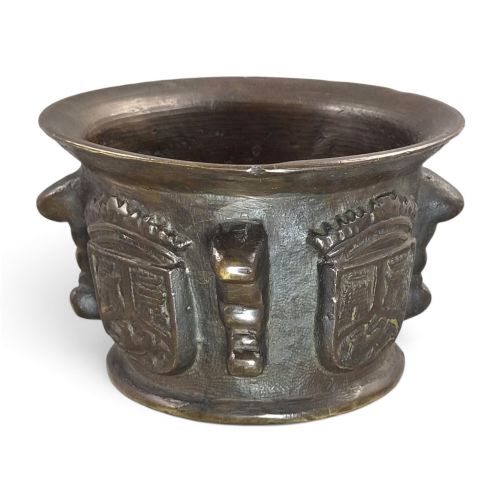
The forms range from utilitarian kitchen implements to decorative revival pieces influenced by Gothic and Renaissance styles. Many surviving examples carry specific historical markers such as the Tudor Rose motif or the arms of the House of Enríquez. Buyers frequently find complete sets where the mortar and pestle have stayed together, though individual mortars also appear without their original grinding bars.
Materials and construction methods
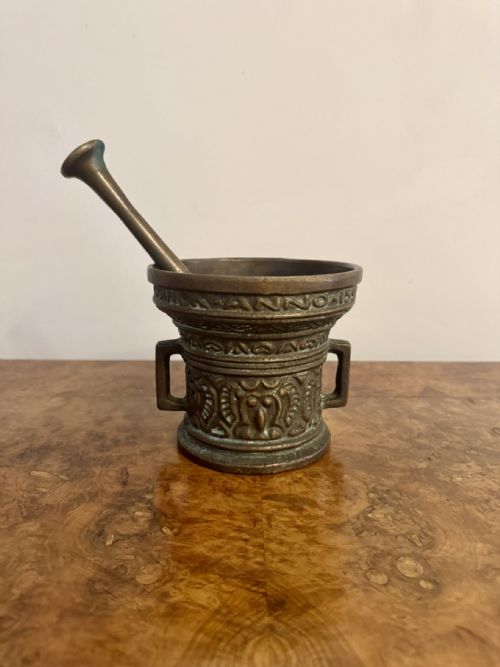
These pieces rely primarily on cast bronze, bell metal, and brass, utilising traditional foundry techniques that leave subtle surface textures and casting flaws. Molten metal was poured into sand or loam moulds, creating thick-walled vessels capable of withstanding the repeated impact and grinding action of heavy pestles. Artisans often turned the rims and bases on lathes to achieve clean circular profiles.
Iron also appears alongside bronze and brass within the wider selection of metalware, offering alternative weight distributions for heavy-duty crushing tasks. The metal composition directly affects the acoustic resonance and surface patina developed over centuries of handling and use.
Bronze Apothecary Pestle Retail Price Guide 2026
Typical asking prices for bronze apothecary pestle among the pieces listed under this phrase on Sellingantiques today, from the lower quarter to the upper quarter. They describe what is for sale here now, not the wider market.
Some seventeenth-century mortars feature little cast lugs that look like tiny ears, just waiting to hear the gossip of the apothecary.
Assessing quality and proportion
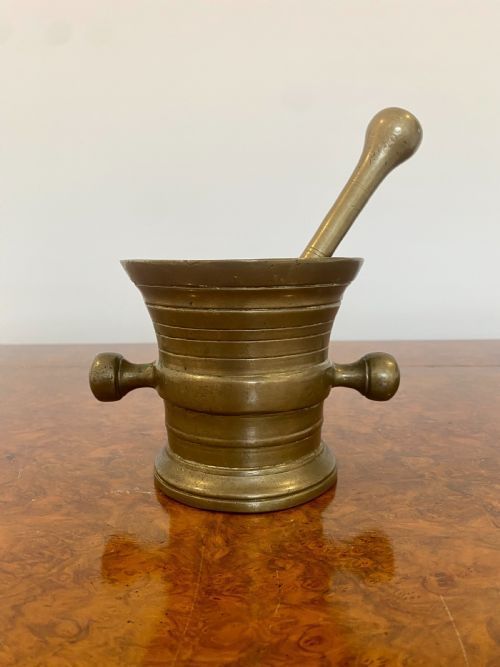
Quality in a bronze apothecary pestle rests upon the crispness of the casting detail, the thickness of the metal walls, and the balance between the mortar and its pestle. Superior examples display sharp decorative moulding around the flared rim and foot, without excessive pitting or modern repairs interrupting the historic profile. Weight distribution matters significantly, as a heavier casting provides the necessary stability for heavy grinding.
The presence of heraldic decoration, such as the Tudor Rose or specific family arms, elevates the historical interest of a piece beyond standard utilitarian kitchenware. Surviving matched sets where the pestle shows matching wear and metal composition command greater attention than assembled pairs or solitary mortars.
The Bronze Apothecary Pestle Glossary
- Mortar
- The heavy bowl-shaped vessel used to hold materials during the crushing process. Its thick walls absorb the impact of the pestle.
- Pestle
- The heavy hand-held club used to grind, crush, and mix substances inside the mortar. Matching period pestles complete the functional set.
- Tudor Rose
- A traditional floral heraldic badge of England, frequently cast onto the exterior walls of seventeenth-century English mortars as a decorative motif.
- SpSpanish Baroque
- An ornate artistic style originating in seventeenth-century Spain, seen on select imported cast bronze mortars featuring elaborate surface ornamentation.
Bronze Apothecary Pestle: Frequently Asked Questions
How were bronze apothecary pestles used?
These tools served to grind, crush, and mix dried herbs, roots, minerals, and medicinal resins into powders or pastes for medical and culinary preparations.
Chemists, apothecaries, and domestic cooks relied on the heavy weight of the metal to break down tough ingredients through persistent manual friction.
How do I date a bronze mortar?
Dating relies on examining the rim profiles, decorative mouldings, and specific cast motifs such as the Tudor Rose or heraldic coats of arms.
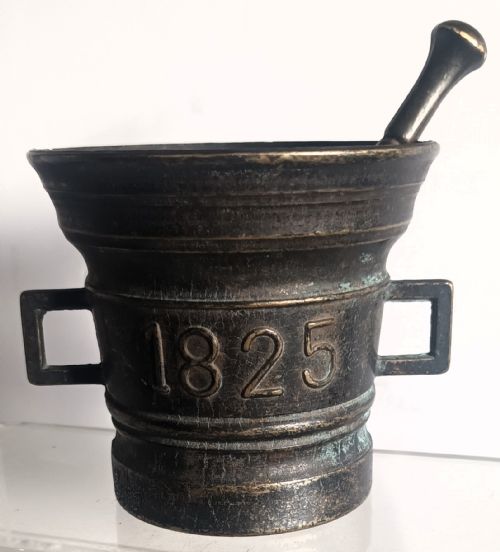
Earlier seventeenth-century examples tend to feature simpler flared rims and thicker cast walls, while nineteenth-century revival pieces often mimic these historical styles.
Are the pestles original to the mortars?
Many surviving sets have been reunited over time, though matched pairs share identical alloy patination, wear patterns, and proportional scale.
A genuine matching set displays consistent metal colour and appropriate physical wear on both the striking end of the pestle and the interior base of the mortar.
How should I clean my bronze mortar?
Maintenance requires only gentle dusting and occasional cleaning with a soft cloth to preserve the accumulated historical patina developed over centuries.
Harsh metal polishes and chemical cleaners strip away the desirable aged surface finish and reduce the historical value of the piece.