
Bronze and Marble Cherubs
Bronze and marble cherubs bring together heavy stone bases and animated metal figures from nineteenth-century continental workshops.
Bronze and Marble Cherubs
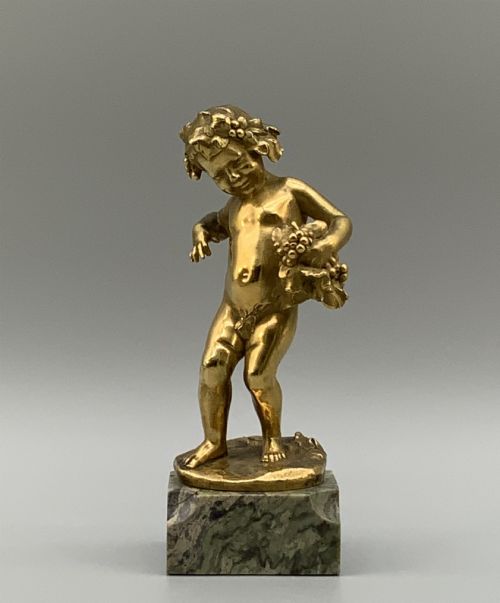
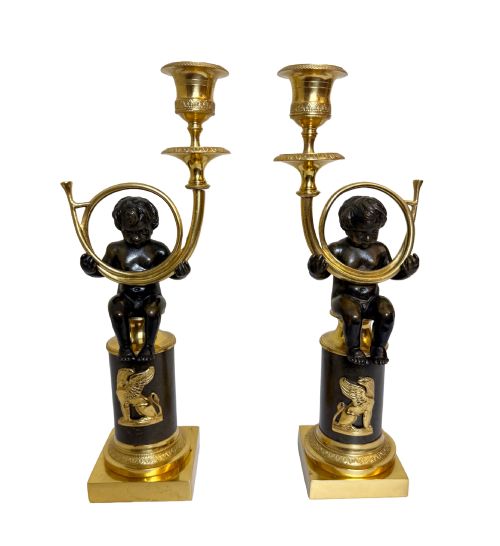
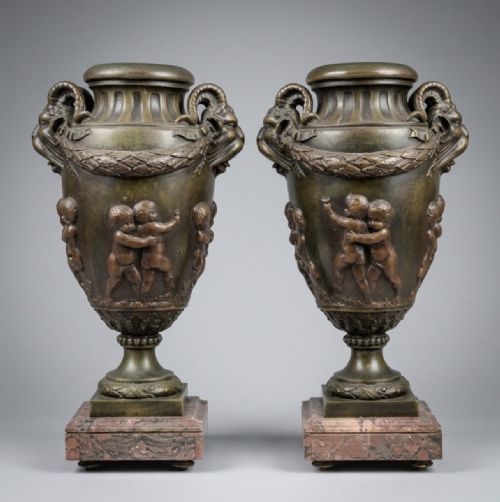
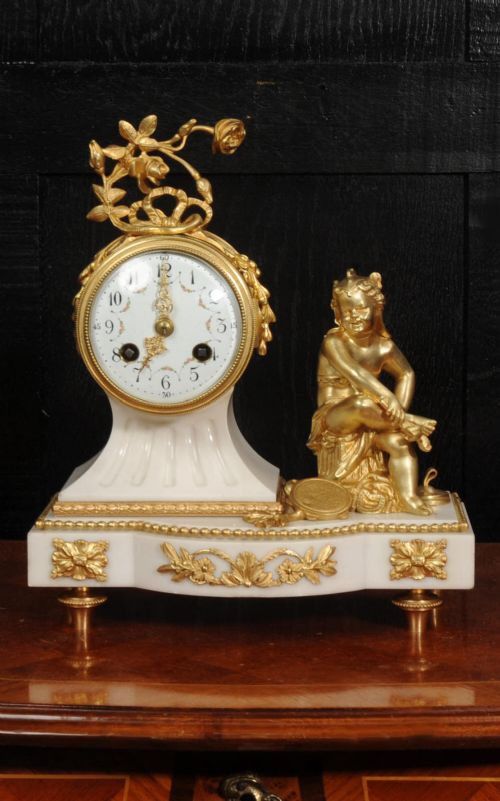
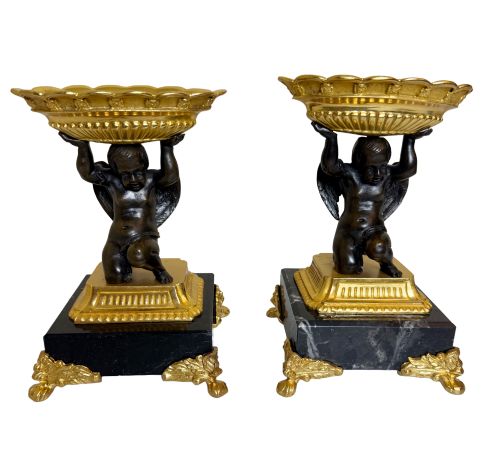
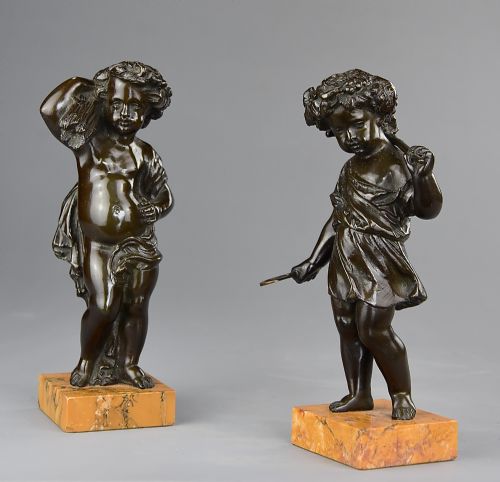
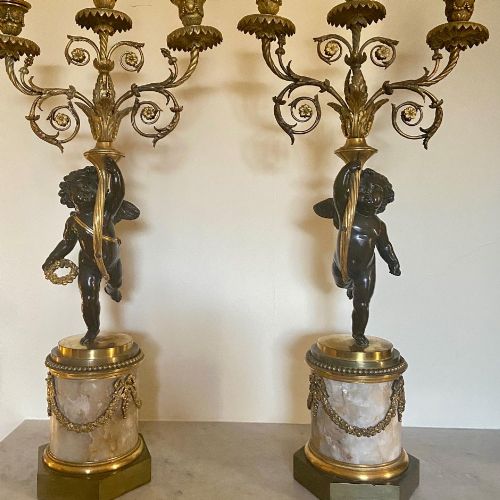
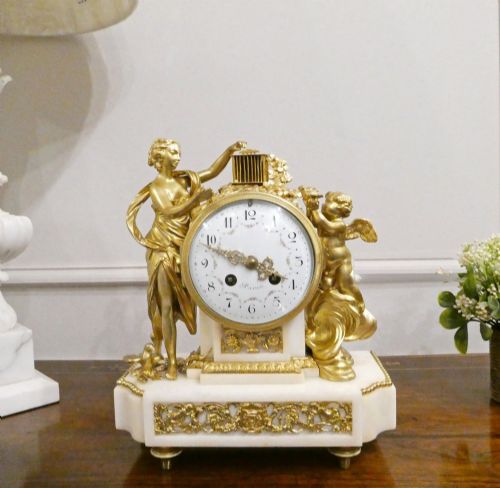
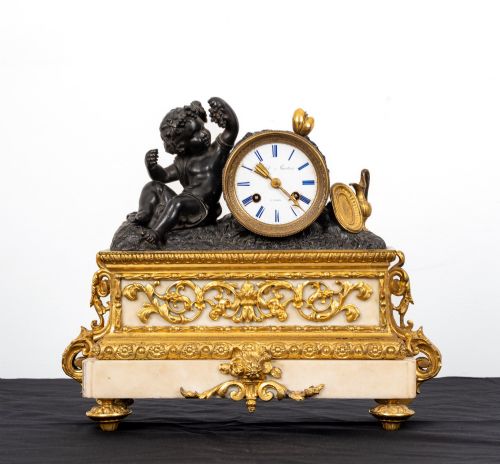
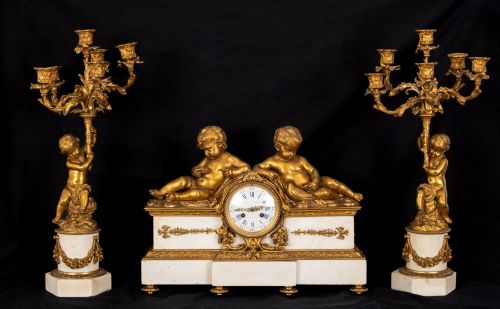
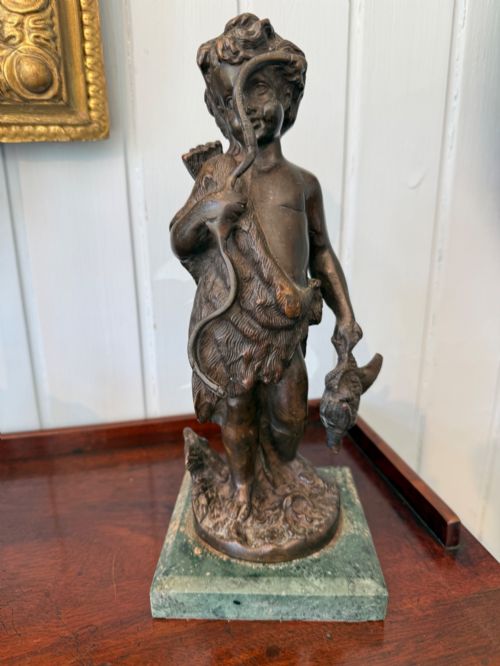
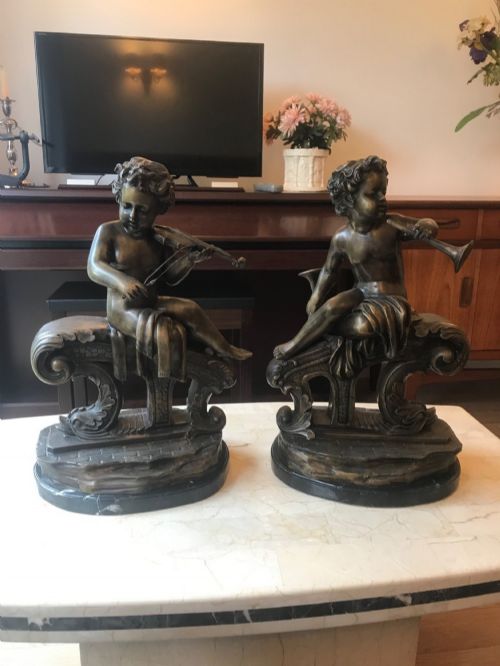
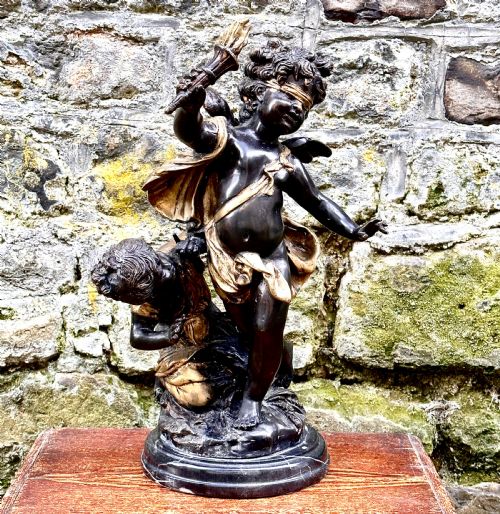
When you search for bronze and marble cherubs, you are looking at nineteenth-century decorative arts that combine cast metal figures with polished stone plinths. The most common examples on this page are mantel clocks, candelabra, and small statuettes originating from French and Italian makers.
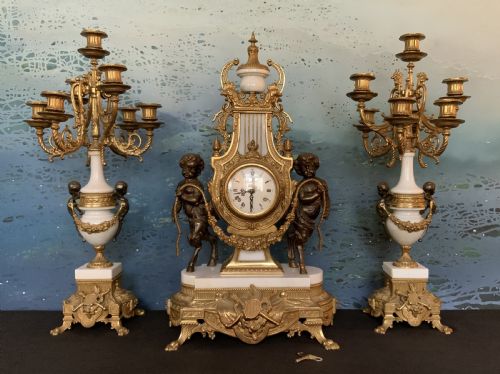
The figures depicted often take the form of winged putti, harvest cherubs, or mythological children associated with Bacchus and Cupid. These pieces frequently appear in pairs designed to flank a central clock in a garniture set.
Originating largely in the Victorian period and the French Second Empire, these objects reflect a fascination with Neoclassical and Louis XVI styles. They served as functional timepieces and lighting supports while functioning as sculptural centrepieces for formal rooms.
Materials and construction methods
The construction relies on the pairing of heavy white or variegated marble bases with cast bronze components, often finished with ormolu or gilding. Founders utilised techniques such as lost-wax casting or sand casting to achieve detailed hair and feather textures on the figures.
Mounts, bezels, and decorative foliage are cast separately and attached to the stone plinths using threaded rods and screws. Patinated bronze surfaces were treated with chemical solutions to produce dark brown or greenish tones, contrasting with bright gilded highlights.
Listings feature periods spanning from the eighteenth century to the mid-twentieth century, with the Victorian era heavily represented.
Assessing quality in cast metal and stone
The selection and turning of the marble base also indicate the tier of the piece. Dense, unblemished marble with precise levelling and well-fitted bronze feet represents superior workshop production compared to flawed stone with irregular seams.
Susse Frères·Japy Freres·Siffel and Cartier·H Luppens Paris·Louis Auguste Moreau
The Bronze and Marble Cherubs Glossary
- Ormolu
- A technique of applying finely ground high-carat gold to a bronze object using a mercury amalgamation process. This finish provides a bright, durable golden lustre characteristic of French decorative items.
- Puttu
- A classical motif representing a plump, often winged infant. In these works, they appear as musicians, harvesters, or attendants to mythological figures.
- Garniture
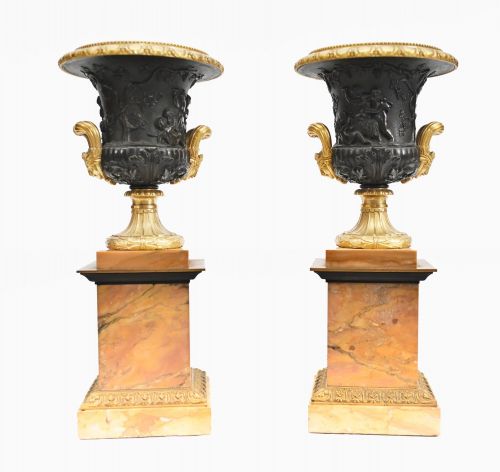
- A set of matching ornamental objects designed for display together, typically comprising a central clock flanked by two candelabra or urns.
- Tazza
- A shallow cup or basin mounted on a stem and foot, frequently rendered in marble and bronze to match cherub figures.
- Casting
- The process of pouring molten metal into a mould to form the body of the cherub or decorative mount.
Bronze and Marble Cherubs: Frequently Asked Questions
How do I clean marble and bronze?
Cleaning marble requires only a soft, dry cloth or a slightly damp sponge with mild soap, avoiding acidic cleaners that etch the polished stone surface. Bronze and ormolu should be dusted gently without chemical polishes, which can strip away the historic patination and gilding.
Professional restoration is recommended if the metalwork requires intervention or if the clock movement needs servicing.
What distinguishes Neoclassical from Rococo styles?
Neoclassical design emphasises symmetry, straight lines, classical architectural motifs, and restrained proportions derived from ancient Greece and Rome. Rococo revival favours asymmetry, fluid organic curves, scrolling foliage, and exuberant ornamentation.
Cherub figures appear in both styles, but the surrounding mounts and bases dictate whether the piece leans toward orderly classical discipline or ornate theatricality.
Were these pieces used for lighting?
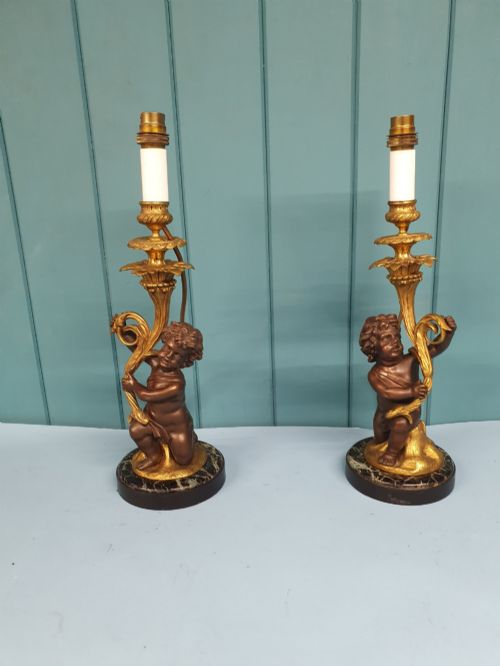
Many examples on this page functioned as practical lighting fixtures alongside their sculptural appeal. Candelabra and candlesticks held wax tapers to illuminate formal interiors before the widespread adoption of electric lighting.
Some surviving figures were later converted to table lamps as domestic lighting habits changed over time.