
Bronze and Crystal Light
Bronze and crystal light brings together heavy cast metalwork and sparkling glass drops to illuminate rooms with genuine period character.
Bronze and Crystal Light
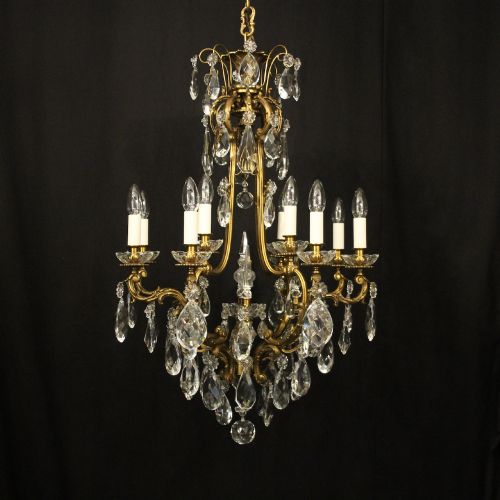
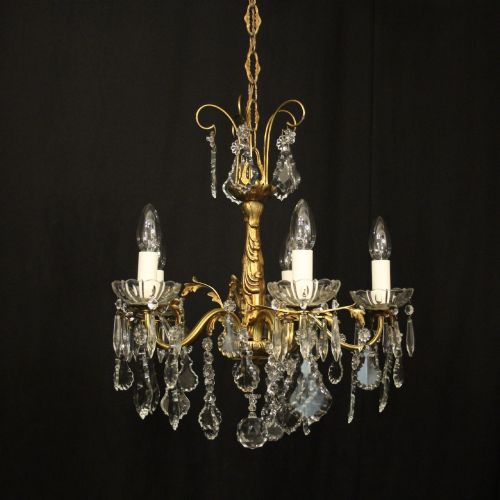
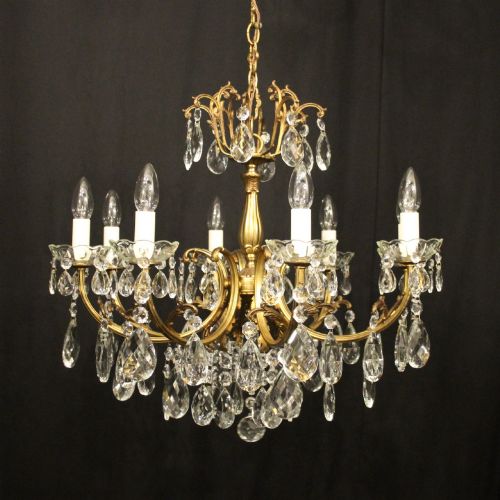
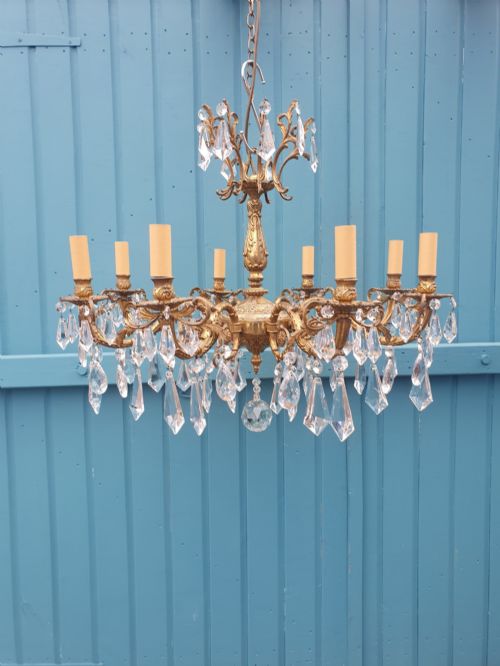
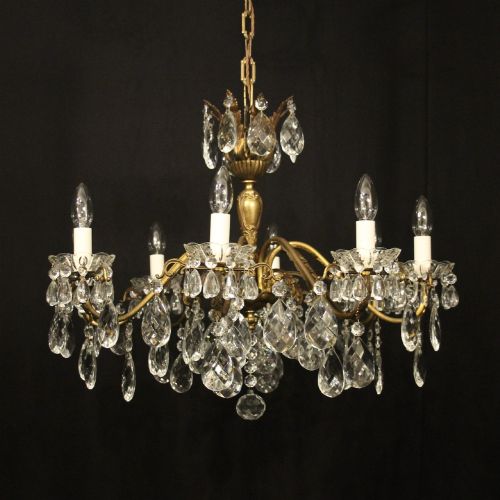
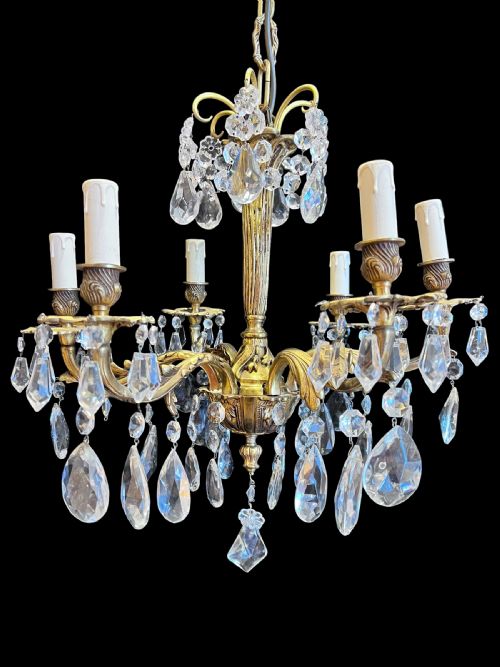
A bronze and crystal light encompasses grand multi-arm chandeliers, wall sconces, and table lamps originating primarily from French and Italian workshops. Pieces span the nineteenth century through the Edwardian era and into the 1920s and 1930s.
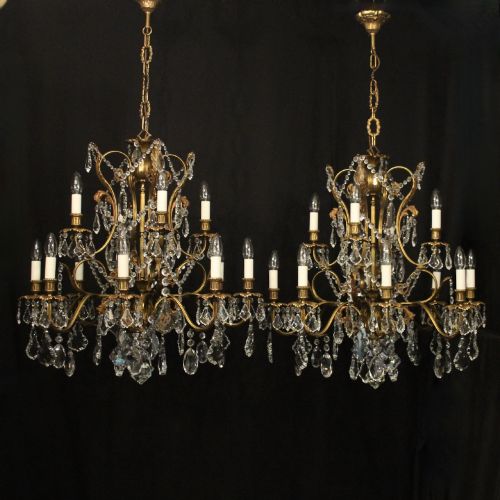
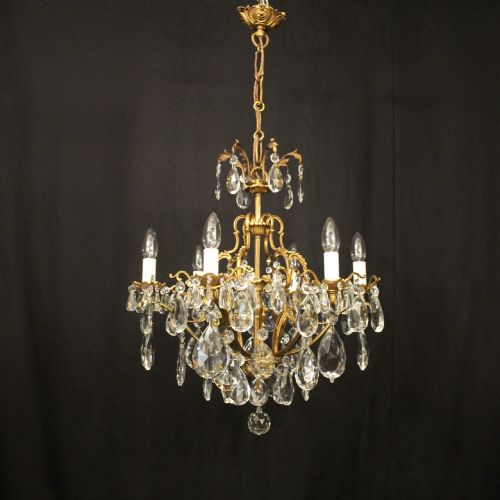
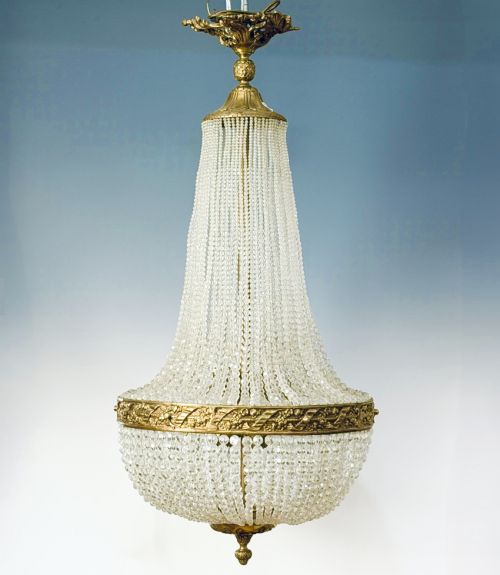
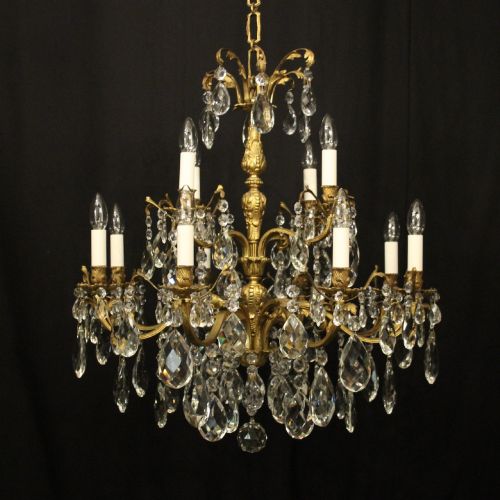
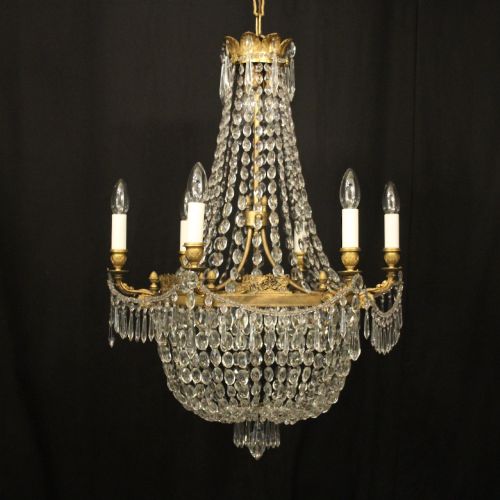
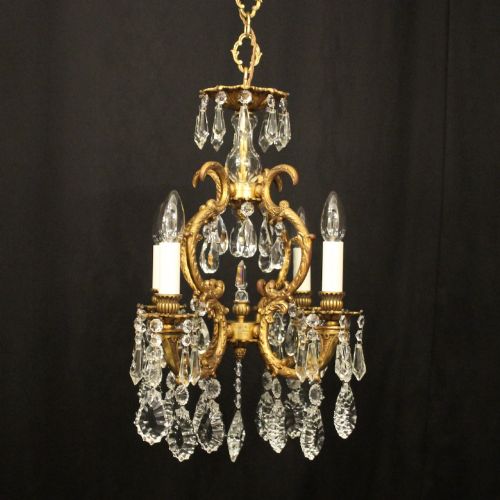
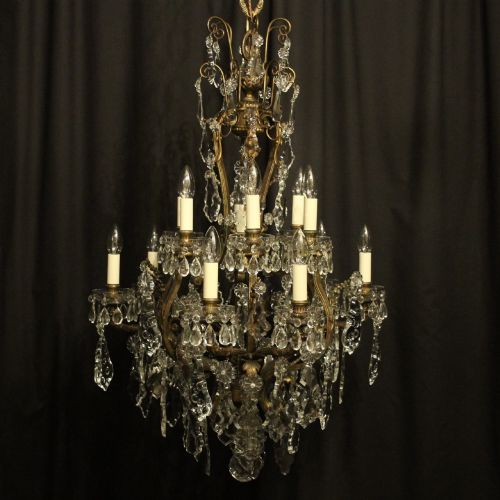
Chandeliers dominate the selection, frequently taking the form of tent and waterfall designs dressed with numerous glass drops. Wall lights and candelabra appear alongside these larger centrepieces, often created in pairs for balanced room placement.
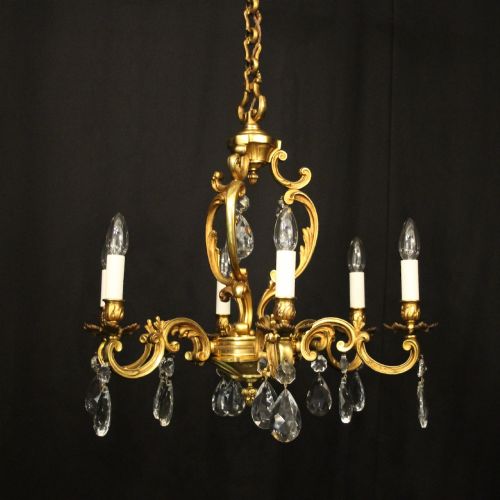
Stylistic influences draw heavily on French Rococo, Empire, and Louis Revival designs, alongside Florentine Baroque expressions. Metal structures in gilt bronze, brass, and ormolu provide the armature for intricate glass arrangements.
Materials and construction
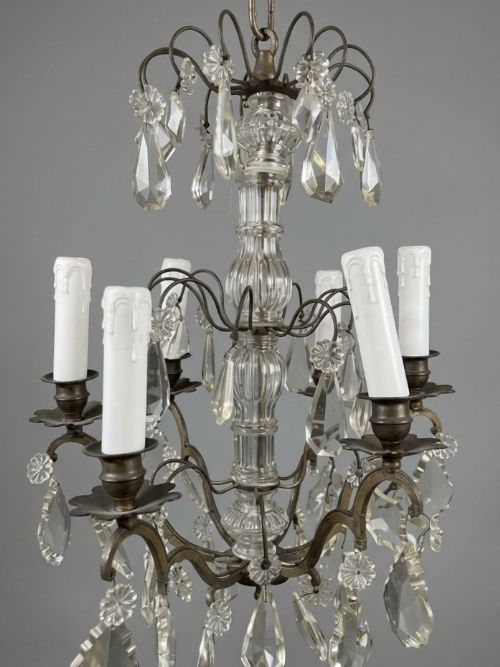
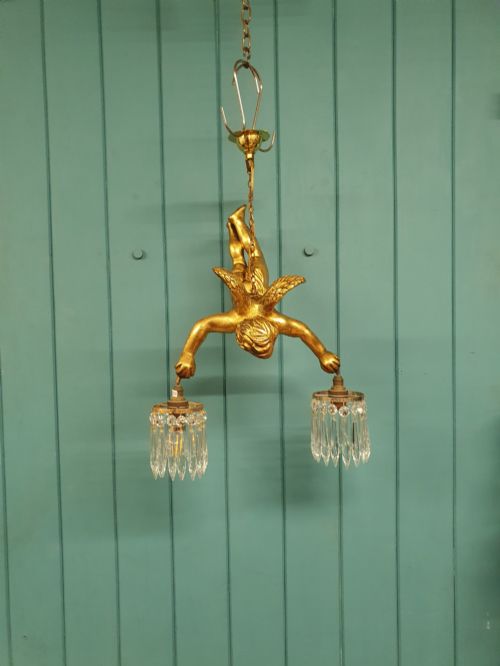
Foundations rely on cast bronze, brass, or ormolu, shaped into arms, sconces, and decorative motifs such as cherubs or leaf decoration. Gilding or silver gilding is applied to metal surfaces to catch ambient illumination.
Cut crystal and glass elements suspend from the metal frames using wire loops or pins, creating the characteristic waterfall and tent formations. Prisms and drops refract light across the room when the fixture operates.
Flying cherubs occasionally join the metalwork to support crystal spikes overhead.
Assessing quality
Metalwork casting depth dictates refinement, where sharply detailed chased ornament on bronze and ormolu separates finer examples from simpler brass or spelter castings. Hand-cut crystal drops with crisp faceting produce superior light refraction compared to moulded glass alternatives.
Proportion and scale influence overall impact, as large ballroom fixtures demand precise balancing of arm counts and crystal density to maintain visual harmony. Integrated design unity between the metal armature and suspended glass determines the cohesion of the piece.
The Bronze and Crystal Light Glossary
- Ormolu
- Gilded bronze produced by applying a mercury and gold amalgam to a bronze base, creating a durable golden surface finish. This technique defines high-end French decorative metalwork.
- Tent and waterfall
- A chandelier configuration featuring an upper canopy or tent of strung crystal beads cascading down to a lower ring of lights. The arrangement maximises glass surface area for light diffusion.
- Spelter
- An alloy of zinc and lead used as a cheaper substitute for bronze in decorative castings. It is softer and typically heavier than bronze.
- Lustre
- A candlestick or light fitting hung with glass pendants designed to reflect candle flame. These pieces combine metal stands with suspended crystal drops.
- Baroque
- An ornate style characterised by dramatic curves, rich ornamentation, and dynamic movement. This aesthetic influences many nineteenth-century Italian and French lighting designs.
Bronze and Crystal Light: Frequently Asked Questions
How do I hang a heavy crystal chandelier?
Ceiling suspension requires fixing directly into structural joists using a rated ceiling hook capable of supporting the substantial weight of bronze and glass components. Professional electrical installation ensures safe connection to mains power.
Weight distribution matters because multi-arm chandeliers place significant downward force on the mounting point. Reinforcing the ceiling bracket prevents structural sagging over time.
How are antique chandeliers cleaned safely?
Crystal drops remain attached to the frame during careful cleaning with a mild soapy solution and a soft cloth, or they are individually removed for washing. Metal parts require gentle dusting rather than harsh chemical polishes that strip historic gilding.
Support each glass pendant from beneath when wiping to avoid straining the connecting wire loops. Regular maintenance prevents dust accumulation from dulling the sparkle of the crystal.
What is the difference between ormolu and gilt brass?
Ormolu consists of mercury-gilded bronze, yielding a rich, deep golden lustre associated with fine French decorative arts from earlier centuries. Gilt brass uses a brass base metal with a applied gold layer, appearing lighter in tone.
Bronze provides a heavier, more durable structural foundation for complex casting. Brass offers a brighter yellow base metal that shows through wear over extended periods.
Can these lights be rewired for modern homes?
Rewiring old fixtures allows safe integration into contemporary electrical systems while retaining the original external metalwork and crystal drops. Electricians can update internal wiring channels without altering the exterior appearance.
Inspecting older wiring ensures compliance with current safety standards. Many surviving pieces have already received modern rewiring while preserving their historic frames.