




Broad Arm Chair
A broad arm chair is a sturdy country seat with a wide wooden paddle arm, designed for writing or relaxing.
Broad Arm Chair
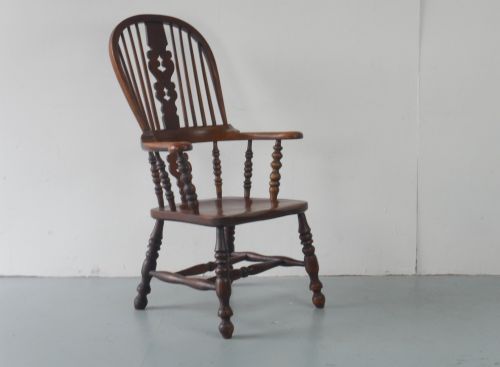
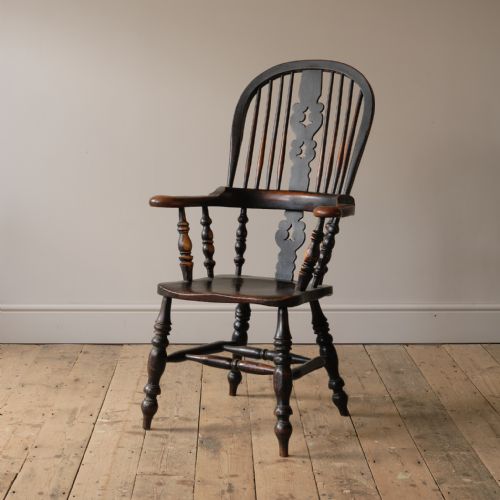
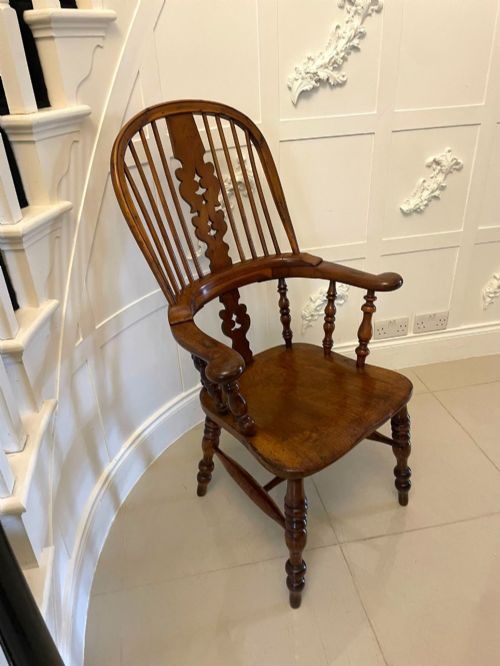
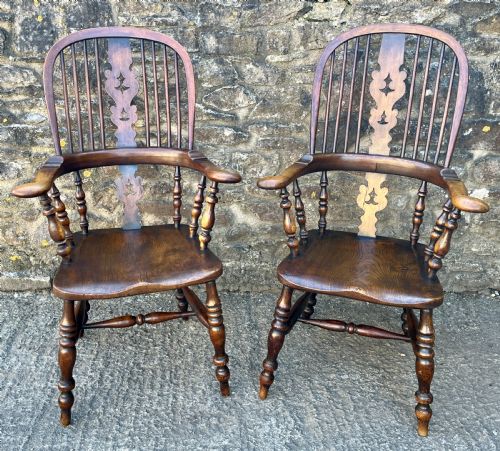
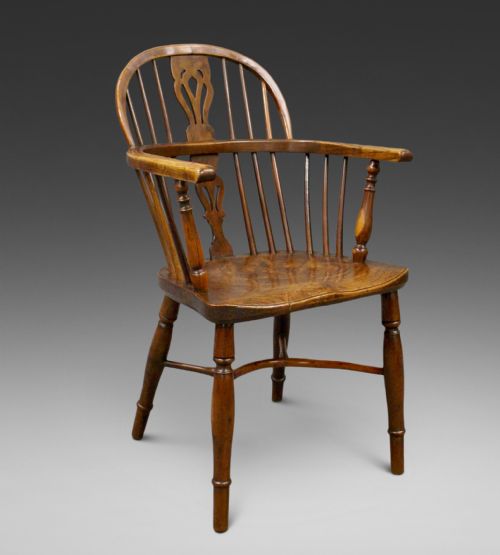
A broad arm chair takes the form of a traditional Windsor chair, distinguished by an enlarged wooden arm that provides a convenient surface for writing or resting. These pieces emerge predominantly from nineteenth century English country workshops, spanning Victorian and Edwardian periods.
The version most commonly met on this page is the Windsor chair with a wide wooden arm, built primarily in ash, elm, or yew. Regional variations such as the Yorkshire type appear alongside vernacular forms originating in places like Worksop.
Most examples rely on a combination of woods, pairing elm seats with ash or yew spindles and framing. Makers constructed these chairs for functional domestic utility in farmhouses and rural homes, resulting in enduring rustic character.
Materials and Construction
Makers utilised native English timbers suited to steam bending and structural strength. Elm provided a stable, interlocking grain ideal for solid saddle seats that resisted splitting under daily use.
Ash and yew supplied the resilience needed for slender spindles, bows, and the wide armrests characteristic of these seats. Turned legs and undercarriage stretchers united the components through traditional joinery without metal fasteners.
Broad Arm Chair Retail Price Guide 2026
Typical asking prices for broad arm chair among the pieces listed under this phrase on Sellingantiques today, from the lower quarter to the upper quarter. They describe what is for sale here now, not the wider market.
Listings feature nineteenth century and Victorian periods, with materials spanning elm, yew, ash, oak, and beech.
Judging Quality and Character
Quality rests in the selection of timber and the fluid grace of the turning on the legs and spindles. Yew wood examples generally command attention for their rich figuring and warm natural tone compared to simpler ash or elm versions.
The proportion of the wide paddle arm relative to the comb or bow dictates the visual balance of the piece. Substantial saddle seats sculpted deeply from a single plank denote careful workmanship by experienced country joiners.
Allsop Worksop·Worksop Made
The Broad Arm Chair Glossary
- Windsor chair
- A wooden chair constructed with upright spindles inserted into a solid sculpted seat rather than traditional frame joinery. These seats evolved in rural districts across England during the eighteenth and nineteenth centuries.
- Broad arm
- An enlarged wooden armrest integrated into one side of a Windsor chair to serve as a writing surface. This feature appears frequently in nineteenth century country seating.
- Saddle seat
- A wooden chair seat carved into a concave, ergonomic shape resembling a horse saddle. Makers shaped elm blocks to ensure comfort during long periods of sitting.
- Spindle
- A slender, turned wooden rod forming the backrest or structural support of a chair. Artisans shaped these components on lathes using ash, beech, or yew.
- Stretcher
- A horizontal wooden rod connecting the legs of a chair to provide rigidity and structural stability. These components are typically turned and wedged tightly into the leg bores.
Broad Arm Chair: Frequently Asked Questions
What is a broad arm chair used for?
A broad arm chair served as a practical seat in country homes where the wide wooden paddle provided a convenient surface for writing or reading.
Households utilised these sturdy Windsor chairs in studies, parlours, and farmhouse kitchens for everyday tasks.
How do I date a broad arm chair?
Dating relies on examining timber selection, turning styles, and construction wear consistent with nineteenth century English vernacular furniture.
Victorian and Edwardian examples often display specific regional traits, such as the distinct Yorkshire bow shape or Worksop turning patterns.
Are these chairs comfortable to sit in?
The deep excavation of the solid elm saddle seat provides natural ergonomic support for daily use.
While designed without upholstery, the curved back rails and wide armrests accommodate relaxed seating postures.
Which woods were used to build them?
English makers combined native timbers to maximise both structural strength and visual warmth in country seating.
Elm provided the stable base for solid seats, while yew and ash supplied flexible resilience for spindles and arms.