



British Watercolour Ink
British watercolour ink works combine fluid pigments with deft line, offering intimate glimpses into landscapes, figures, and architectural scenes.
British Watercolour Ink
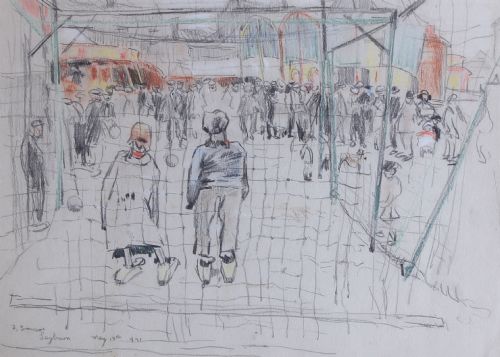
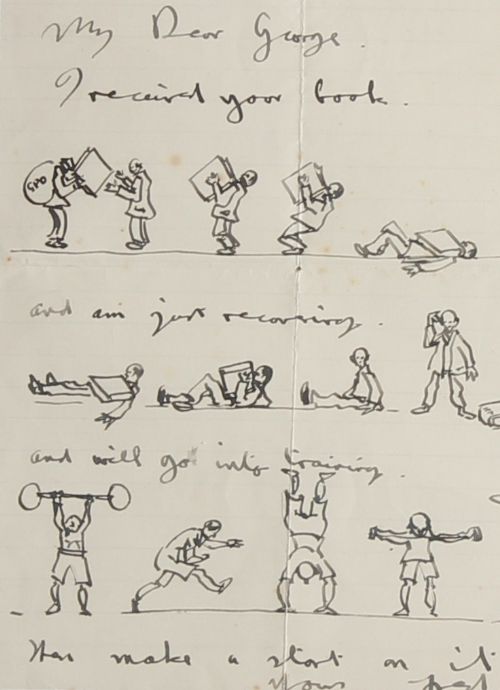
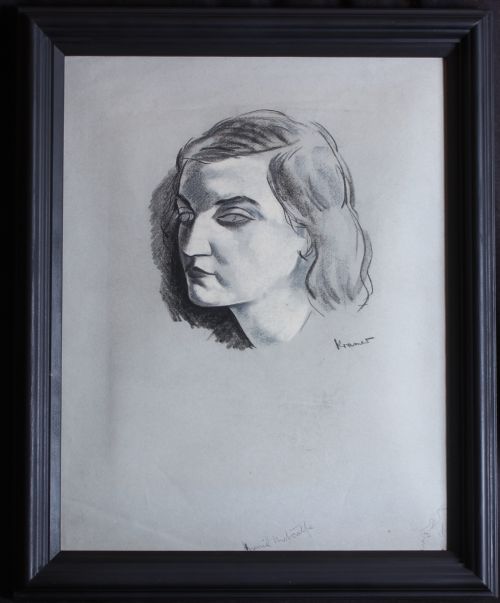
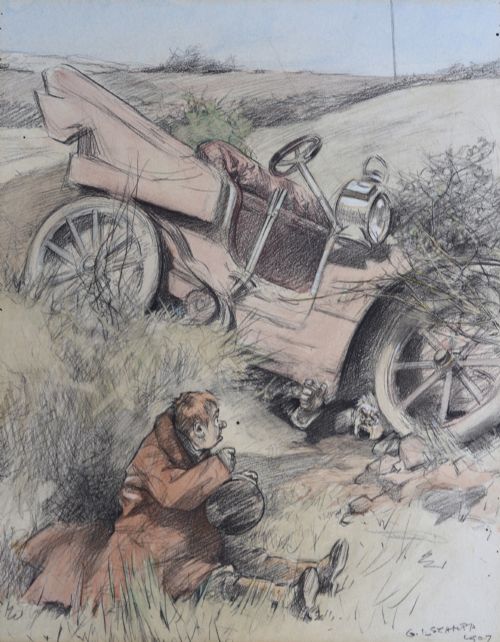
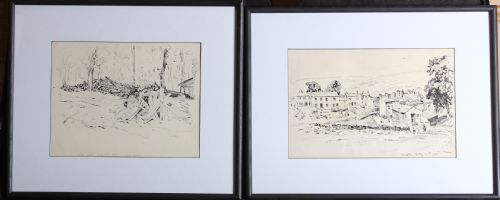
When searching for British watercolour ink, collectors encounter original works on paper spanning the Georgian, Victorian, Edwardian, and twentieth-century periods. These pieces take the form of watercolours, pen and ink sketches, drawings, and framed artwork depicting pastoral scenes, townscapes, portraits, and still lifes.
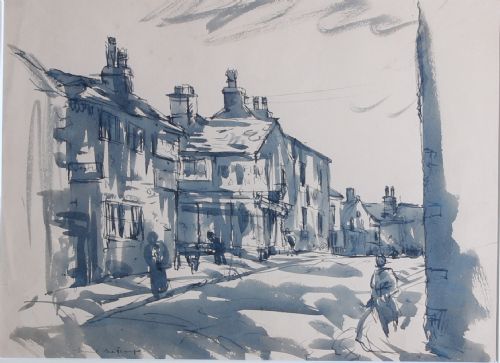
The material record shows a strong presence of mid-twentieth-century examples, particularly landscape and townscape drawings from the 1930s and 1940s. Works range from intimate figure studies and detailed architectural views to village scenes and agricultural subjects.
The inventory demonstrates a mix of named artists and regional studies, executed on paper using mixed drawing media. Buyers meet both single framed sheets and occasional pairs or book illustrations.
Materials and technique
Works are executed primarily on paper supports, utilising watercolour pigment combined with ink or sepia ink for linear definition. Artists also employed pencil and charcoal to lay down initial compositions before applying washes of colour.
Framed presentation typically involves wood and glass to protect the delicate paper surfaces from atmospheric moisture and handling. Pigments are brushed or washed onto the sheet, while ink is applied with pens to create sharp contours and hatching.
British Watercolour Ink Retail Price Guide 2026
Typical asking prices for british watercolour ink among the pieces listed under this phrase on Sellingantiques today, from the lower quarter to the upper quarter. They describe what is for sale here now, not the wider market.
Several items capture quiet British village life, from carts and farmyards to the damp stones of northern castles.
Factors of quality
Quality rests upon the sureness of the draughtsmanship and the vitality of the ink line combined with watercolour wash. Strong composition and atmospheric depth distinguish accomplished works from routine topographical recording.
The preservation of the paper support and the clarity of the ink and pigment also determine distinction. Strong provenance or attribution to recognised artists elevates individual pieces within the genre.
Jacob Kramer·Fred Lawson·James Tower·Stanley Orchart·William Edward Frost·Thomas Rowlandson·John Thistle·Owen Bowen·Dame Laura Knight
The British Watercolour Ink Glossary
- Watercolour painting
- A work of art executed with water-soluble pigments on paper. These pieces rely on the transparency of the washes to create light and tone.
- Sepia ink
- A brown drawing medium derived from the ink sac of the cuttlefish. It produces warm, monochromatic tones favoured for landscape sketches.
- Works on paper
- A broad category encompassing drawings, watercolours, sketches, and prints created on paper supports. This grouping highlights the fragile and intimate nature of the medium.
- Modern British
- A stylistic umbrella covering art produced in Britain during the twentieth century. It embraces varied movements that diverged from strict academic tradition.
British Watercolour Ink: Frequently Asked Questions
How should I frame and display works on paper?
Works on paper require conservation-grade mounting under glass to protect delicate pigments and paper from ultraviolet light and humidity.
Keep framed pieces away from direct sunlight and damp environments to preserve the integrity of the ink and watercolour wash.
What subjects are common in these drawings?
Subjects range from pastoral landscapes and village townscapes to architectural studies of castles and churches. Figure studies and still lifes also appear frequently across the periods represented.
Artists often recorded everyday rural life, agricultural labour, and regional topography during their travels across Britain.
How do I identify the date of a piece?
Dates are often established through artist signatures, inscriptions on the reverse, or stylistic conventions characteristic of specific decades. Catalogues and artist biographical records help narrow down the period of execution.
Paper types and framing materials can also offer contextual clues, though direct artist notes provide the most reliable evidence.
What is the difference between ink and watercolour here?
Ink provides the sharp linear structure and dark contours, while watercolour adds chromatic washes and atmospheric shading. Artists frequently combined both mediums on a single sheet of paper.
Some pieces rely entirely on pen and ink or sepia work, whereas others feature broad washes of colour applied over pencil or charcoal underdrawing.