





British Urban Painting
British urban painting captures the texture of streets and mills across centuries of changing light and industry.
British Urban Painting
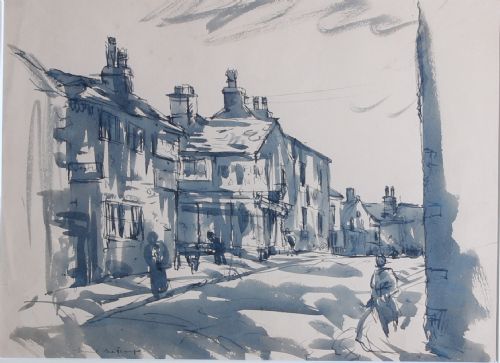
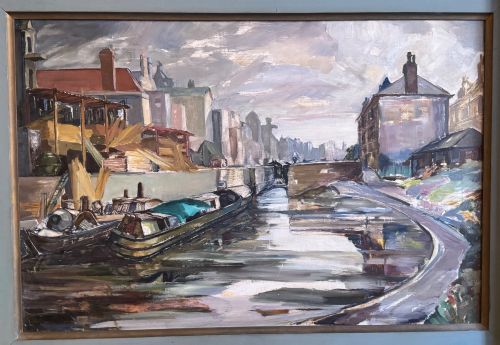
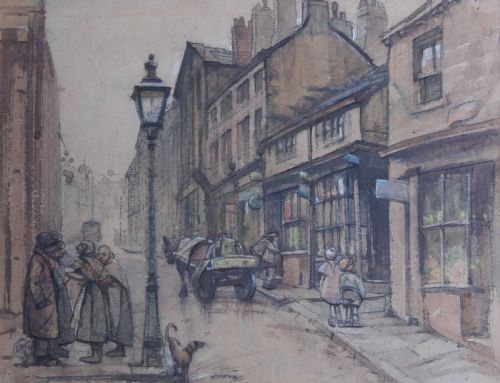
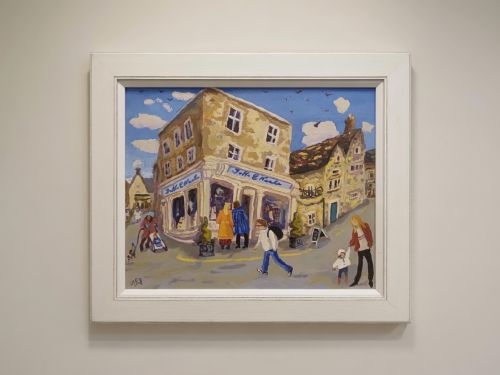
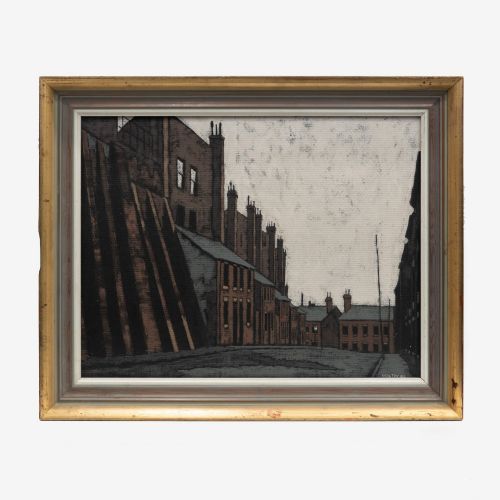
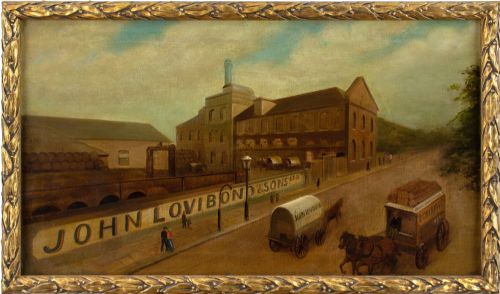
A british urban painting brings together townscapes, street scenes, and industrial views created across various periods including the Victorian era, the nineteenth century, and subsequent decades up to the mid-century and later. Buyers encounter works ranging from moonlit city thoroughfares and northern mill towns to specific local shops and bustling London bridges.
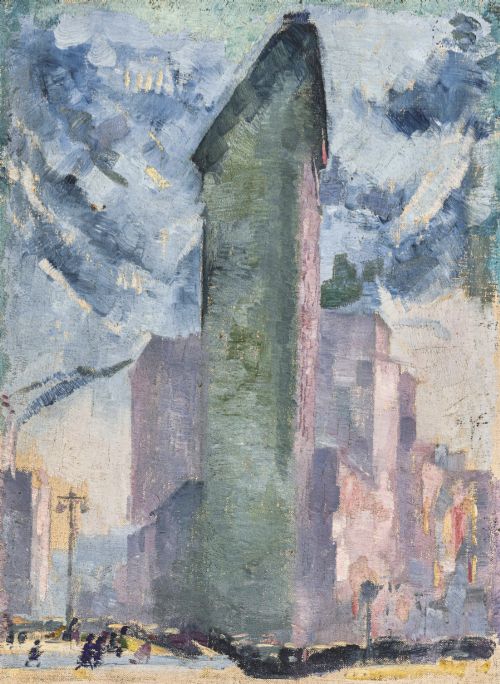
The selections on this page span several recognised movements and regional approaches, notably British Impressionism, British Realism, Post-Impressionism, Northern Realism, and English School traditions. Forms encompass both watercolours on paper and oils on canvas or board, executed by named artists and regional painters alike.
Subject matter often anchors itself in recognisable geography, from Charing Cross Bridge and St Martin-in-the-Fields to provincial street corners, factories, and local breweries. These works document the evolving architecture and daily life of towns and cities through diverse interpretations of light and atmosphere.
Materials and methods
Artists working within this tradition utilised oil on canvas or board and watercolour on paper, applying pigment to capture the density of urban environments and atmospheric conditions like twilight and moonlight. The physical support dictates the surface quality, allowing oils to build heavy impasto and texture while watercolours achieve translucent washes of townscapes.
Pigments and inks are handled through distinct stylistic lenses, moving from the detailed realism of the English School and Victorian practitioners to the looser brushwork of British Impressionism and Post-Impressionism. Support materials such as wood panels and heavyweight papers provide the foundation for these varied painterly approaches.
British Urban Painting Retail Price Guide 2026
Typical asking prices for british urban painting among the pieces listed under this phrase on Sellingantiques today, from the lower quarter to the upper quarter. They describe what is for sale here now, not the wider market.
Listings feature works spanning the nineteenth century, Victorian era, 1900, 1910, 1930, 1950, 1960, and later decades.
Assessing quality
Quality rests on the surety of the draughtsmanship and the artist's ability to render the specific atmosphere of a street or industrial site without resorting to formulaic compositions. Stronger examples demonstrate a confident handling of light - whether capturing winter twilight or artificial illumination - that defines the urban topography.
The distinction between standard decorative pieces and superior works lies in the depth of observation and the integration of figures within the architectural setting, distinguishing competent topographical records from compelling artistic interpretations of the built environment.
Cuthbert Crossley·Lucy Pratt·Alfred Wolmark·Stuart Walton·William Manners·Florence Hess·Walter Meegan·Jack Merriott·Rowland Henry Hill·Fred Lawson·Matthew Hale
The British Urban Painting Glossary
- Watercolour
- A paint consisting of soluble pigments suspended in a water-based solution, traditionally applied to paper to create translucent washes of colour. It is frequently employed here for rapid townscape sketches and finished street scenes.
- Oil on Canvas
- Pigment bound in a drying oil applied to a stretched woven fabric support. This medium allows for rich texture and deep layering, visible in many larger city views.
- British Impressionism
- A painting style influenced by French movements but rooted in British light and subject matter, focusing on transient effects of weather and urban atmosphere. Works in this manner often break away from strict academic finish.
- English School
- A broad designation for national artistic traditions spanning centuries, encompassing portrait, landscape, and topographical painters. Pieces under this banner reflect shared training and stylistic lineages within Britain.
- Townscape
- A painting or drawing depicting a city or urban landscape, analogous to a landscape but centred on architecture and street life. These form the core visual record of industrial and commercial hubs.
British Urban Painting: Frequently Asked Questions
What periods do these paintings cover?
The works span from the nineteenth century and the Victorian era through early twentieth-century movements, the 1930s, 1950s, 1960s, and into later mid-century periods.
This broad chronological spread allows collectors to trace how artists depicted industrial growth, urban expansion, and changing architectural styles over time.
What materials were commonly used?
Painters utilised oil on canvas, oil on board, watercolour paint on paper, and ink.
Watercolour allowed for portable sketching of street scenes, while oils on canvas or wood panels suited more substantial studio compositions.
How do styles differ across the works?
The inventory includes British Impressionism, Post-Impressionism, British Realism, Northern Realism, and the traditional English School.
Some pieces focus on precise topographical detail, whereas others employ looser brushwork to evoke twilight, moonlight, or industrial haze.
How should I care for these paintings?
Works on paper, particularly watercolours, require protection from direct sunlight to prevent fading of the pigments. Oil paintings on canvas or board benefit from stable indoor humidity and freedom from extremes of temperature.