





British Naval Painting
A british naval painting captures the drama of sail and steam, offering a direct window into maritime history that commands any room.
British Naval Painting
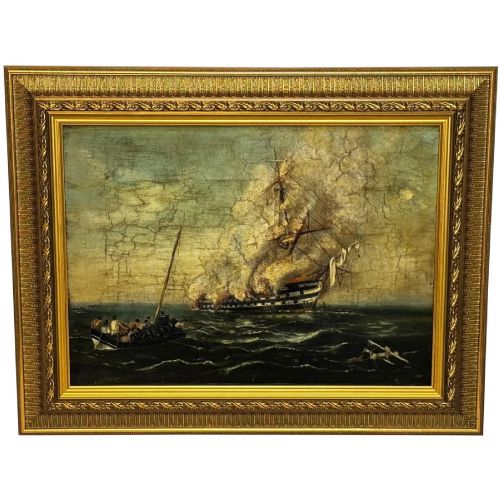
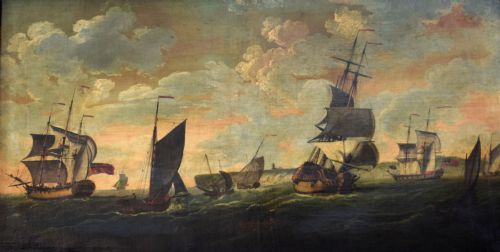
A british naval painting spans centuries of maritime heritage, recording specific engagements, named vessels, and commanding figures on the water. When exploring a british naval painting, collectors encounter detailed depictions ranging from eighteenth-century galleons to twentieth-century commanders.
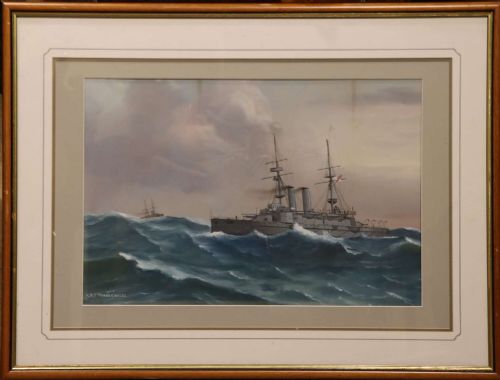
The works appearing in this collection take several distinct forms, including large-scale oil canvases, intimate watercolours, gouache studies, and portrait miniatures on agate or enamel. These pieces bridge the gap between historical documentation and fine art, reflecting changing artistic approaches across the Victorian, Edwardian, and earlier periods.
Most examples concentrate either on dramatic sea battles with raised sails and cannon fire or on formal portraits of admirals and officers in uniform. This dual focus allows a collector to choose between action-driven coastal scenes and character studies of naval leadership.
Materials and construction
Artists relied primarily on oil paint applied to stretched canvas or wood panels, utilising the medium's depth to render tumultuous seas and complex rigging. Watercolours and gouache on paper offer a lighter alternative, capturing the atmospheric conditions of coastal views with swift brushwork.
Framing forms an integral part of these pieces, with period works often housed in traditional wood frames, maple-veneered surrounds, or gold-mounted settings. Specialised miniature works utilise delicate supports like agate panels and enamel, demanding precise handling by portrait specialists.
British Naval Painting Retail Price Guide 2026
Typical asking prices for british naval painting among the pieces listed under this phrase on Sellingantiques today, from the lower quarter to the upper quarter. They describe what is for sale here now, not the wider market.
Materials in this category span oil on canvas, watercolour, gouache, and enamel on agate.
Markers of distinction
The distinction between standard works and superior examples often rests on the accuracy of maritime detail, such as the correct rigging of a frigate or the precise configuration of a warship's hull. Works executed by documented artists or those with clear historical provenance regarding the subject command greater attention.
Execution and medium stability dictate the longevity and visual impact of each piece. Superior oil paintings retain rich pigment depth in the water and sky without excessive darkening, while watercolours maintain their crisp lines and paper integrity.
Beechey·Bernard Gribble·Charles William Adderton·Henry Bone ARA·Sir Thomas Lawrence PRA·Francis Holman·Robert Ker Porter·Ambrosini Jerome
The British Naval Painting Glossary
- Frigate
- A fast, medium-sized warship with three masts, frequently depicted in maritime art patrolling coastal waters or engaging in combat.
- Gouache
- An opaque watercolour medium that dries to a matte finish, allowing artists to build dense highlights on paper.
- Provenance
- The documented history of ownership of an artwork, which helps verify attribution and historical context.
- Miniature portrait
- A small, highly detailed painting, often executed on ivory, vellum, enamel, or agate, designed for intimate viewing or locket mounting.
- Seascape
- A work of fine art that depicts the sea, coastal views, or naval engagements as the primary subject.
British Naval Painting: Frequently Asked Questions
How do I identify the age of a painting?
Dating relies on stylistic clues, framing materials, and the costume or naval uniforms worn by any figures depicted. Canvas types and stretcher construction also offer physical evidence of the period.
Historical records matching named vessels, such as specific frigates or nineteenth-century warships, further narrow the window of creation.
What is the difference between marine oils and watercolours?
Oil paintings on canvas offer rich textures and deep tonal ranges, making them ideal for dramatic, large-scale depictions of sea battles and rough weather.
Watercolours on paper provide a more immediate, luminous quality that captures coastal light and finer atmospheric details with translucent washes.
Where should I hang a large maritime oil?
These substantial works require sturdy wall fixings and benefit from rooms with controlled natural light to prevent glare on the varnished surface.
Placing them away from direct heat sources ensures the canvas and traditional wood frame remain stable over time.
Are miniature portraits considered naval paintings?
Miniatures depicting named admirals, captains, or officers in naval uniform form a recognised category within military and maritime art.
Though smaller in scale, they share the same historical documentation purpose as larger canvas works.