



British Dog Print
A british dog print captures canine character through various historic techniques, offering collectors a tangible piece of domestic and sporting history.
British Dog Print
A british dog print encompasses framed works on paper, etchings, and lithographs spanning from the nineteenth century into the twentieth century. These pieces record canine companions, working animals, and patriotic symbols across distinct artistic movements.
Landscapes, animal portraits, and sporting subjects dominate the offerings, reflecting how artists across different decades depicted the close relationship between humans and dogs. Each piece brings a specific period aesthetic to the wall, ranging from Victorian sentiment to wartime resilience.
Materials and production methods
These works rely primarily on paper supports combined with ink, watercolour, or pastel pigments to form the core imagery. Etchings utilise metal plates for drypoint lines, whilst lithography employs stone or metal surfaces to transfer detailed illustrations.
Framing materials incorporate wood and gilded wood, often protecting the delicate paper and glass elements that preserve the artwork. Artists applied oil on canvas for broader painterly depictions, contrasting with the fine line work found in period etchings.
British Dog Print Retail Price Guide 2026
Typical asking prices for british dog print among the pieces listed under this phrase on Sellingantiques today, from the lower quarter to the upper quarter. They describe what is for sale here now, not the wider market.
Assessing quality in prints and paintings
Quality rests upon the clarity of the line work, the preservation of the paper, and the skill with which the artist captures canine anatomy and expression. Finer drypoint etchings exhibit crisp plate marks and rich ink density that define the texture of the animal's coat.
The relationship between the artist's hand and the mechanical reproduction distinguishes original fine art prints from standard commercial copies. Superior examples retain vibrant pigments and balanced composition, whereas lesser works suffer from fading or muddy tones.
C. H. Weigall·Mabel Gear·Florence Mabel Hollams·Herbert Dicksee·Sonia Lawson R.A.
The British Dog Print Glossary
- Drypoint etching
- A printmaking technique where an artist scratches a design directly onto a metal plate with a sharp needle, raising a burr that holds ink for a velvety line. This method produces distinctive textured impressions highly valued by collectors.
- Lithograph
- A planographic printing process based on the antipathy of oil and water, allowing artists to draw directly onto a stone or metal plate. It enables rich tonal gradations and precise reproduction of fine art.
- Victorian Pastoral
- An artistic style from the nineteenth century celebrating rural life, agricultural scenes, and domestic animals in idyllic countryside settings. These works often evoke a romanticised view of the British landscape.
- Pastel
- A medium consisting of powdered pigment combined with a binder and moulded into sticks, applied directly to paper to create velvety colour fields. It requires glass protection due to its fragile surface.
British Dog Print: Frequently Asked Questions
What periods do these pieces date from?
The works span from the nineteenth century through the mid-twentieth century, covering Victorian, Edwardian, and later British art movements. Dates recorded on this page range from the 1830s lithographs up to 1950s pastels.
Different decades brought distinct aesthetic approaches, shifting from detailed sporting illustrations to expressive wartime imagery and modern interpretations.
How are original etchings distinguished from reproductions?
Original etchings display plate marks where the edges of the metal plate pressed into the damp paper during printing. They also feature the raised burr left by the drypoint needle, which holds a characteristic depth of ink.
Modern photographic reproductions lack these physical indentations and ink textures, appearing entirely flat under magnification.
How should framed paper pieces be displayed?
Framed paper works require placement away from direct sunlight to prevent the fading of inks and watercolours over time. Maintaining stable indoor humidity levels also protects the paper support and wooden frames from warping.
Using conservation-grade glass helps shield delicate pigments from ultraviolet radiation whilst keeping the artwork secure within its period frame.
What subjects feature in these canine artworks?
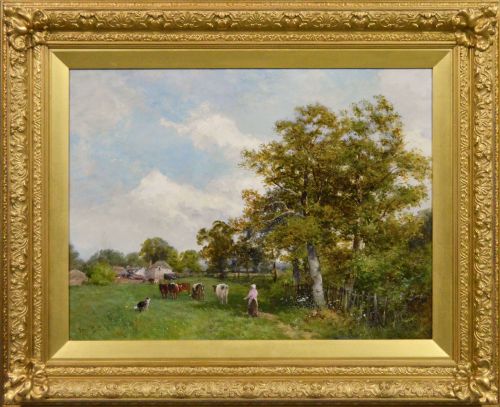
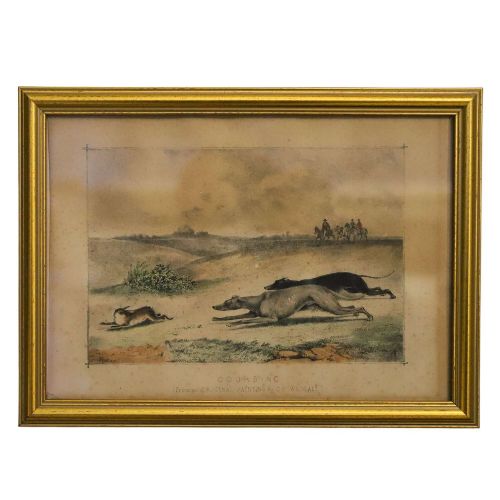
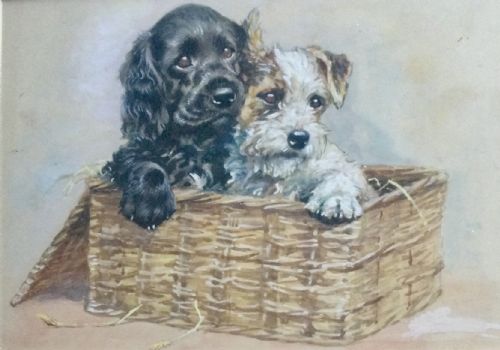
The subjects range from working spaniels and terriers to bulldogs, Pekingese, and hounds involved in field sports like hare coursing. Some pieces portray working animals within wider pastoral landscapes alongside livestock.
Other works capture specific cultural moments, such as wartime bulldogs reflecting British resilience during the 1940s.