




British Dog Art
British dog art captures canine companions within nineteenth and twentieth-century paintings, watercolours and etchings.
British Dog Art
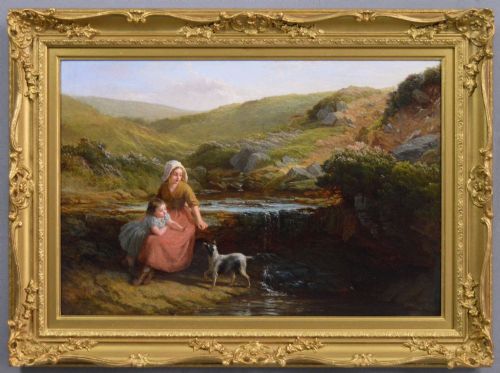
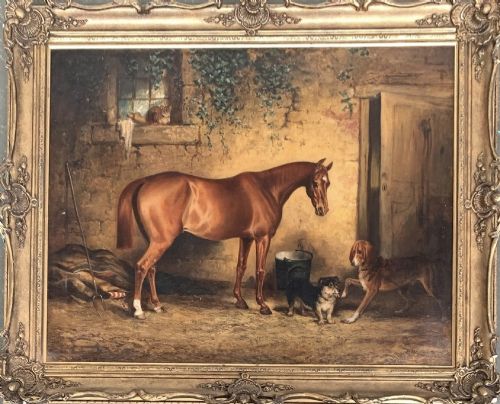
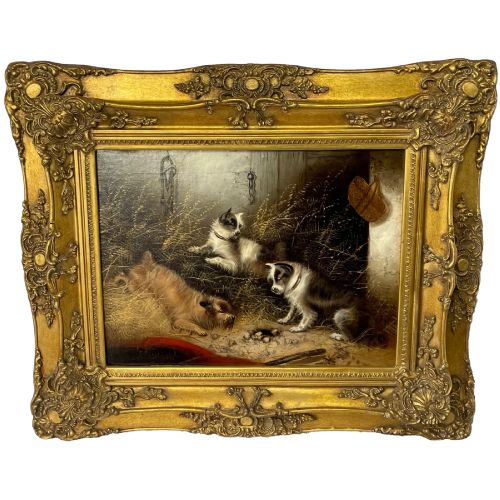
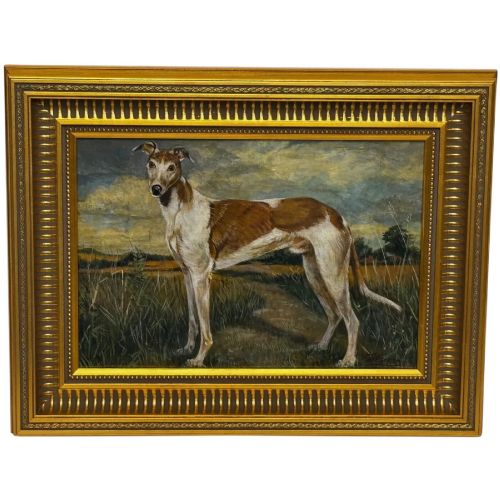
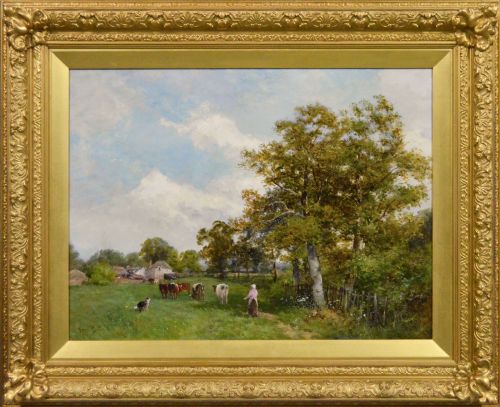
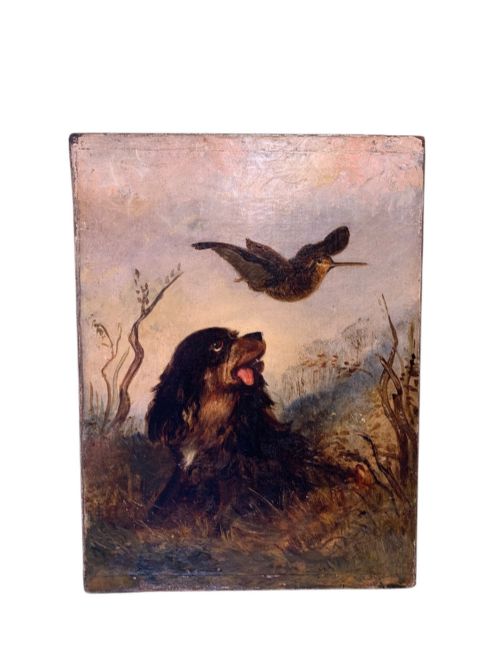
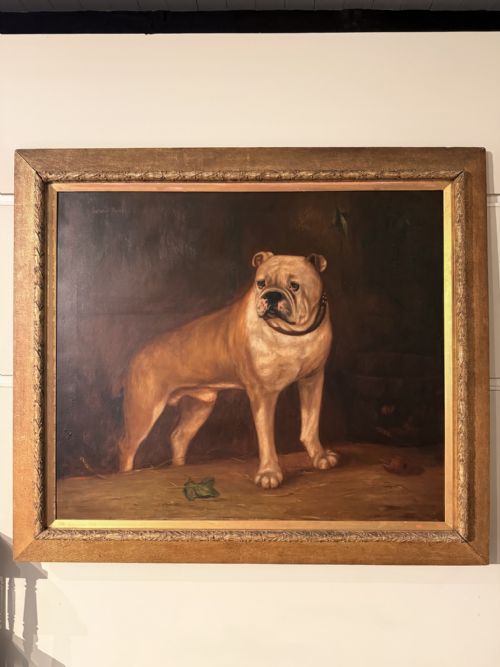
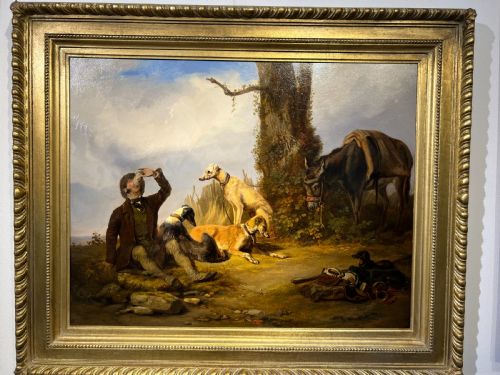
When you examine British dog art, you encounter oil on canvas, watercolour and original etchings depicting working terriers, spaniels, collies and bulldogs. These pieces record canine subjects either as dedicated animal portraits or as participants within genre scenes, landscapes and sporting watercolours.
The selections span from the Victorian and Edwardian eras into the mid-twentieth century, showing working dogs, favourite pets and hunting packs. Oil paintings and framed watercolours dominate the selection, offering a direct window into historical domestic and rural life.
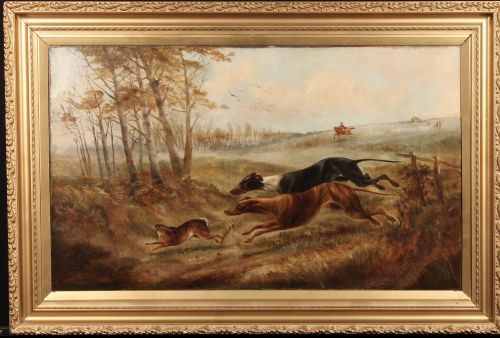
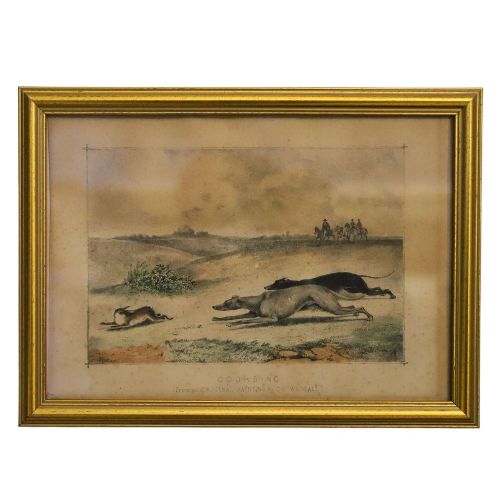
Works range from detailed sporting art documenting hare coursing and hound packs to naive interiors and intimate family portraits featuring beloved pets. Each piece reveals how artists across different decades chose to portray the character and physical presence of dogs.
Materials and methods
Painters utilised oil on canvas or oil on board, building rich textures with layered pigments to render the sheen of a dog coat and the varied tones of landscapes. Watercolours on paper offer a lighter, immediate touch, often capturing delicate facial expressions and domestic settings with transparent washes.
Printmakers applied etching and drypoint techniques to paper, scoring fine lines that allowed plates to hold ink for detailed impressions of bulldogs and terriers. Frames often incorporated wood and gilt leaf, completing the presentation of these historical artworks.
British Dog Art Retail Price Guide 2026
Typical asking prices for british dog art among the pieces listed under this phrase on Sellingantiques today, from the lower quarter to the upper quarter. They describe what is for sale here now, not the wider market.
The collection includes both detailed individual portraits of named pets and wider rural genre scenes incorporating working terriers and hound packs.
Distinctions in quality
Anatomy and proportion separate standard works from accomplished portrayals, as skilled painters accurately capture the bone structure, muscle tone and alert posture specific to each breed. The handling of fur texture, light fall and background integration determines the depth and realism achieved across canvas or paper.
The reputation of the artist and the documentation of provenance elevate certain pieces, distinguishing named Victorian and Edwardian hands from anonymous studio output. Condition of the underlying canvas or paper, alongside the preservation of original pigments, influences the visual impact of the artwork.
Edward Holmes RBA·Henry Barraud·Edward Armfield·Valentine T Garland·David Bates·Sir Edwin Henry Landseer·CH Weigall·John Emms·Arthur Wardle·William Barraud·John Trivett Nettleship·Michael Lyne·Mabel Gear·Daniel Pasmore·Sydney Kendrick·Molly Maurice Latham·Florence Mabel Hollams·Philip Eustace Stretton·Eliza Maddock·Dixon Clark·George Cole·Arthur Claude Strachan·Frederick Tayler·Samuel John Carter·Herbert Dicksee
The British Dog Art Glossary
- Drypoint etching
- A printmaking process where an artist scratches a design directly onto a metal plate with a sharp needle. This technique produces velvety lines that hold characteristic burr during printing.
- Genre painting
- The depiction of subjects from everyday life, ordinary people, and domestic scenes. These works frequently include family pets participating naturally in the narrative.
- Sporting art
- Artwork focused on hunting, shooting, fishing, horses and hound packs. This tradition emphasises field sports and working animal portraits.
- Provenance
- The chronological history of the ownership of a work of art. Documented records help verify authorship and historical authenticity.
- Watercolour
- A painting method where coloured pigments are suspended in a water-based solution. Artists apply these transparent washes onto paper to achieve luminous effects.
British Dog Art: Frequently Asked Questions
What periods do these pieces date from?
The works predominantly date from the nineteenth and twentieth centuries, spanning Victorian, Edwardian and later periods.
Artists active during these decades produced oil paintings, watercolours and etchings reflecting contemporary tastes in animal portraiture.
How should I care for a watercolour painting?
Watercolour paintings require protection from direct sunlight to prevent the fading of delicate pigments on paper.
Displaying them away from moisture and humid environments preserves the integrity of both the paper support and the framing materials.
What is the difference between an oil and a watercolour?
Oil paintings utilise pigments suspended in drying oils applied to canvas or board, allowing for rich texture and deep colour layering. Watercolours employ water-soluble pigments on paper, creating translucent washes and a lighter overall visual effect.
Both media were widely used by British artists to depict canine subjects.
How can I identify different dog breeds in antique art?
Artists often recorded specific working and sporting types such as rough collies, spaniels, terriers and bulldogs with notable anatomical accuracy. Examining ear shape, coat length and body proportions helps distinguish historical representations of specific breeds.
Titles and inscriptions on the reverse or frame occasionally provide direct identification.