

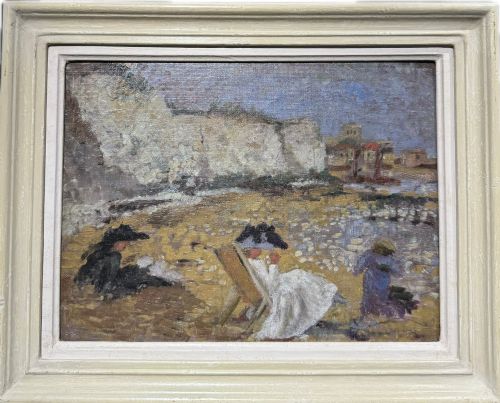


British Coastal Beach Seascape
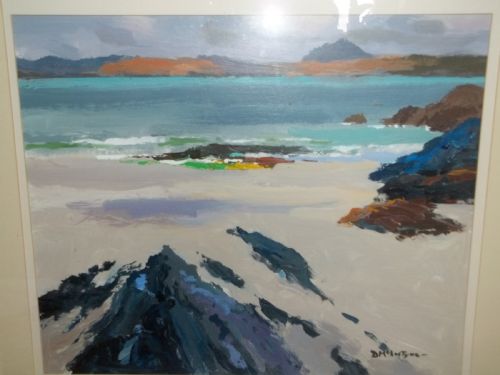
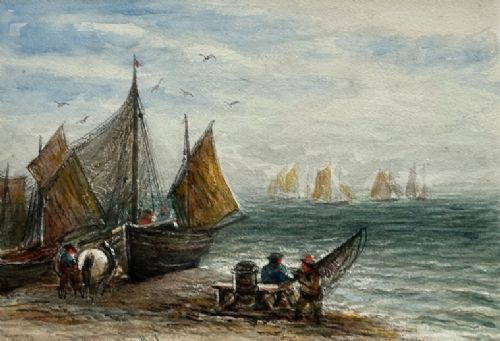
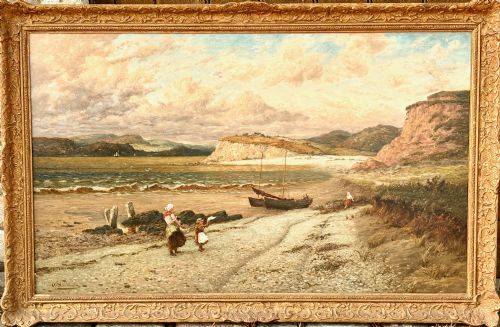
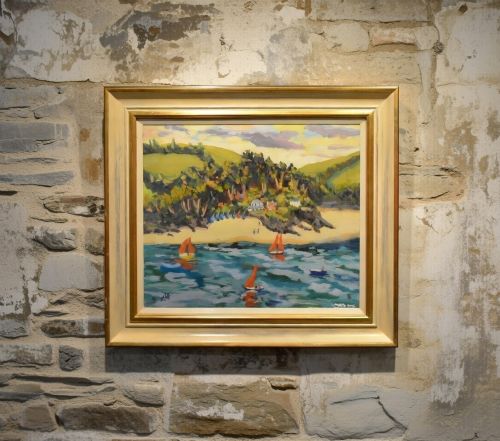
British coastal beach seascape works capture the shores of Britain across the nineteenth and twentieth centuries through oils and watercolours.
British Coastal Beach Seascape
A British coastal beach seascape records harbours, fishing boats, and shorelines along locations such as St Ives, Hastings, and Whitby.
These works appear predominantly as watercolours on paper and oil paintings on canvas, spanning periods from the nineteenth century into the later twentieth century.
The subjects range from Victorian fisher folk hauling nets to twentieth century interpretations by modern British painters.
Materials and Techniques
Artists built these scenes using oil paint on canvas or watercolour pigment applied to paper.
Wood served frequently as a material for framing these paintings to protect the canvas or paper surface.
Fisher folk share these beaches with children playing in the surf and seaweed gatherers at low tide.
Quality Variations
The strength of a piece rests on the handling of light across water and sand, alongside the accuracy of regional topography.
Skilled brushwork in oils or delicate transparency in watercolours distinguishes the finest examples from standard topographical views.
James Orrock·William Banks Fortescue·Sir William Russell Flint·Thomas Bush Hardy·Donald McIntyre
The British Coastal Beach Seascape Glossary
- Watercolour
- A paint consisting of colour pigment suspended in a water-soluble vehicle, typically applied to paper.
- Canvas
- A heavy woven fabric used as a surface for oil painting, stretched across a wooden frame.
- Victorian
- Relating to the reign of Queen Victoria, a period noted for detailed marine and coastal fine art.
- Impressionism
- A style of painting focusing on light and its changing qualities rather than precise details.
British Coastal Beach Seascape: Frequently Asked Questions
What periods do these paintings cover?
The selections span the nineteenth century, the Victorian era, and various decades of the twentieth century up to the nineteen-sixties.
Works range from early Victorian watercolours to later twentieth-century modernist canvases.
What mediums are used?
Paintings are executed in oil paint or watercolour pigment.
Supports consist chiefly of canvas and paper.
How do I care for a watercolour?
Watercolours on paper require protection from direct sunlight to prevent the pigments from fading.
Framing behind glass with proper conservation mount board keeps the paper stable.