


British Art Ceramics
British art ceramics comprise decorative vessels, figures and plaques originating in the Victorian, Edwardian and later periods.
British Art Ceramics
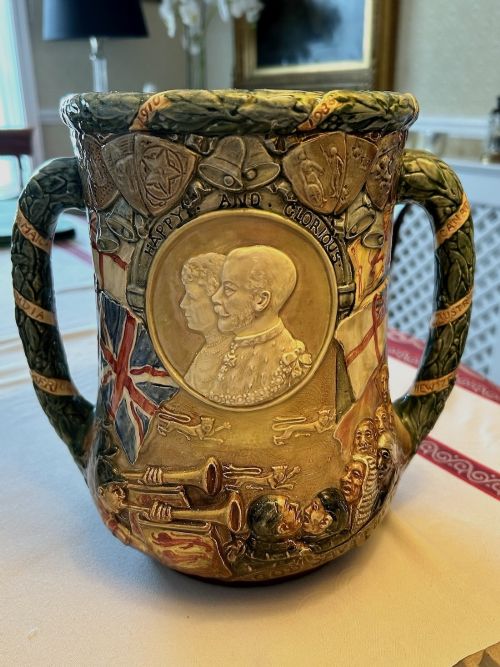
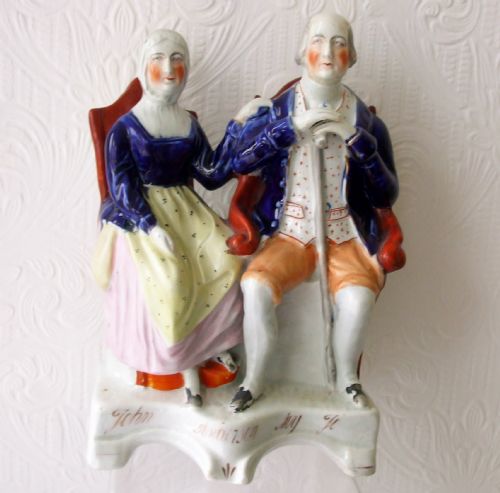
British art ceramics encompass diverse decorative objects shaped in stoneware, earthenware and porcelain, reflecting stylistic movements from Victorian Art Pottery to Art Deco. Buyers seeking British art ceramics encounter varied forms including twin-handled vases, commemorative loving cups, tygs, umbrella stands and portrait figures.
The pieces appearing most frequently originate from the later nineteenth century and the early decades of the twentieth century, with notable representation from Doulton Lambeth and Moorcroft. These items demonstrate distinct regional craftsmanship spanning the Victorian, Edwardian, 1920s and 1930s periods.
How they were made
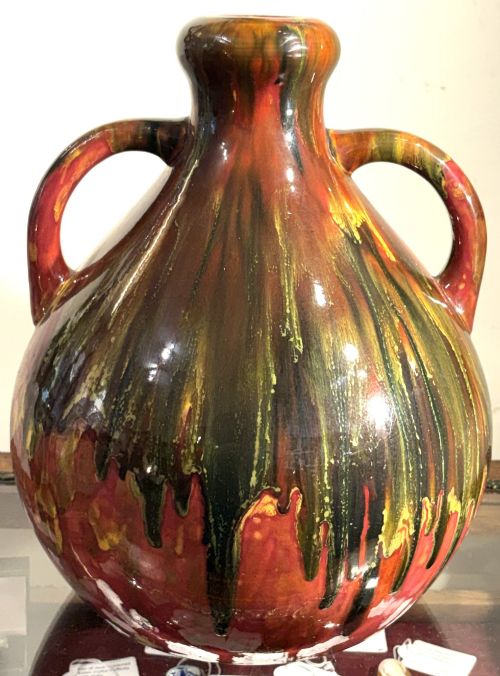
Makers utilised stoneware and earthenware bodies shaped into vessels and figures, often finished with specialised glazes such as the Flamminian style. Decoration involved hand-painted pigments and applied slip techniques.
Surface ornamentation frequently incorporated incised patterns, pâte-sur-pâte work and silver mounts attached to ceramic bodies. Kiln firing fixed these glazes and mineral colours onto the earthenware and stoneware substrates.
John Anderson and his partner managed to secure permanent residency inside nineteenth-century Staffordshire pottery kilns.
What varies in quality
Quality rests upon the execution of the hand-painting, the depth and consistency of the glaze, and the sharpness of the modelled or incised decoration. Pieces decorated by named artists display superior artistic control.
The balance of the form and the ambition of the vessel shape distinguish standard production items from exceptional studio pieces.
Royal Doulton Lambeth·Burmantofts·William Moorcroft·Royal Worcester·Fulham Pottery·Poole Pottery
The British Art Ceramics Glossary
- Stoneware
- A dense, vitreous ceramic fired at high temperatures until non-porous. It accepts salt glazes and intricate incised decoration well.
- Earthenware
- A porous pottery body fired at lower temperatures that requires an impervious glaze to hold liquids. It forms the base for many decorative figures and painted vases.
- Tyg
- A large drinking vessel fitted with multiple handles designed for communal passing. They appear frequently in traditional pottery production.
- Slip
- Liquid clay applied to the surface of a ceramic piece for decoration or colouring before firing. It creates raised patterns and contrasting colour backgrounds.
- Plaque
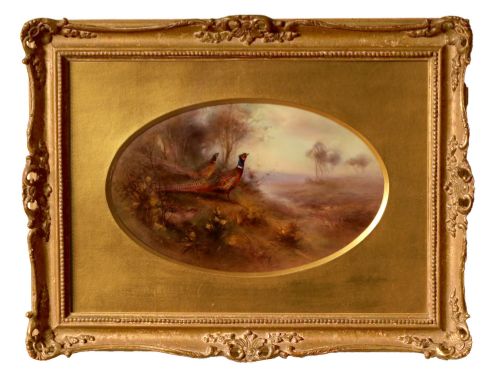
- A flat panel of porcelain or earthenware intended for display as wall art. They often carry detailed hand-painted floral or figural scenes.
British Art Ceramics: Frequently Asked Questions
What defines british art ceramics?
These pieces represent pottery produced by British kilns and studios focusing on artistic design rather than solely utilitarian output.
They span periods from the Victorian era through the twentieth century, encompassing wares from major factories and individual makers.
How do I identify a piece?
Look for impressed factory marks, incised artist monograms and paper labels preserved on the base.
Stylistic cues such as Art Nouveau floral motifs or Arts and Crafts glazes also help determine the period.
Were these items used daily?
Many vessels served decorative functions on mantelpieces or tables rather than routine household tasks.
Items like umbrella stands and commemorative loving cups balanced practical utility with ornamental display.
How should I display them?
Position ceramic vases and figures away from direct foot traffic to prevent accidental impact.
Stable shelving with adequate lighting highlights the glaze variations and hand-painted details.