



Bright Cut Engraved Spoons
Bright cut engraved spoons are sterling silver tableware pieces from the Georgian, Victorian and 1910 periods, sought after for their refined hand-chased decoration.
Bright Cut Engraved Spoons
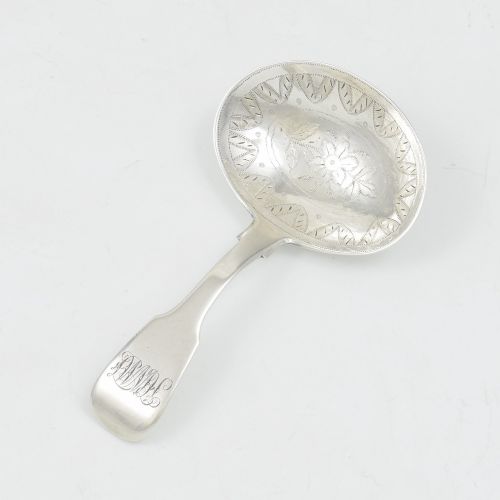
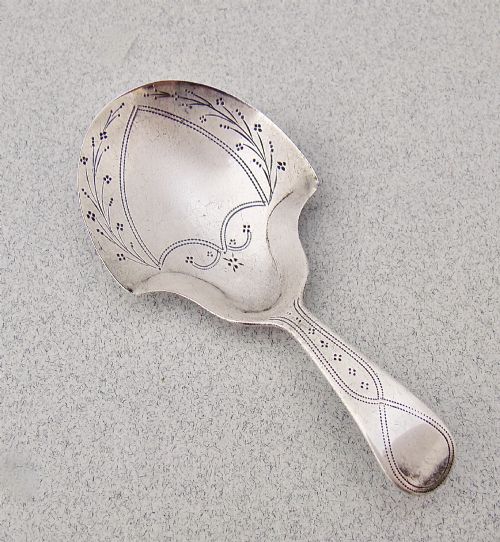
When you search for bright cut engraved spoons, you encounter small sterling silver items designed for tea service and dining use. These pieces primarily take the form of caddy spoons, alongside mustard pots, soup ladles, and dessert spoons.
The objects appearing on this page span the Georgian, 1800, 18th Century, 1910, and Victorian periods. You are most likely to meet Georgian caddy spoons featuring engraved handles, reflecting the dominant styles of the era.
Makers such as John Pittar, Michael Smith, and George Unite produced these items across Dublin, London, and Exeter. Each piece demonstrates specific regional silversmithing characteristics from the late eighteenth and early nineteenth centuries.
How they were made
These items are shaped from sterling silver using traditional smithing techniques suited to cutlery and hollowware. Silversmiths hammered and formed the metal before applying decorative surface work.
The distinct ornamentation relies on bright cut engraving, a method involving faceted cuts made with a graver to reflect light. Artisans used this technique to create geometric borders, shell motifs, and crests on handles and bowls.
Bright Cut Engraved Spoons Retail Price Guide 2026
Typical asking prices for bright cut engraved spoons among the pieces listed under this phrase on Sellingantiques today, from the lower quarter to the upper quarter. They describe what is for sale here now, not the wider market.
What varies in quality
Quality in these sterling silver items depends on the crispness and depth of the engraving work. Sharply faceted cuts that retain their geometric precision elevate a piece above worn or shallow surface decoration.
The weight of the metal and the clarity of the hallmarks also distinguish individual pieces. Clear town marks, date letters, and maker initials indicate careful workshop production and better overall preservation.
John Pittar·Michael Smith·George Unite
The Bright Cut Engraved Spoons Glossary
- Bright cut engraving
- A surface decoration technique using faceted angled cuts made with a graver to produce glittering light reflections. This method creates geometric borders and patterned highlights on the silver.
- Caddy spoon
- A short-handled spoon specifically designed for measuring loose tea leaves from a tea caddy. These small utensils frequently feature shell bowls and decorated handles.
- Sterling silver
- An alloy consisting of pure silver and other metals to increase durability while maintaining standard fineness. This material forms the base of all items in these listings.
- Hallmark
- An official stamp applied to precious metals indicating the standard of purity, the maker, and the year of assay. These marks provide secure dating for Georgian and Victorian pieces.
Bright Cut Engraved Spoons: Frequently Asked Questions
How were these spoons used?
Caddy spoons served a specific role in the formal tea service of the eighteenth and nineteenth centuries. They measured loose tea leaves from storage containers into the teapot.
Larger items like soup ladles and dessert spoons functioned at the dining table for serving and eating food. Their decorative engraving displayed the status and taste of the household.
How do I date a silver spoon?
Dating relies upon the official hallmarks stamped directly into the sterling silver metal. These tiny marks record the assay office, the maker, and a specific date letter.
By comparing the stamped letter against historical assay tables, you can determine the exact year the item was tested and approved.
How do I care for antique silver?
Antique silver requires gentle cleaning with non-abrasive cloths to preserve the delicate faceted engraving. Avoid harsh chemical dips that strip away the natural patination built up over centuries.
Store the items in dry conditions away from direct sunlight and humidity to protect the metal surface from tarnishing too quickly.