



Brass Weather Glass
Brass weather glass instruments record atmospheric pressure changes in polished metal cases.
Brass Weather Glass
A brass weather glass encompasses barometers, barographs and scientific instruments designed to measure atmospheric changes and forecast meteorological shifts. When searching for a brass weather glass, a buyer encounters domestic recording devices dating from the Georgian, Victorian and Edwardian periods.
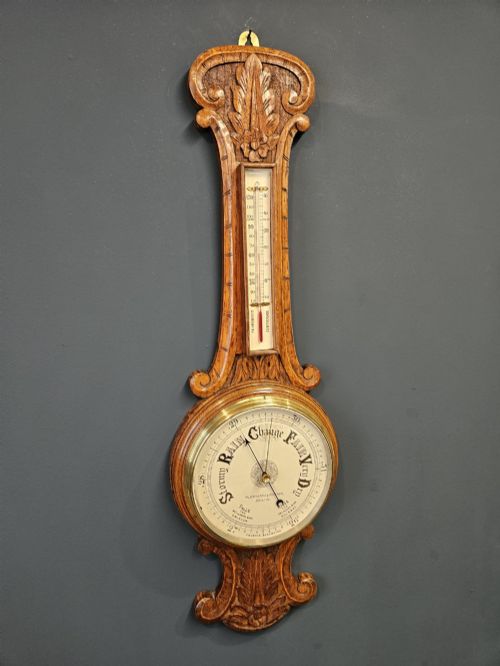
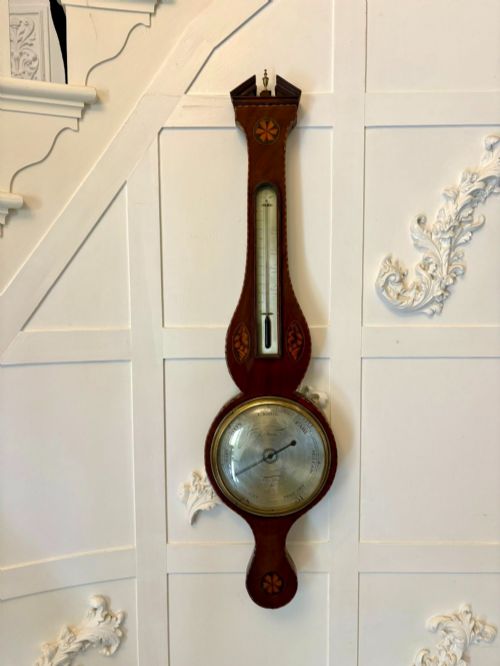
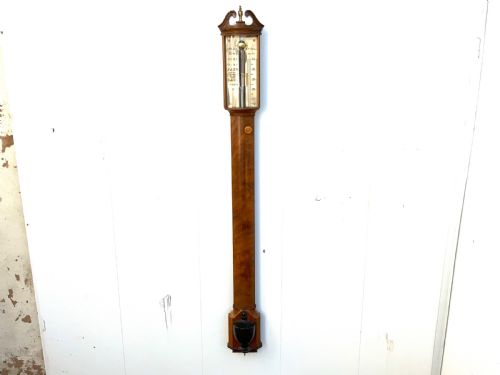
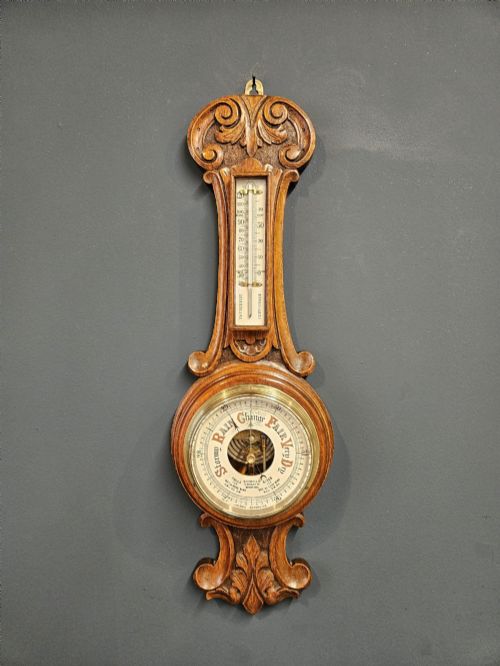
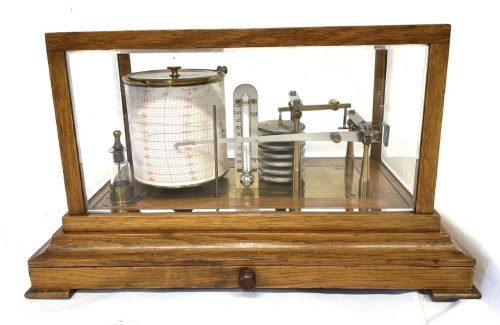
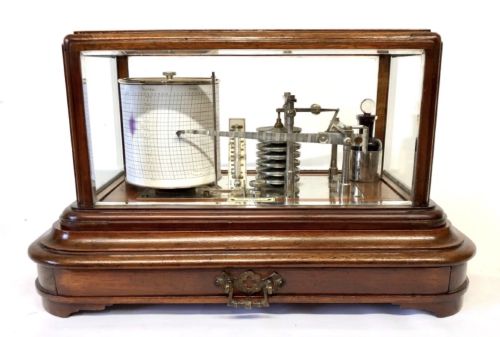
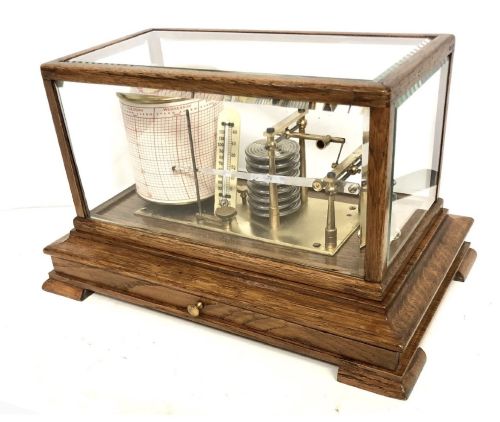
The selections on this page span wall-mounted stick barometers, banjo barometers with subsidiary dials, and heavy oak-cased barographs furnished with chart drawers and bevelled glass. These instruments combine utility with period cabinet-making, utilising brass dials, bezels and mercury tubes to display changing pressure.
Most examples meet on this page originate from nineteenth-century workshops, ranging from modest domestic aneroid models to substantial marine barometers housed in rosewood or mahogany. The forms reflect the evolution of scientific instrument manufacture alongside domestic interior decoration.
How they were made
Cases utilise solid timbers such as mahogany, oak, walnut and rosewood, shaped into banjo profiles, stick frames or five-glass table boxes. Cabinet-makers incorporated shell inlay, geometric carvings and satinwood banding into the wood housings.
Metalwork relies heavily on cast and spun brass for bezels, dials, gimbals and cistern covers, paired with silvered metal scales for reading barometric pressure. Bevelled glass protects the moving levers and paper charts inside barographs.
Brass Weather Glass Retail Price Guide 2026
Typical asking prices for brass weather glass among the pieces listed under this phrase on Sellingantiques today, from the lower quarter to the upper quarter. They describe what is for sale here now, not the wider market.
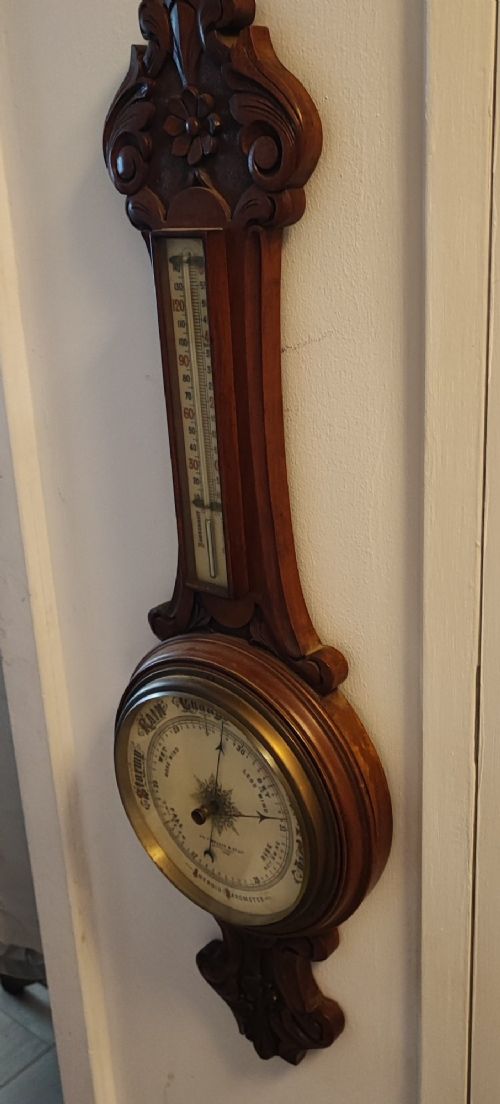
Some Victorian oak barometers feature hand-carved birds keeping watch over the forecast.
What varies in quality
The grade of an instrument rests upon the crispness of the brass engraving, the weight of the timber case and the precision of the internal mechanical movement. Signed dials by noted makers command greater attention than unsigned commercial iterations.
Subtleties in cabinet-making, such as hand-carved wooden mounts depicting birds or foliage rather than mass-produced press-mouldings, distinguish finer examples from standard workshop output.
Gaupp and Co·Short and Mason·Elliott Brothers·Negretti and Zambra·Baines Harrogate
The Brass Weather Glass Glossary
- Barograph
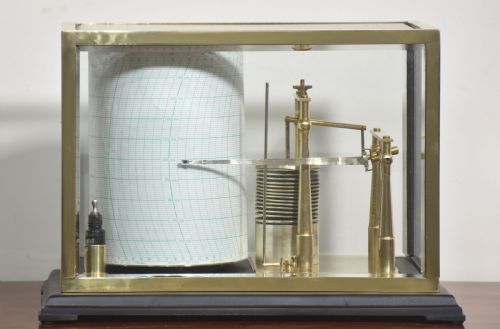
- A self-recording aneroid barometer that traces pressure fluctuations onto a rotating drum holding a paper chart. The clockwork mechanism inside drives the drum over the course of a week.
- Stick Barometer
- A tall, narrow instrument containing a vertical glass tube filled with mercury, mounted against a wooden backboard. This form offers a direct and precise reading of atmospheric pressure.
- Aneroid Barometer
- A barometer that measures pressure using a flexible-walled sealed metal capsule that expands or contracts. This design avoids the use of liquid mercury entirely.
- Banjo Barometer
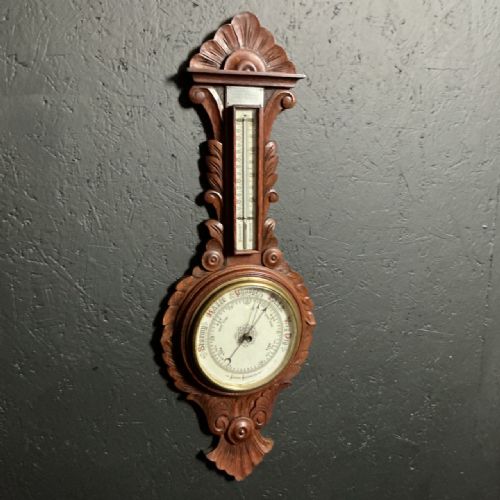
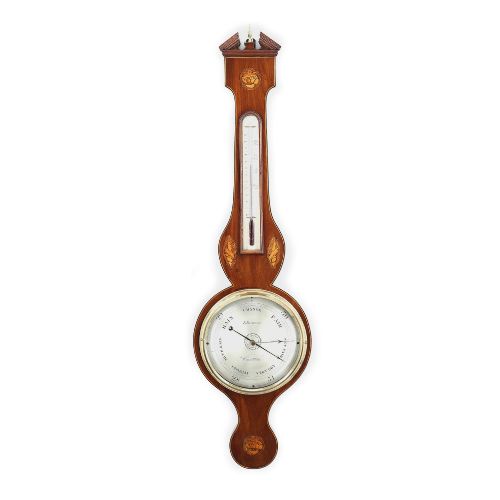
- A domestic barometer housed in a distinctive curved wooden case resembling a banjo. It typically incorporates a hygrometer, thermometer, spirit level and a large circular dial.
- Skeletonised Movement
- An instrument design with the structural plates cut away to expose the working gears and levers. This allows the observer to view the internal mechanics directly through glass.
Brass Weather Glass: Frequently Asked Questions
How do I read a brass weather glass?
Read the main dial by observing the position of the pointer relative to engraved weather descriptors like 'Rain', 'Change' and 'Fair'. On barographs, follow the ink line traced on the rotating chart drum over recent days.
Tapping the glass gently before reading helps settle the mechanical linkage to show the true current pressure.
Where should I hang a stick barometer?
Mount the instrument on an interior wall away from direct sunlight, radiators and draughty doorways. Temperature stability ensures the mercury or internal metal capsule registers genuine atmospheric shifts rather than room heat.
Secure the case firmly to the wall using appropriate fixings to prevent accidental knocks to the delicate frame.
What is the difference between an aneroid and a mercury barometer?
Aneroid barometers use a sealed vacuum metal box that moves levers connected to a dial pointer, avoiding liquid altogether. Mercury barometers use a column of liquid metal balanced against atmospheric pressure.
Both track weather patterns effectively, though mercury stick versions offer traditional calibration.
How do I care for the brass case?
Dust the brass bezels and fittings regularly with a soft, dry cloth to prevent tarnishing. Avoid abrasive metal polishes that can wear away the original lacquer or fine engraving.
Treat the wood case with appropriate wax polish according to the timber finish.