
Brass Wall Rack
A brass wall rack brings disciplined utility to an entrance hall, offering a sturdy place to hang coats, hats or letters.
Brass Wall Rack
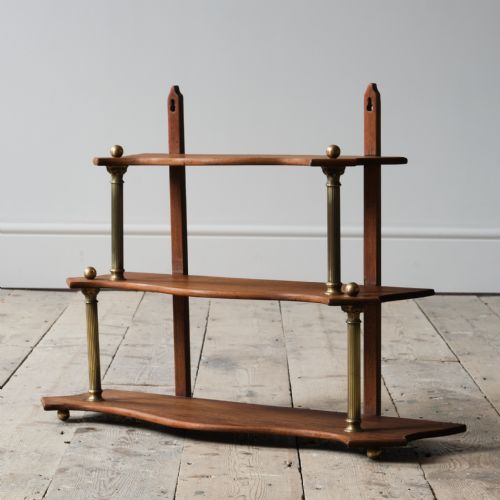
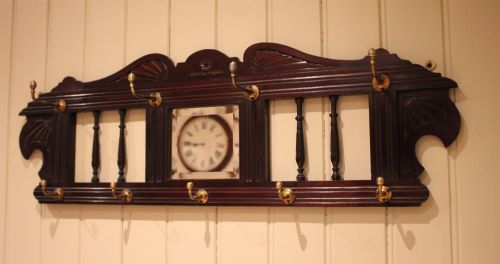
A brass wall rack combines functional metal hardware with wooden backboards or structural frames designed for domestic organisation. When searching for a brass wall rack, buyers encounter Victorian coat racks, French portmanteaus, and letter racks spanning the nineteenth and early twentieth centuries.
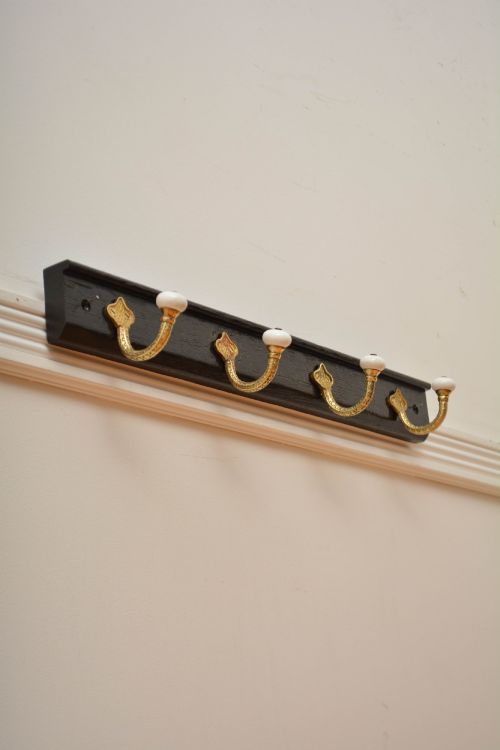
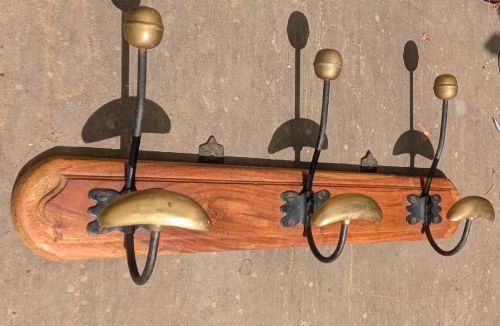
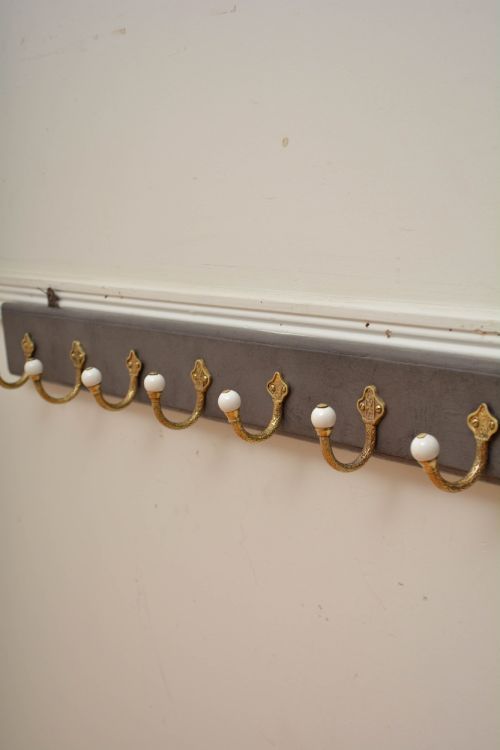
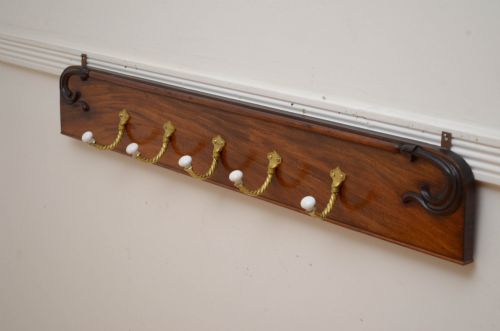
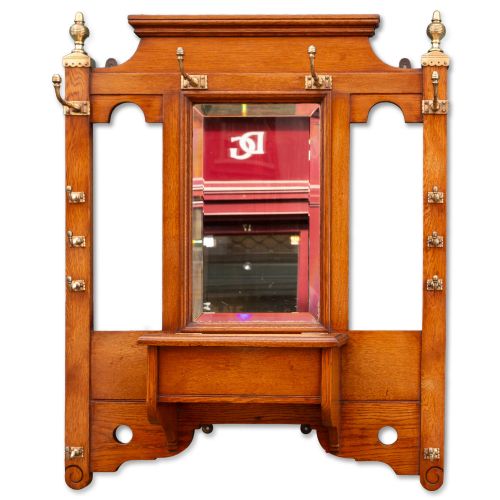
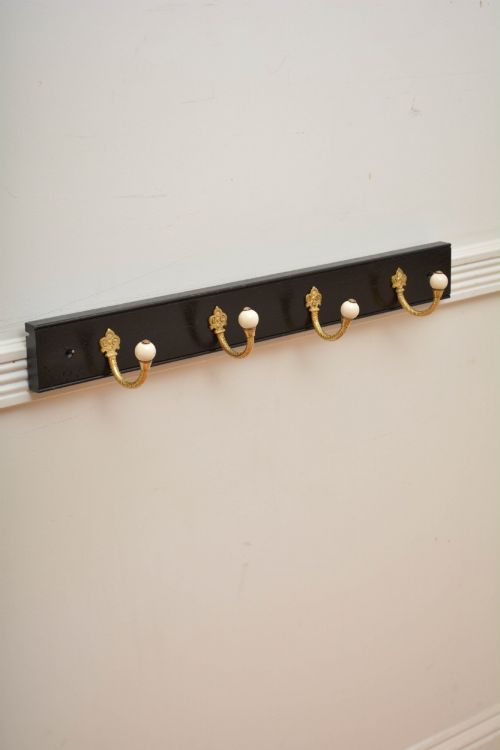
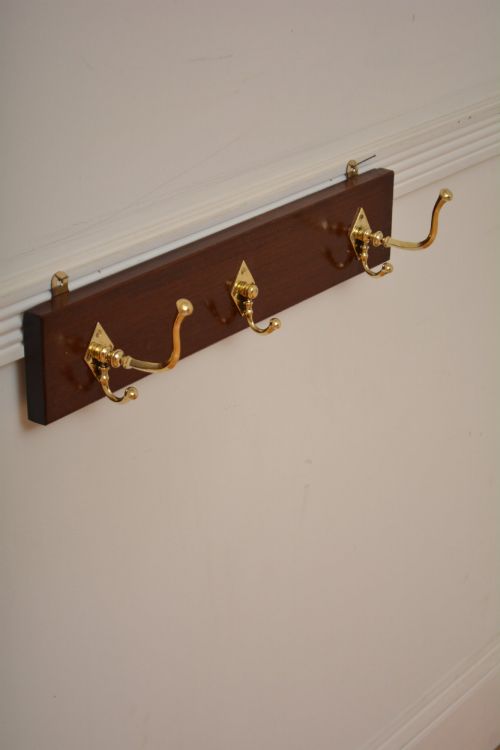
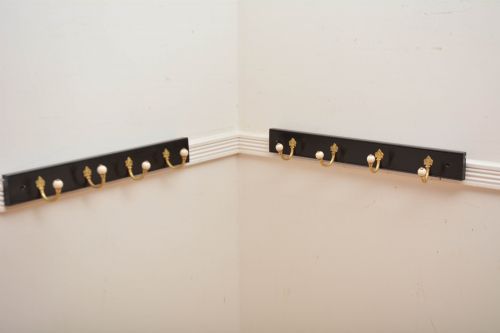
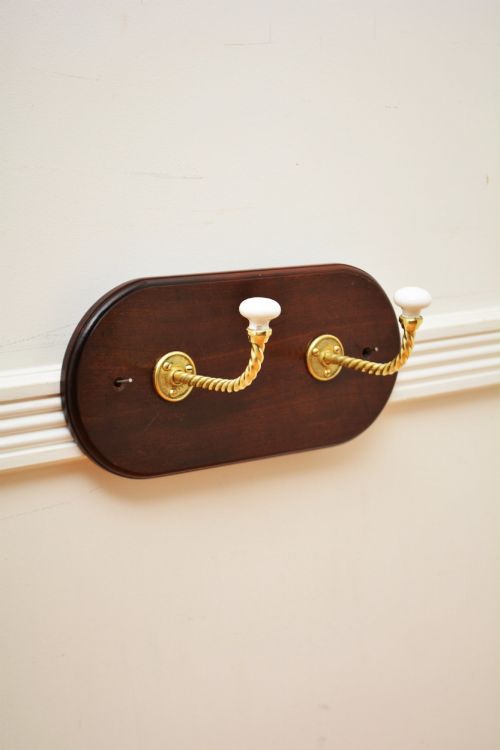
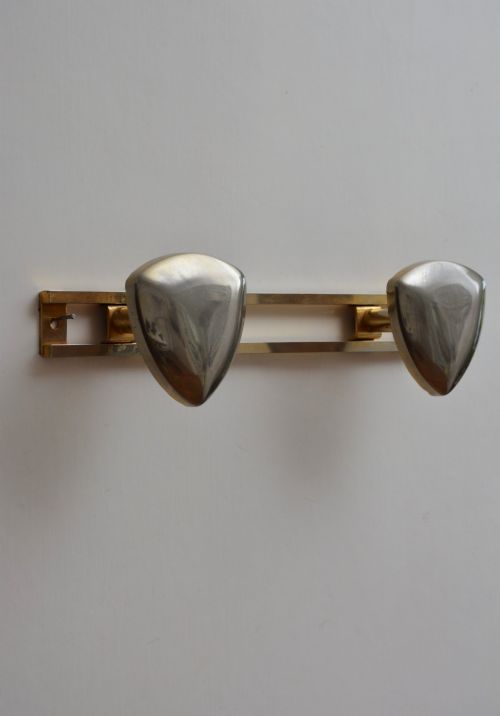
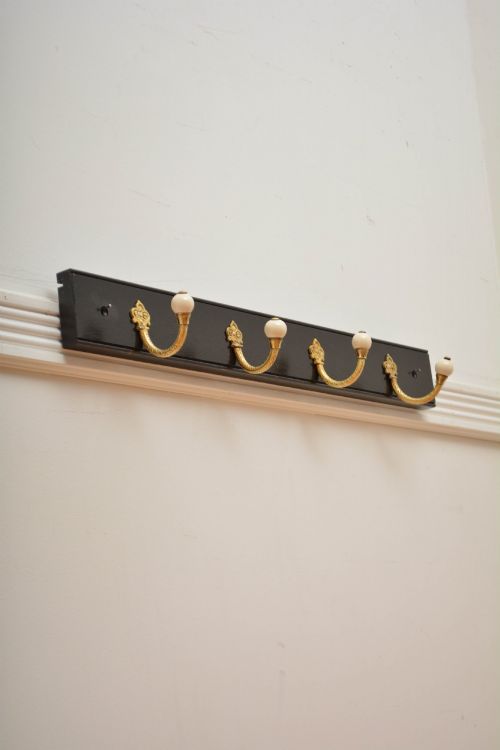
The format ranges from simple rows of cast brass hooks mounted on mahogany or oak boards to elaborate multi-tier portmanteaus featuring integrated mirrors and shelves. Pieces originating from French chateaux or English country houses frequently incorporate decorative motifs such as ceramic knobs or shield-shaped backplates.
Materials and construction
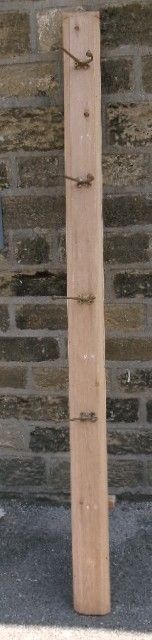
Makers mounted cast and chased brass hooks onto solid timbers including mahogany, oak, pine, and ebonised wood using traditional screw fixings. Many examples integrate ceramic or porcelain knobs alongside metal elements to prevent snagging on garments.
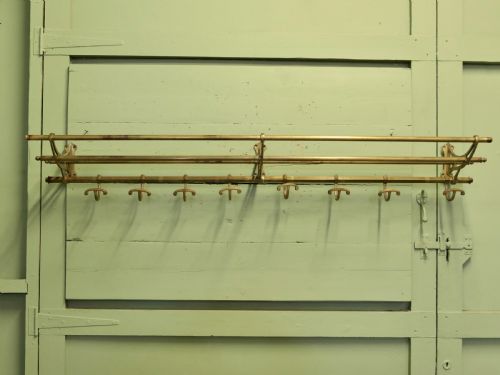
Structural complexity varies from single backboards to multi-tier luggage racks and folding newspaper holders employing brass hinges and brackets.
Several pieces include folding mechanisms, proving that nineteenth-century households appreciated space-saving convenience just as much as modern ones do.
Factors separating examples
The distinction between standard utility items and finer examples lies in the weight of the casting and the quality of the timber backboard. Well-modelled brass mounting plates with crisp chasing and original bevelled mirror plates command greater appreciation than plain replacements.
Integrity of surface finish and the retention of matching original hooks across an entire rail indicate superior original manufacture.
William Tonks and Sons
The Brass Wall Rack Glossary
- Portmanteau
- A combined wall-mounted rack featuring hat hooks, a mirror, and sometimes a small shelf or compartment for personal effects. These items served busy Victorian and Edwardian hallways.
- Backboard
- The wooden panel providing structural support for mounted hooks and shelves. These boards often feature shaped edges or contrasting timber inlays.
- Cast brass
- Molten metal poured into a mould to create three-dimensional hooks and decorative mounting plates. This technique allowed for ornate Victorian and Edwardian ornamentation.
- Chasing
- Hand-finishing metal surfaces with small punches and chisels to sharpen details after casting. This decorative work appears on higher quality hardware.
Brass Wall Rack: Frequently Asked Questions
How do I mount an antique rack securely?
These pieces require solid fixings into wall studs or masonry due to the combined weight of dense hardwood and solid brass.
Matching the original screw hole spacing or using concealed mounting brackets preserves the backboard while ensuring safety under load.
Were these racks used only for coats?
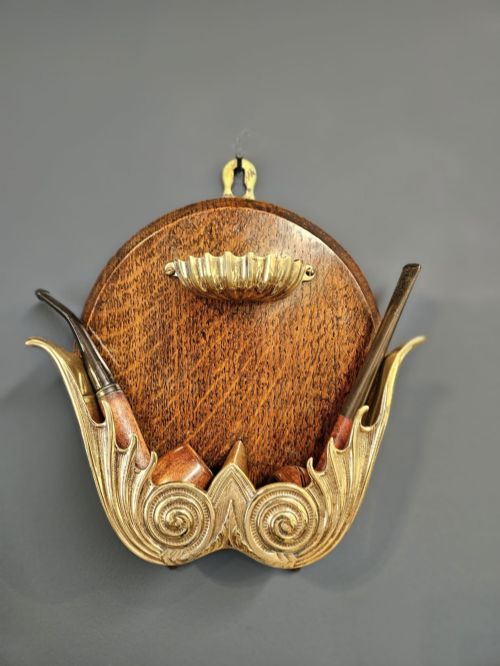
Domestic wall racks served multiple functions depending on their specific form, holding everything from outerwear and hats to letters and newspapers.
Smaller letter racks and stationery holders were standard fixtures in reception rooms and hallways for daily correspondence.
How should I clean aged brass hardware?
A gentle dusting and occasional wipe with a soft cloth maintains the accumulated patina developed over generations of use.
Harsh metal polishes strip the characteristic dark oxidation valued by collectors, so cleaning should remain minimal.
What timber types are most common?
Mahogany and oak predominate across English and French pieces, often finished with ebonising or polished to a deep natural lustre.
Pine served as a utilitarian backing timber on simpler workshop pieces.