





Brass Twist Candlesticks
These brass twist candlesticks bring warmth to a room through their tactile stems and heavy metal weight.
Brass Twist Candlesticks
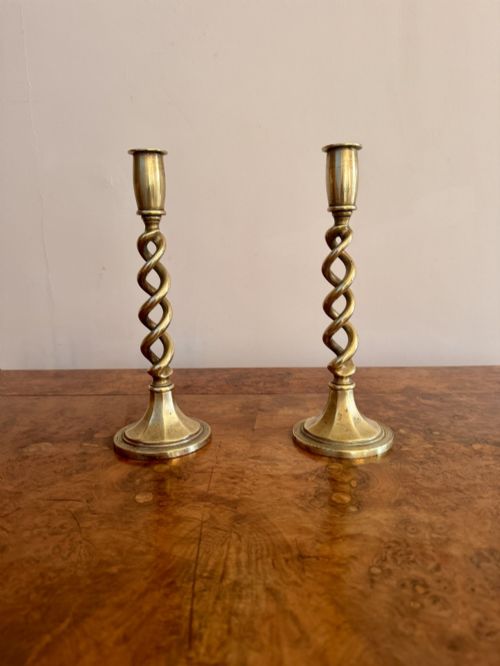
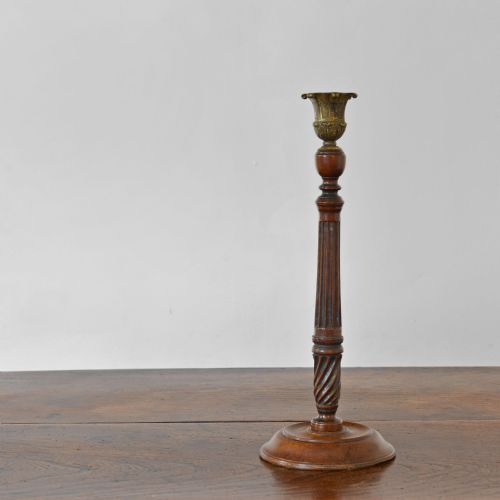
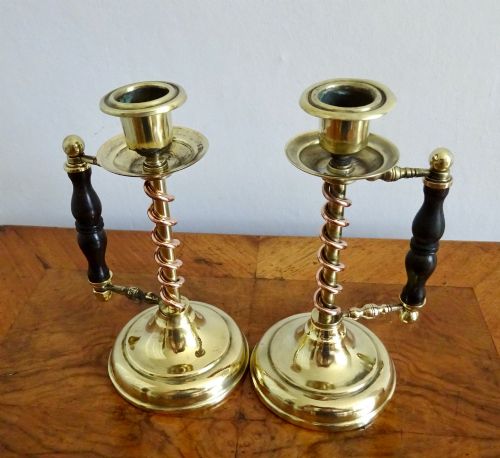
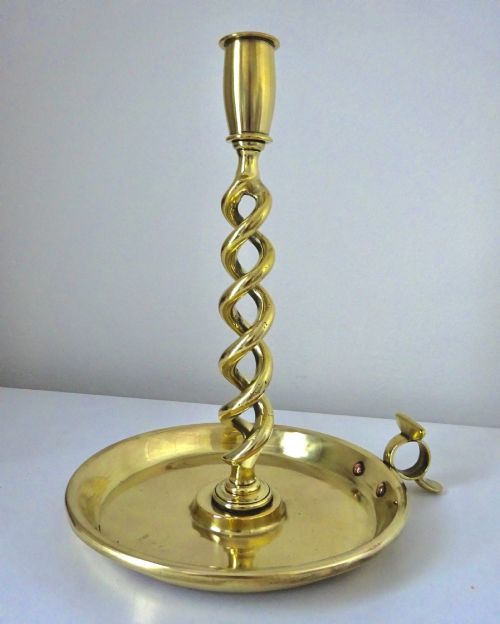
Brass twist candlesticks are candleholders featuring spiralling stems produced across the Victorian, Edwardian, and Georgian periods. The design employs a helical or barley twist shaft that catches candlelight differently than a standard smooth column.
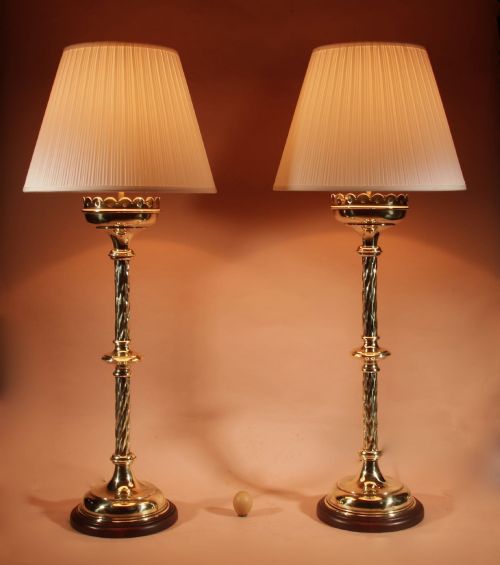
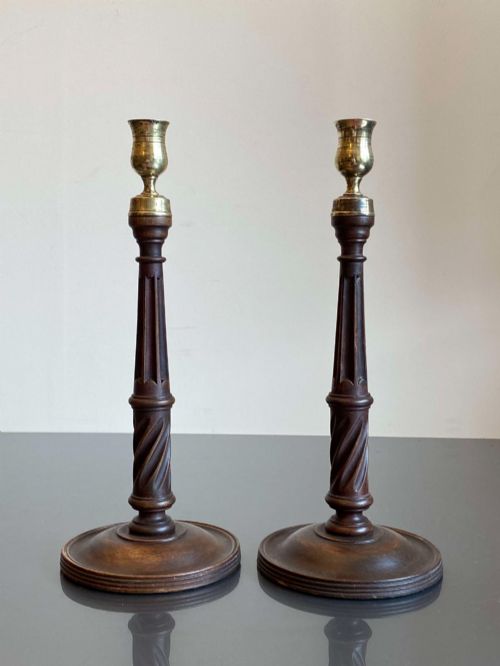
Most examples found here combine cast brass with turned wooden bases or combine copper accents with the metal twist. Pairs dominate the selections, alongside occasional table lamps adapted from earlier holders.
The materials span oak, mahogany, and glass alongside solid cast brass, reflecting domestic use and larger ecclesiastical settings. The stylistic range covers plain Victorian utility, Gothic Revival, and Arts and Crafts production.
How they were made
Makers shaped the twisted stems using either casting techniques for solid brass or wood-turning lathes for oak and mahogany shafts. Metal components were cast in sections and joined, while fitted trays and weighted bases provided stability for taller stems.
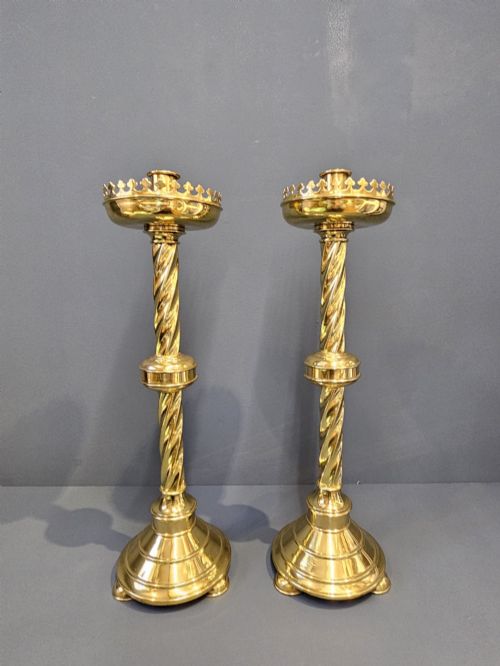
Combinations of brass, copper, and enamel appeared in later Arts and Crafts pieces, contrasting polished metal surfaces with natural timber grain. Altar and church candlesticks utilised heavy gauge brass to support larger candles safely.
Brass Twist Candlesticks Retail Price Guide 2026
Typical asking prices for brass twist candlesticks among the pieces listed under this phrase on Sellingantiques today, from the lower quarter to the upper quarter. They describe what is for sale here now, not the wider market.
Period styles span Georgian, Victorian, Edwardian, Gothic Revival, and Arts and Crafts.
What varies in quality
Quality rests in the crispness of the twist and the proportional balance between the base and the column. Finely cast brass exhibits sharp edges along the helical grooves, whereas mass-produced variants appear softer and smoother.
The weight of the metal and the integrity of any fitted wooden base distinguish standard domestic items from substantial ecclesiastical pairs. Original matching pairs demonstrate superior workshop consistency compared to assembled sets.
T Thomason and Co
The Brass Twist Candlesticks Glossary
- Barley twist
- A spiralling column resembling a stalk of barley, popular in furniture and candlestick design. This form creates diagonal lines that catch light as you move around the room.
- Ecclesiastical
- Pertaining to the church, describing taller, heavier candlesticks and altar lamps made for religious settings. These pieces often feature larger drip pans and robust bases.
- Gothic Revival
- An architectural and decorative style drawing on medieval forms, seen here in pointed motifs and heavier brass construction. It was particularly prevalent during the Victorian era.
- Double helix
- A decorative twist featuring two parallel spiralling strands winding up the column together. This technique requires precise manufacturing to maintain symmetry.
- Fitted base
- A weighted or shaped platform designed to anchor tall twisted stems securely. It prevents the candlestick from tipping when holding a heavy candle.
Brass Twist Candlesticks: Frequently Asked Questions
How do I date a brass twist candlestick?
Dating relies on combining the stylistic clues of the base with manufacturing techniques. Georgian and 18th-century pieces often integrate turned mahogany elements alongside the metal shaft.
Victorian and later Edwardian examples lean towards heavy cast brass, Gothic Revival motifs, or Arts and Crafts copper combinations.
Were these candlesticks made in pairs?
Many domestic and ecclesiastical candlesticks were produced as matching pairs to flank mantelpieces, sideboards, or altars. Sets of four also occur, particularly in heavier church examples.
Single pieces do appear, having been separated from their original pairs over time.
How do I care for antique brass?
Maintenance requires gentle dusting and occasional cleaning with a soft cloth to preserve the natural patina. Avoid harsh chemical polishes that strip away the aged surface.
Wooden bases benefit from standard beeswax to nourish the timber grain.
Can these candlesticks be used with modern candles?
Most antique sockets accommodate standard taper candles, though slight variations in sizing can occur across different periods. Checking the nozzle diameter ensures a secure fit.
Some pieces have been adapted into table lamps while retaining their original brass twist stems.