

Brass Top Card Table
When you search for a brass top card table, you find sophisticated fold-over furniture designed for evening entertainment.
Brass Top Card Table
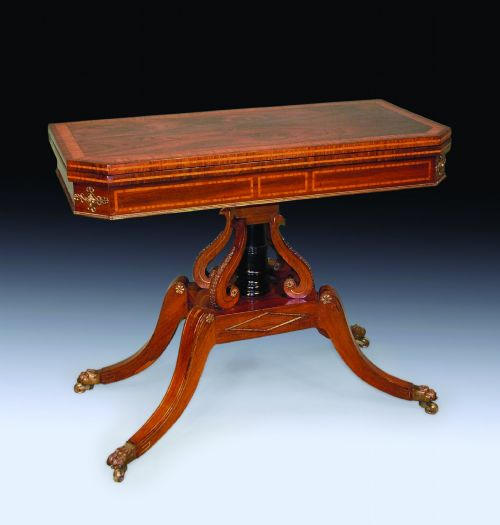
A brass top card table combines the clever engineering of a folding games surface with decorative metalwork. These pieces emerge primarily during the Georgian, Regency, and Victorian periods, often taking the form of console or side tables that double in function when evening entertainment begins.
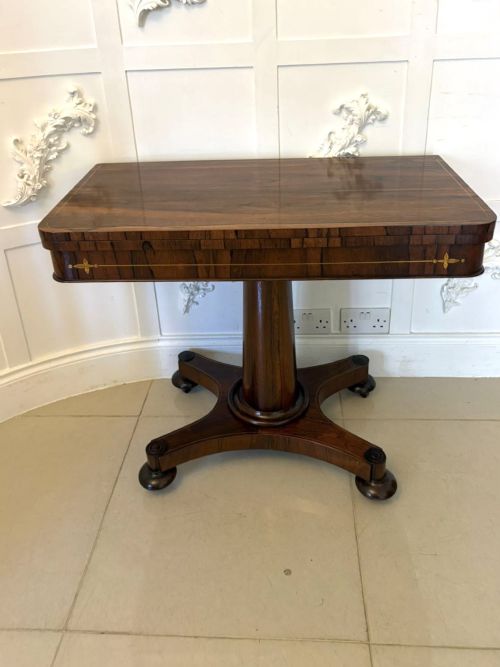
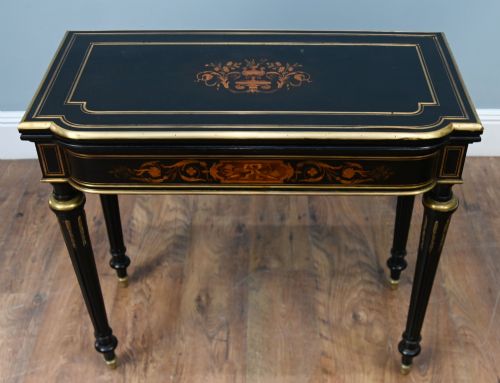
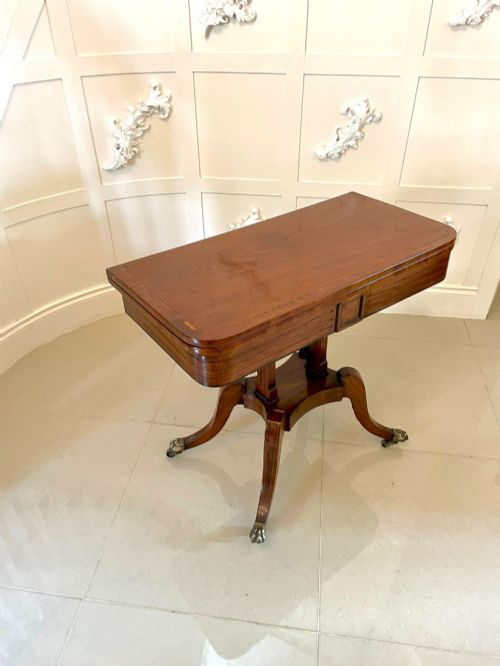
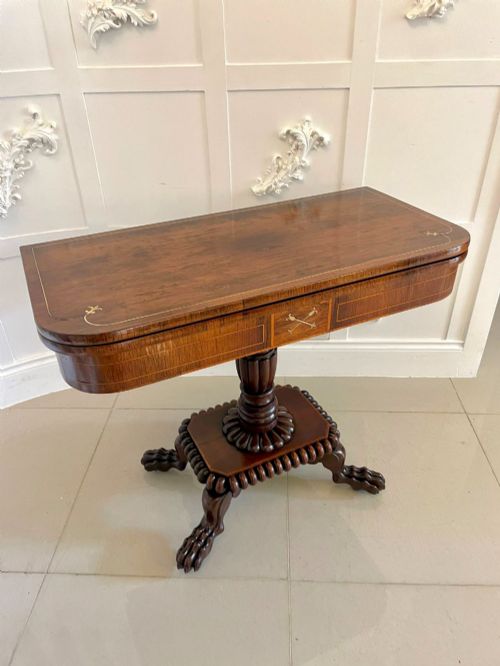
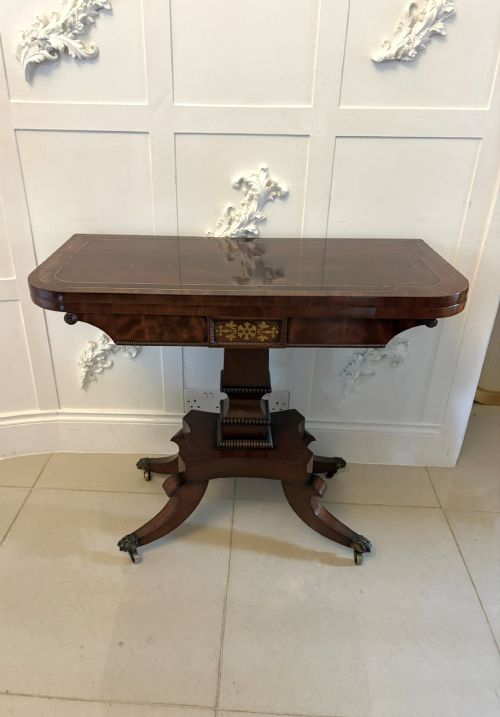
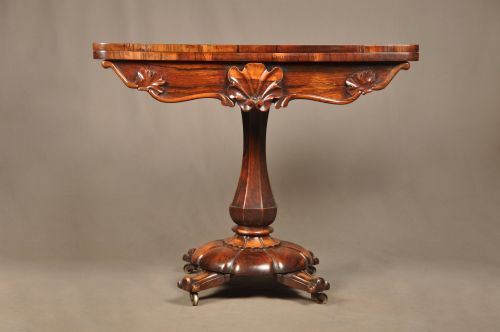
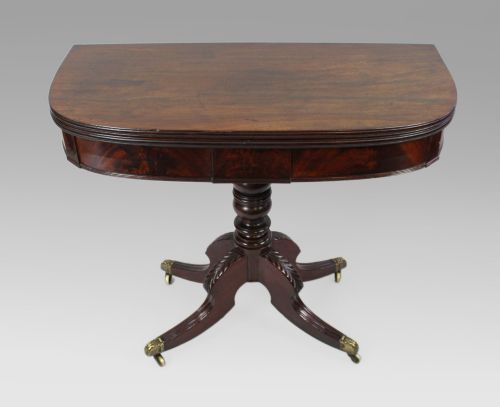
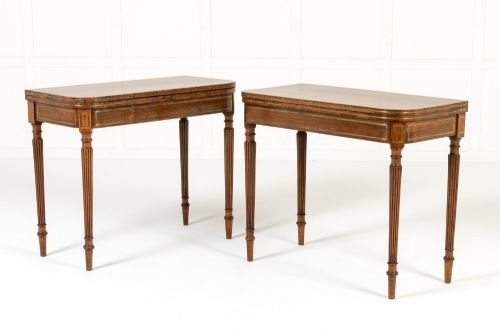
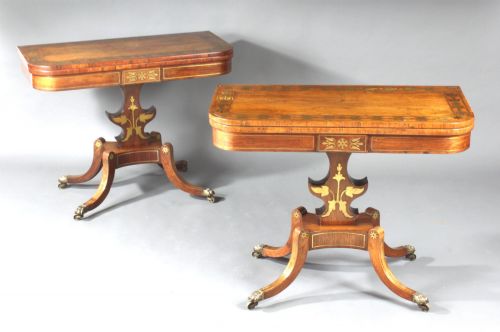
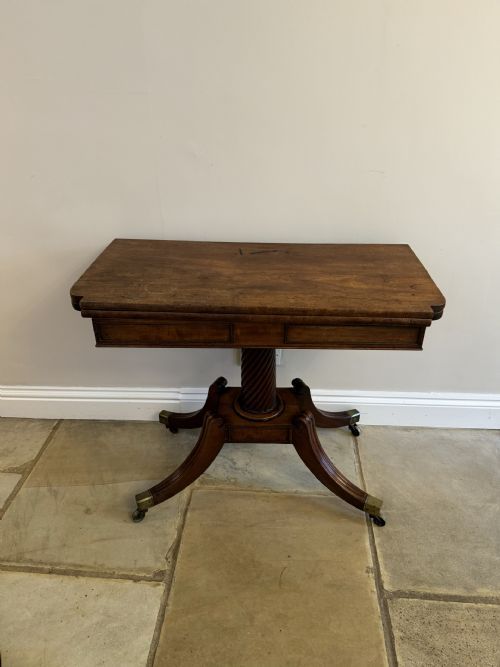
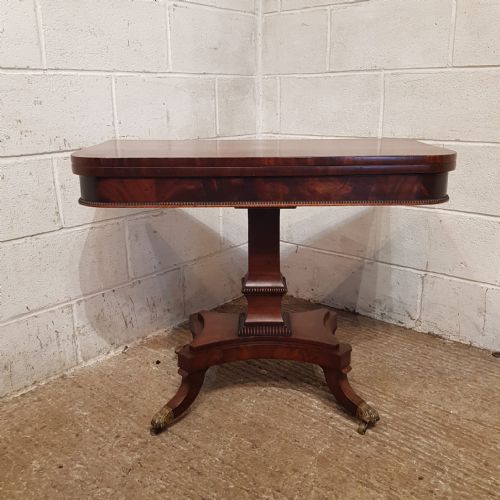
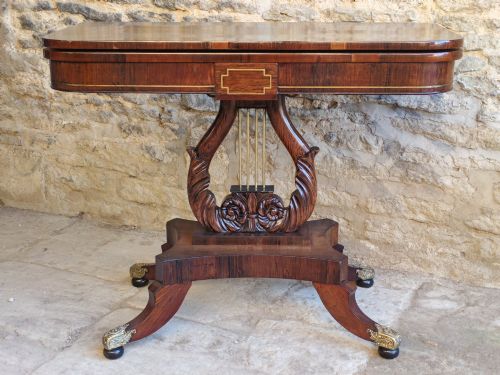
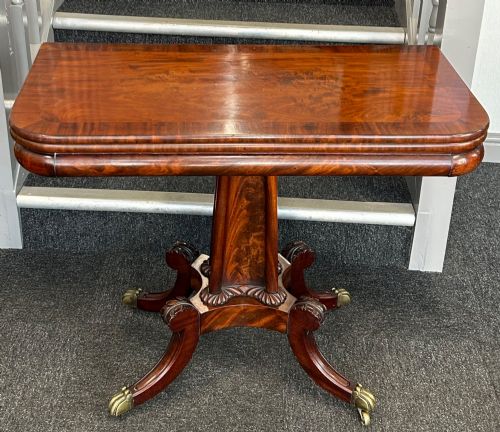
The version most commonly met on this page is the Regency rosewood or mahogany card table featuring brass inlay, brass mounts, or a gilded trim along the edge. Makers constructed these versatile items to sit flat against a wall when closed, revealing a baize-lined playing surface only when unfolded for cards or games.
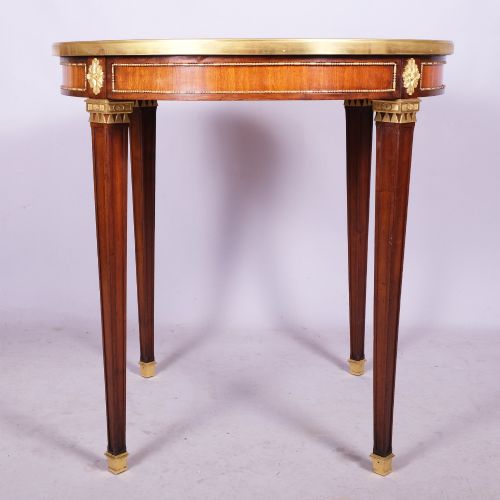
Alongside dedicated card tables, the selection includes related forms such as tea tables, bouillotte tables with marble tops, and occasional games tables. Their origins span English workshops influenced by classical revival styles, Louis XVI aesthetics, and Sheraton designs.
Materials and construction
Cabinetmakers built the structural carcases of these tables using dense hardwoods like mahogany and rosewood, frequently incorporating satinwood, ebony, and walnut as contrasting veneers. Timber selection focused on rich grain patterns, which were then polished to a deep lustre.
Metal enrichment defined the visual character of these pieces, utilising brass inlays set directly into the wood, cast or gilded brass mounts, and occasional ormolu detailing. These metal elements required precise hand-cutting and fitting into the surrounding timber surface.
Some tables hide secret compartments beneath their folding tops, originally designed for storing stray dice, counters, and elusive card markers.
Distinctions in quality
The standard of a brass top card table rests upon the crispness of its brass inlay and the precision with which the folding mechanism operates. Finer examples display meticulous hand-cut brasswork embedded flush with the timber, whereas lesser pieces show wider gaps or simpler stamped metal strips.
Timber selection and secondary framing also divide the range, with top-tier pieces employing highly figured rosewood or figured mahogany veneers over robust solid mahogany carcases. The elegance of the pedestal base, whether carved with scroll motifs or supported by a lyre frame, further separates standard production from exceptional design.
The Brass Top Card Table Glossary
- Bouillotte table
- A small French card or occasional table, typically featuring a marble top surrounded by a raised brass gallery. These tables were originally designed for the card game bouillotte during the eighteenth and nineteenth centuries.
- Console table
- A table designed to be fixed against a wall or supported by front legs with brackets securing it to the vertical surface. In card tables, the console format allowed the piece to double as a decorative wall table when folded.
- Fold over top
- A hinged table top that opens to double the surface area for dining, writing, or playing games. This mechanism is the defining structural feature of antique card and tea tables.
- Ormolu
- Gilded bronze applied as a decorative mount or foot on furniture. The technique involves treating bronze with an amalgam of gold to achieve a durable golden finish.
- Lyre base
- A table support carved in the distinctive symmetrical shape of an ancient stringed musical instrument. This form appears frequently on the pedestals of Regency rosewood tables.
Brass Top Card Table: Frequently Asked Questions
How do you fold a card table?
The hinged top rotates on a pivot or lifts upward on butterfly hinges, allowing the leaf to swing open flat over a swinging rear leg or gateleg frame.
Once opened, the inner surfaces often reveal a baize or felt playing area intended for card games.
Where were these tables placed?
These tables stood against drawing room or parlour walls when closed, serving as decorative console or side pieces holding lamps or decorative objects.
When evening arrived, servants or hosts moved them into the centre of the room to accommodate players.
What is a bouillotte table?
A bouillotte table is a specific round card table featuring a raised brass gallery around a marble top to prevent counters from rolling off.
Originating in France, these smaller tables became popular for intimate card games and later served as versatile bedside or occasional tables.
How do you date a Regency card table?
Dating relies on identifying specific stylistic markers such as brass inlay, rosewood veneers, scroll pedestals, and gilded brass mounts characteristic of the early nineteenth century.
Makers of this era frequently combined classical architectural motifs with exotic woods and refined metalwork.