
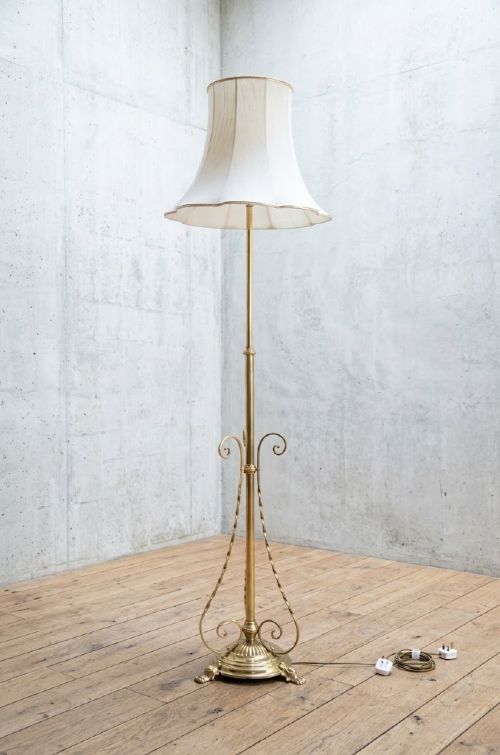
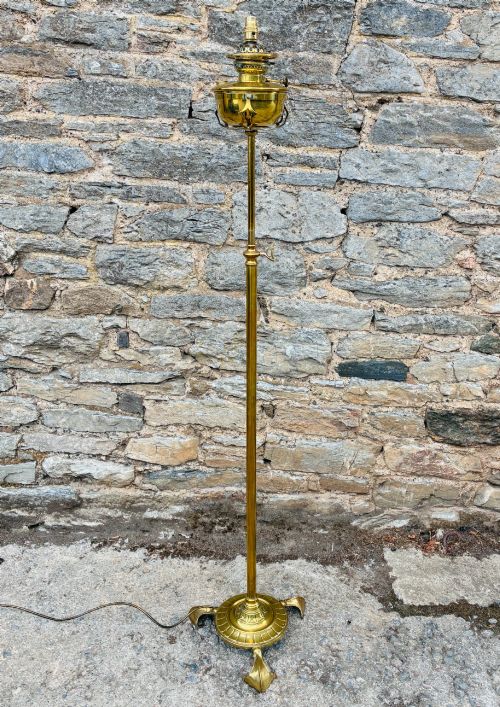
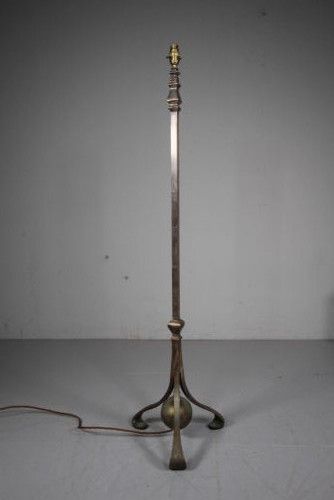
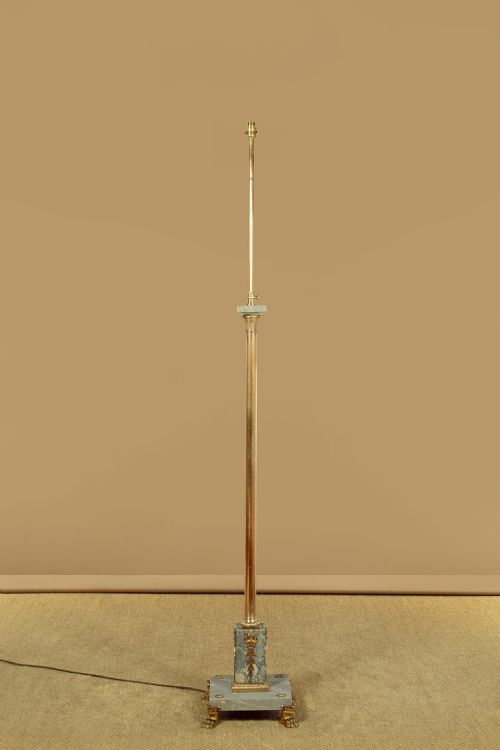


Brass Telescopic Standard Lamp
A brass telescopic standard lamp brings adjustable height and warm metal illumination to a room, drawing on Victorian and Edwardian ingenuity.
Brass Telescopic Standard Lamp
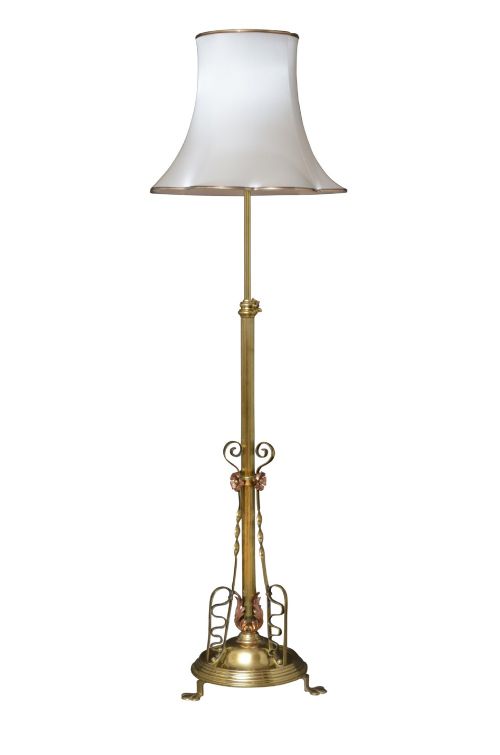
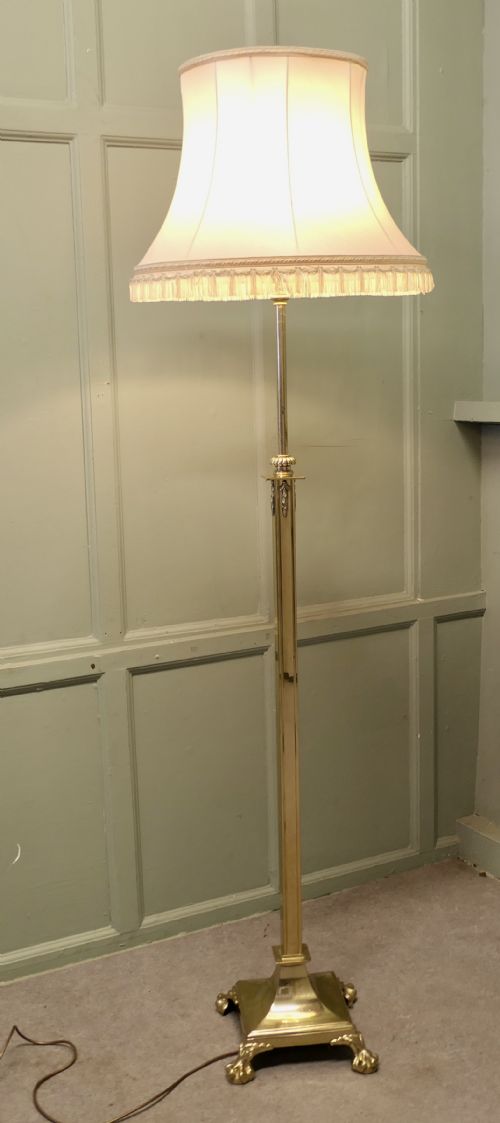
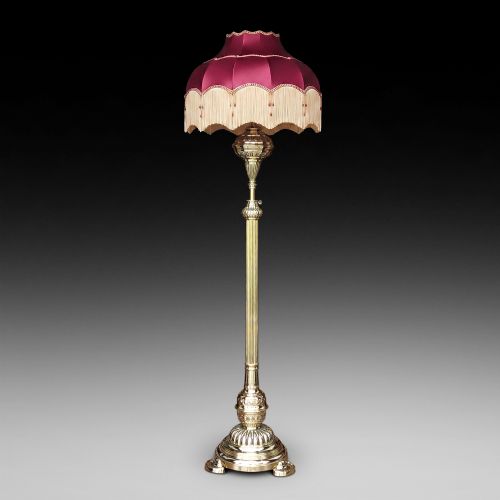
A brass telescopic standard lamp is a tall floor-standing lighting fixture designed with an extending shaft to alter the overall height. These pieces primarily date from the Victorian and Edwardian eras, alongside examples from around nineteen hundred and the early twentieth century.
The form frequently originates as an oil lamp, which accounts for the weighted bases and heavy metal construction needed to support a reservoir and burner safely. Many survive with their original fittings or have been converted to electricity for modern interior use.
Beyond plain brass, versions incorporate materials like copper, marble, onyx and ormolu, reflecting styles from Arts and Crafts to Art Nouveau and Neoclassical Revival.
How They Were Made
Maker construction relies heavily on spun and cast brass tubes that slide smoothly within one another to provide the height-adjusting mechanism. Heavy weighted bases, sometimes containing iron or filled with pitch, keep the tall structure stable when extended.
Decorative details are added through applied copper, cast ormolu mounts, or carved marble and onyx sections incorporated into the column. Surfaces are often left unlacquered, allowing the metal to develop a natural patina over decades of handling.
Some tall standard lamps hide their original oil snuffers deep within the decorative brass burner assembly.
What Varies in Quality
The standard of engineering in the telescopic mechanism sets examples apart, where tighter tolerances allow the inner shaft to hold its position firmly without slipping. Heavier gauge brass and solid cast components provide better stability than thinner sheet metal alternatives.
The refinement of decorative detailing on the column, such as crisp fluting on Corinthian columns or fine chasing on Art Nouveau and French Empire styles, distinguishes standard production from more ambitious workshop pieces.
Hinks of B'ham·Messenger·W A S Benson
The Brass Telescopic Standard Lamp Glossary
- Telescopic
- An extending shaft mechanism that allows the overall height of the standard lamp to be adjusted up and down.
- Standard Lamp
- A traditional British term for a tall floor lamp designed to stand independently in a room.
- Corinthian Column
- A classical architectural column design featuring ornate acanthus leaf capitals, frequently used for the main shaft of Victorian and Edwardian floor lamps.
- Ormolu
- Gilded bronze or brass applied as decorative mounts and enrichment on the column or base of nineteenth-century pieces.
- Rise and Fall
- An alternative description for the height-adjusting telescopic mechanism found on vertical lamps.
Brass Telescopic Standard Lamp: Frequently Asked Questions
How do you adjust the height?
The inner brass tube slides upward from the main shaft and is secured at the desired level using a thumbscrew or a friction collar.
Older mechanisms rely on precise metal tolerances to hold the weight of the upper section without dropping.
Were these originally for oil?
Many examples began as oil lamps before being converted to electricity during twentieth-century household modernization.
Converted pieces retain their original burners or reservoirs, which are now wired to hold modern lamp holders and shades.
How do I date a brass standard lamp?
Stylistic clues such as Corinthian capitals point to the Victorian period, while whiplash lines indicate Art Nouveau designs around nineteen hundred.
Construction methods and base weights also help separate nineteenth-century models from later twentieth-century reproductions.
Can I use standard lampshades?
Most floor lamps accept standard shade fittings, though heavy frames benefit from sturdy shade carriers attached to the bulb holder.
Opaline glass and fabric shades both appear historically alongside these tall brass stands.