
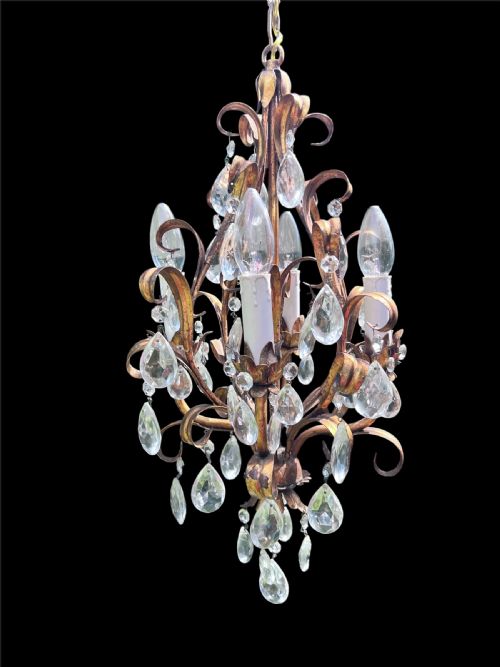


Brass Teardrop Ceiling Fixture
A brass teardrop ceiling fixture brings refined illumination and classic period character to a room through distinctive hanging crystal elements.
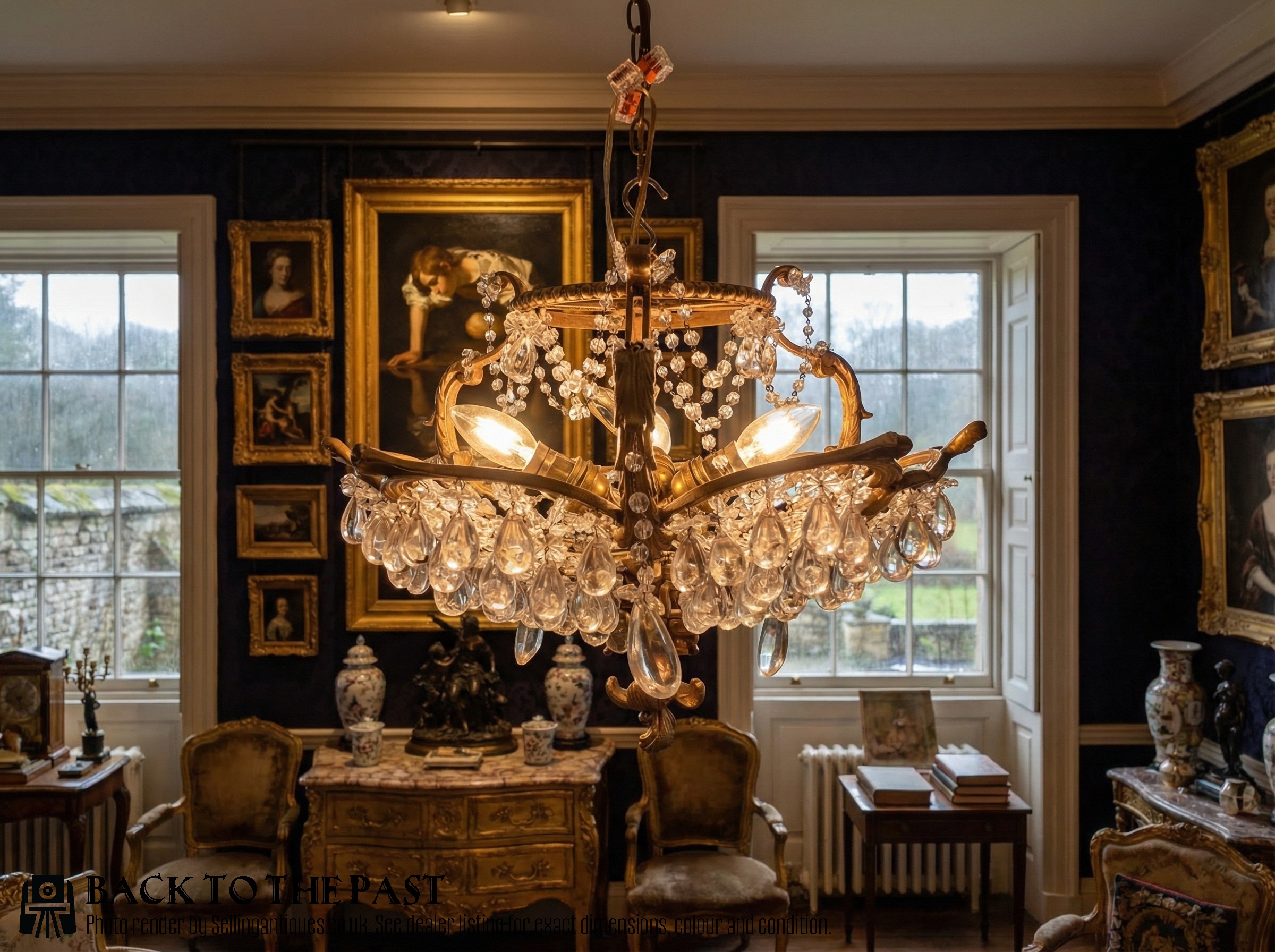
Brass Teardrop Ceiling Fixture
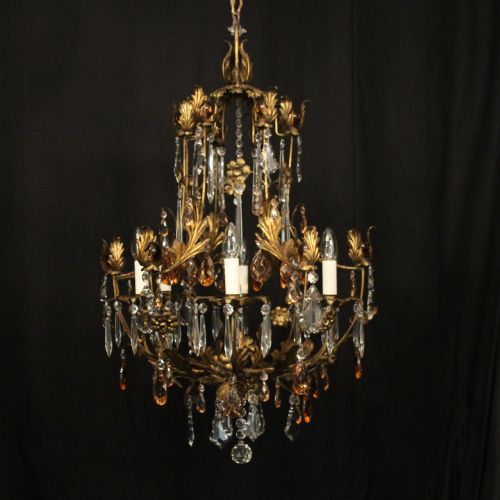
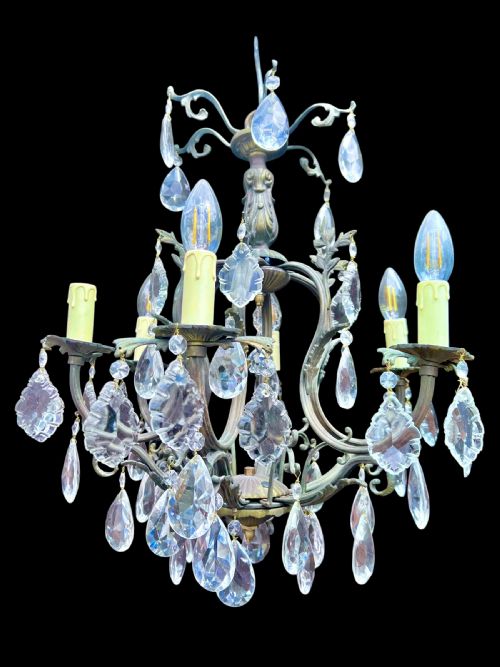
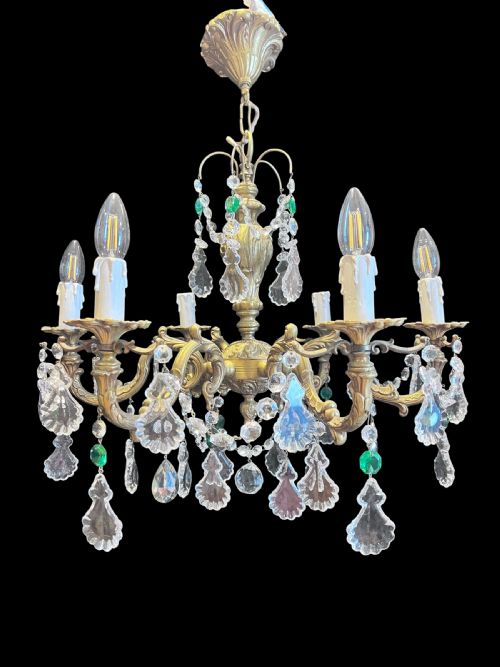
Buyers seeking a brass teardrop ceiling fixture will find multi-arm chandeliers and drop lighting originating from the late nineteenth century through the nineteen-thirties. These pieces primarily encompass French and Italian designs, ranging from small single-tier fixtures to large sixteen-light examples.
The assortment includes chandeliers featuring faceted crystals shaped as teardrops, alongside pieces adorned with grape decoration, swags, and waterfall tiers. Common stylistic influences span French Rococo Revival, Neoclassical, and Italian Florentine aesthetics.
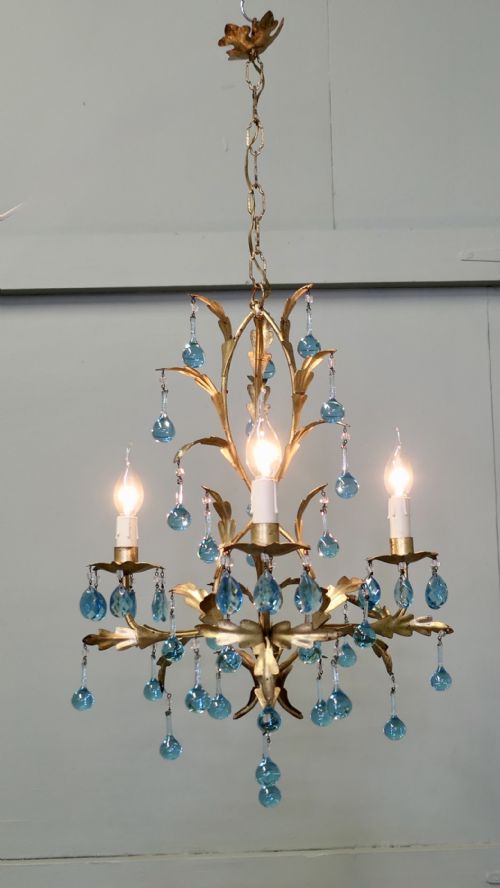
Most examples rely on a central brass or gilt metal frame to support the glass elements, though occasional variants incorporate wrought iron or gilded toleware. Smaller rooms often suit compact twelve-inch fixtures, while expansive spaces accommodate substantial multi-tier chandeliers.
Materials and construction methods
Construction relies heavily on cast and fabricated brass, gilt brass, and bronze to form the structural skeleton and arms of each chandelier. Metal components frequently receive a gilt finish to enhance reflectivity and visual warmth.
Lighting assemblies incorporate clear and coloured glass crystals shaped into teardrops, suspended from the main frame using wire links or pins. Additional decorative accents utilise forged iron, gilt toleware, and naturalistic motifs such as leaves and grapes.
Listings feature periods from the late nineteenth century through the nineteen-thirties, dominated by French and Italian designs.
Distinctions in quality and execution
Superior examples demonstrate meticulous metalwork in the foundational frames, featuring crisp casting details on arms and floral elements rather than plain or soft casting. The integration of the hanging crystals shows careful proportion, with uniformly cut glass that catches the light effectively.
Higher grade pieces often incorporate complex multi-tier structures, elaborate swags, or hand-painted toleware components that require advanced artisan skill. The quality of the gilding and the preservation of the original metal patina also divide standard production from exceptional examples.
The Brass Teardrop Ceiling Fixture Glossary
- Teardrop
- A drop-shaped glass or crystal pendant hung from a chandelier to refract light. These elements form the signature visual feature of the fixtures.
- Gilt metal
- Metal coated with a thin layer of gold leaf or gilt paint to simulate solid gold. This treatment provides a bright, decorative finish to brass and bronze frames.
- Toleware
- Painted or lacquered metalware used for decorative accents on lighting fixtures. It often introduces soft colour and organic shapes into the design.
- Waterfall tiers
- Multiple descending layers of crystals arranged in a cascading formation. This configuration increases light refraction and visual volume.
- Chandelier
- A branched ceiling-mounted lighting fixture designed to hold multiple bulbs or candles. They serve as primary decorative focal points in period rooms.
Brass Teardrop Ceiling Fixture: Frequently Asked Questions
How do I clean my chandelier?
Maintenance involves dusting the metal frame gently with a dry cloth and cleaning individual glass teardrops with a mild solution. Removing the crystals allows for thorough washing without risking damage to the antique wiring or structure.
Careful handling ensures that delicate wire links remain secure during reattachment. Regular maintenance preserves the clarity of the crystal and the lustre of the brass.
What rooms suit these chandeliers?
Compact fixtures measuring ten to twelve inches fit well in hallways, powder rooms, or smaller bedrooms where headroom is limited. Larger multi-light versions anchor dining rooms, high-ceilinged living spaces, or grand entryways.
Matching the physical scale of the fixture to the dimensions of the room maintains balanced interior proportions.
How do I date an antique chandelier?
Dating relies on examining the metal casting techniques, assembly methods, and wiring styles present in the piece. Edwardian and early twentieth-century examples often feature distinct patinas and hand-formed crystal suspensions.
Stylistic cues such as Florentine gilt leaf work or French Rococo Revival curves also point to specific periods of manufacture.
Can antique fixtures be rewired?
Professional rewiring ensures compliance with modern safety standards while retaining the original exterior frame and aesthetic. Qualified electricians can update internal fittings without altering the historical integrity of the metalwork.
Retaining original components where possible maintains the authentic character of the piece.