




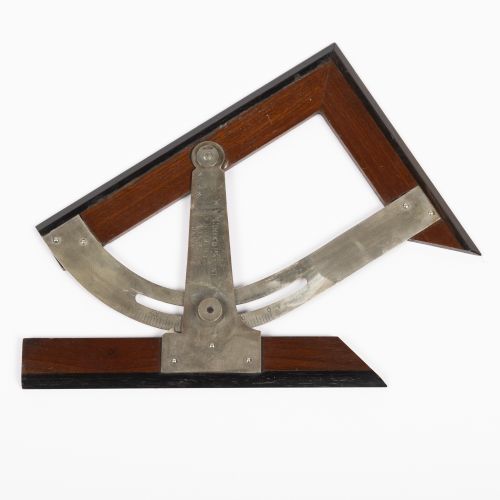


Brass Surveying Equipment
Brass surveying equipment combines utilitarian precision with heavy polished metal, offering practical measurement tools for the field and substantial decorative objects for the desk.
Brass Surveying Equipment
Brass surveying equipment encompasses scientific instruments, barometers, drafting instruments, and nautical instruments designed for measurement and navigation. Pieces span the Georgian, Victorian, and Edwardian eras, reaching into the mid-twentieth century through makers in London and Edinburgh.
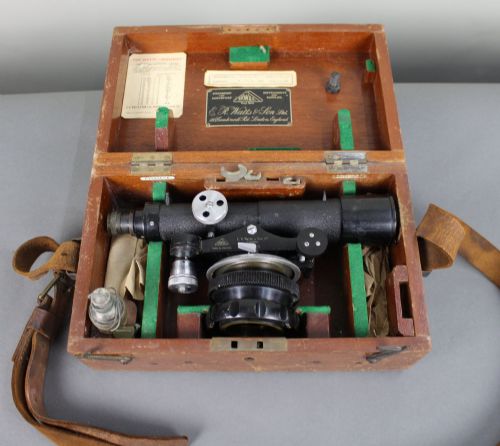
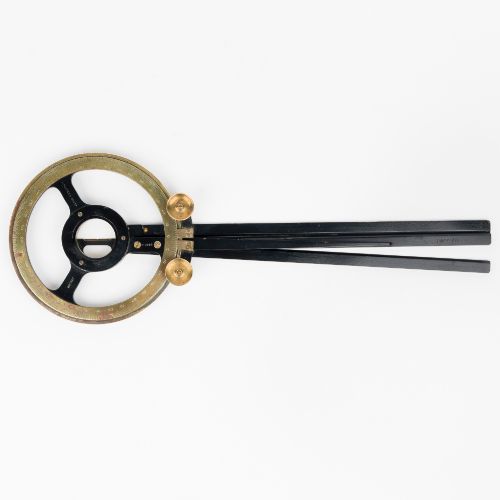
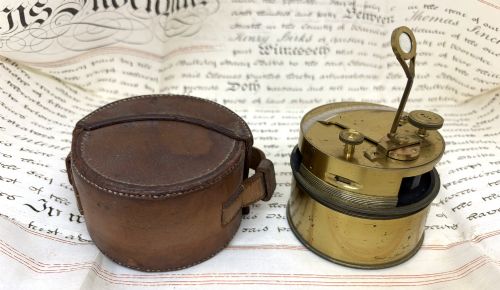
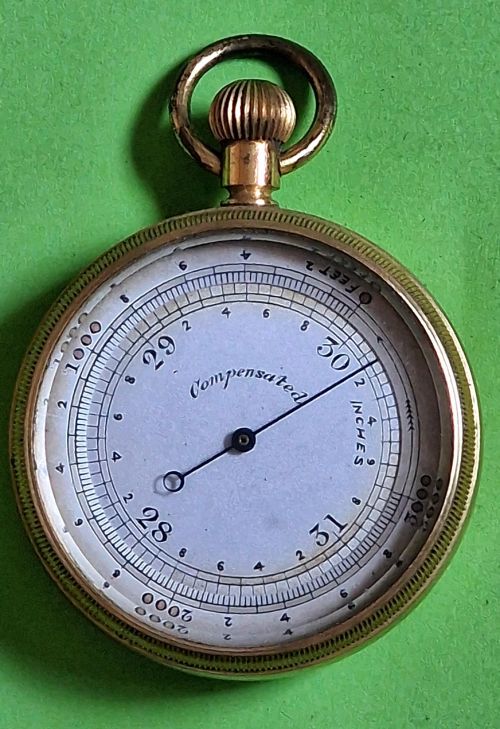
The objects take physical form as theodolites, levels, transit instruments, pocket barometers, pantographs, and station pointers. Many survive complete with fitted mahogany cases, leather straps, and ancillary glass or steel components.
Buyers encounter items ranging from portable pocket instruments to large tripod-mounted engineering tools. The selection reflects the practical needs of nineteenth and early twentieth-century land measurement, drainage work, and maritime navigation.
How they were made
Makers constructed these instruments primarily from heavy cast and turned brass, often applying a protective lacquered finish to preserve the metal surface. Glass elements protect delicate compass dials and spirit levels, while steel components provide necessary tension and sharp edges for precise graduation.
Enclosing wooden cases utilise solid mahogany, frequently fitted with internal blocks and brass hooks to secure the instrument during transport. Retailers and makers inscribed scales and identifiers directly into the metal using fine hand-engraving techniques.
Brass Surveying Equipment Retail Price Guide 2026
Typical asking prices for brass surveying equipment among the pieces listed under this phrase on Sellingantiques today, from the lower quarter to the upper quarter. They describe what is for sale here now, not the wider market.
Materials recorded on this page include brass, lacquered metal, gilt brass, mahogany, glass, steel, and leather.
What varies in quality
The distinction between standard utility instruments and finer pieces rests in the crispness of the engraved vernier scales and the complexity of the mechanical movements. Finer examples display superior casting work and carry the signatures of prominent London or provincial makers.
Completeness dictates the character of a piece, separating instruments retaining their original fitted wooden cases and auxiliary lenses from those surviving alone. The durability of the original lacquered metal finish and the clarity of the glass optics further influence the overall integrity of an instrument.
E.R. Watts & Son Ltd·Hughes & Son·W&S Jones·L Casella & Co·Negretti & Zambra·Alexander Adie·Thomas Dunn·W. H. Harling·John Lilley & Son·De Grave & Co
The Brass Surveying Equipment Glossary
- Transit Instrument
- A telescope mounted on an axis perpendicular to its optical tube, used for observing celestial bodies passing the meridian. Surveyors utilised portable versions for establishing accurate time and longitude.
- Vernier
- A secondary auxiliary scale sliding alongside the main graduated scale to allow readings to a fraction of the primary division. This mechanism ensures precise angular measurement on scientific instruments.
- Artificial Horizon
- A device providing a horizontal reference plane when direct observation of the natural horizon is obscured. These sets frequently employ black glass paired with an adjustable levelling frame.
- Station Pointer
- A three-arm protractor used in maritime navigation and surveying to determine position by measuring angles between three known landmarks. Navigators plotted these angles directly onto nautical charts.
Brass Surveying Equipment: Frequently Asked Questions
What is a theodolite used for?
A theodolite measures horizontal and vertical angles for land surveying, construction layout, and mapping. Surveyors sighted distant targets through the telescope to calculate precise topographical positions.
These instruments sat atop heavy tripods in the field. They formed the backbone of nineteenth-century civil engineering projects and boundary surveys.
How do I identify the date of an instrument?
Makers often engraved their business names, addresses, and production dates directly onto the brass plates or silvered dials. Changing styles in typography and mounting hardware also help narrow down the period.
Surviving trade labels inside fitted mahogany cases provide additional clues regarding the retailer or maker. Patent names mentioned in titles point toward specific decades of origin.
Did these instruments always come in wooden cases?
Portable field instruments typically required sturdy protection during transport across rough terrain. Mahogany cases lined with velvet or fitted with wooden blocks kept delicate brass components secure.
Many surviving pieces retain their original boxes, complete with compartments for secondary lenses, plumb bobs, and adjustment keys.
What is the difference between a level and a theodolite?
A level focuses purely on establishing relative height differences and horizontal planes across terrain. Drainage levels and utility levels guide earthworks and construction without measuring horizontal angles.
A theodolite handles both horizontal and vertical angles simultaneously. It represents a more complex mechanical assembly designed for triangulation and detailed mapping.