

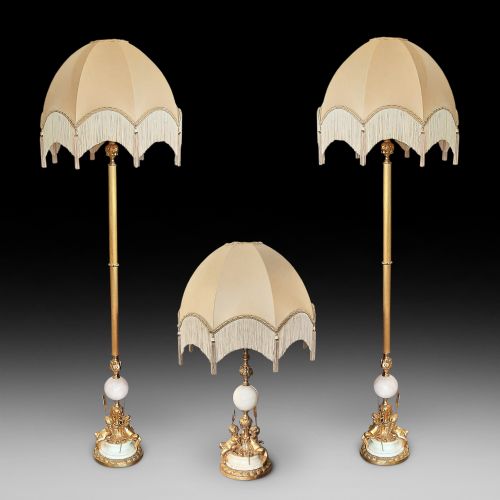
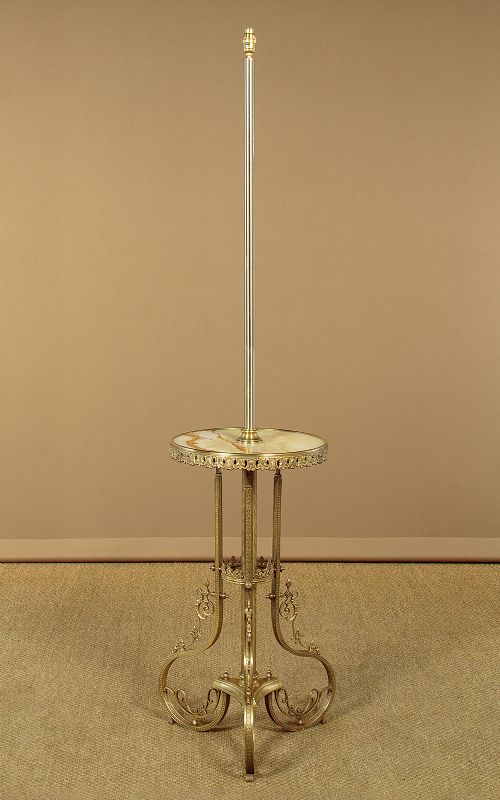


Brass Standard Table
A brass standard table merges the height of a floor-standing lamp with a small surface, offering a clever dual-purpose fixture for period interiors.
Brass Standard Table
When you search for a brass standard table, you encounter tall lighting fixtures that incorporate functional ledges, shelves, or small tabletops into their vertical columns. These versatile objects span the Victorian, Edwardian, and early twentieth-century periods, capturing the domestic ingenuity of their eras.
The selections most frequently met on this page combine cast brass framework with contrasting platforms of onyx, marble, or matching metal. They include adjustable standard lamps with integrated wine tables and column oil lamps adapted for electricity.
Originating largely from British, French, and Spanish workshops, these items reflect diverse stylistic revivals from Rococo to Mamluk design. Each piece demonstrates how nineteenth and early twentieth-century makers maximised domestic utility without sacrificing decorative presence.
Materials and construction methods
Makers utilised heavy cast brass for the primary upright columns, telescopic shafts, and decorative bases to ensure stability when the lamps carried extended arms or attached tables. This metal was frequently polished, chased, or finished with ormolu and gilt bronze accents.
Insets of natural stone such as onyx, alabaster, and marble provide the weight and solid surface for the integrated tables, contrasting smoothly with the surrounding metalwork. Glass components, including oil fonts and shades, complete the traditional structure of these dual-purpose lamps.
Brass Standard Table Retail Price Guide 2026
Typical asking prices for brass standard table among the pieces listed under this phrase on Sellingantiques today, from the lower quarter to the upper quarter. They describe what is for sale here now, not the wider market.
Early twentieth-century makers thoughtfully ensured you could rest your evening glass of wine right beneath the glow of your reading lamp.
Distinctions in craftsmanship and design
The quality of these combination pieces rests upon the precision of the mechanical adjustments and the integrity of the combined materials. Telescopic mechanisms that move smoothly and lock securely demonstrate superior metalworking skill compared to rigid or loose fittings.
Superior examples feature finely chased brass enrichment, substantial stone surfaces without fractures, and balanced proportions that safely support the dual functions of illumination and table space.
The Brass Standard Table Glossary
- Standard lamp
- A tall floor-standing lighting fixture designed to illuminate a room from an elevated position. These items often feature weighted bases and adjustable columns.
- Ormolu
- Finely ground high-carat gold applied to a bronze or brass base using a mercury amalgamation process. This technique imparts a rich, lasting metallic lustre.
- Cairoware
- Metalwork originating from or inspired by Islamic designs of Cairo, typically featuring intricate inlaid silver or copper details on brass. This style appeared on imported decorative lamps during the late nineteenth and early twentieth centuries.
- Telescopic
- Descriptive of a shaft composed of nested tubular sections that allow the overall height of the lamp to be adjusted. This engineering enabled users to tailor the pool of light to specific seating arrangements.
Brass Standard Table: Frequently Asked Questions
What is a brass standard table?
A brass standard table is a tall floor lamp that incorporates a built-in shelf, tray, or small table surface along its upright column. These pieces were designed to save space in period sitting rooms by combining illumination and a resting place for drinks or books into a single footprint.
They appear in various revival styles from the nineteenth and early twentieth centuries, constructed predominantly from cast brass alongside stones like onyx or marble.
How were these combination lamps used?
In Victorian and Edwardian drawing rooms, these fixtures stood beside armchairs or sofas to provide targeted reading light alongside a convenient surface for small personal items. The integrated table eliminated the need for a separate side table in compact spaces.
Many designs featured adjustable heights and pivoting arms, allowing the user to direct the light downward for reading while keeping the tabletop level and steady.
How do I date a brass standard lamp?
Dating relies on examining the casting techniques, the style of any decorative ornamentation, and the presence of functional mechanisms like telescopic adjusters. Victorian examples often display heavier cast brass columns and ornate revival detailing, while Edwardian and 1920s versions may incorporate simpler tiered shafts or imported motifs.
Original wiring methods, switches, and the type of construction joints also offer reliable clues to the decade of manufacture.
Are these lamps suitable for modern rooms?
These pieces integrate well into contemporary interiors by serving as striking vertical accents that combine ambient lighting with functional display space. Their mixed materials, such as polished brass combined with onyx or marble, add textural contrast to modern living areas.
Placing them beside a traditional armchair or using them as an eclectic corner feature allows their dual-purpose design to function effectively today.