
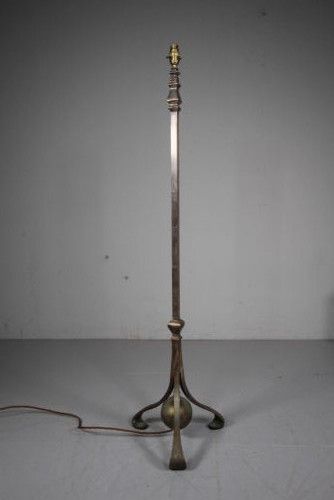
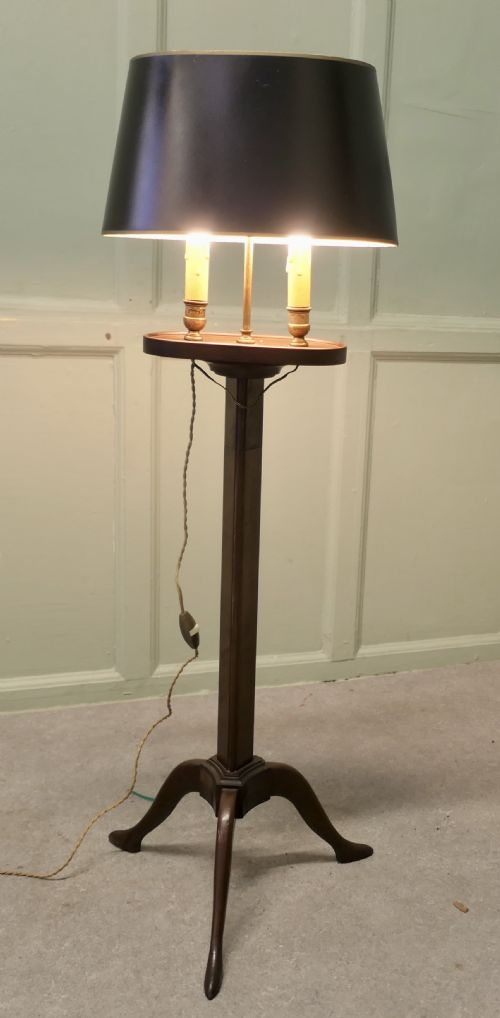
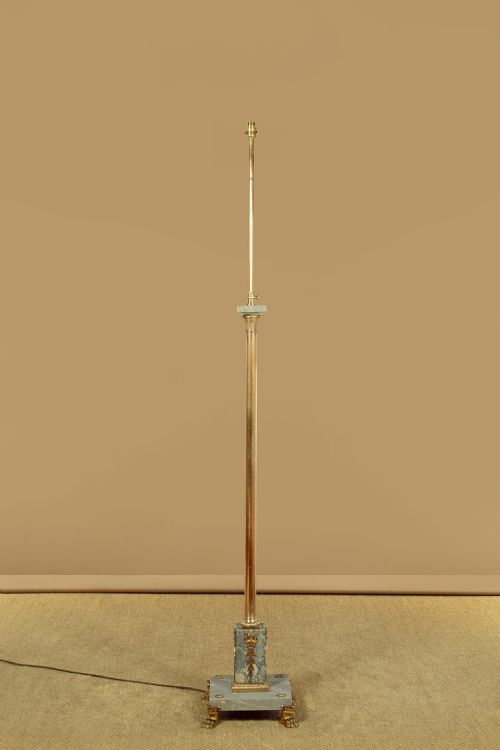
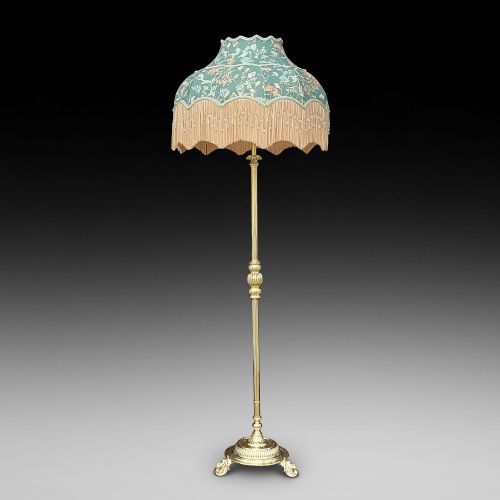
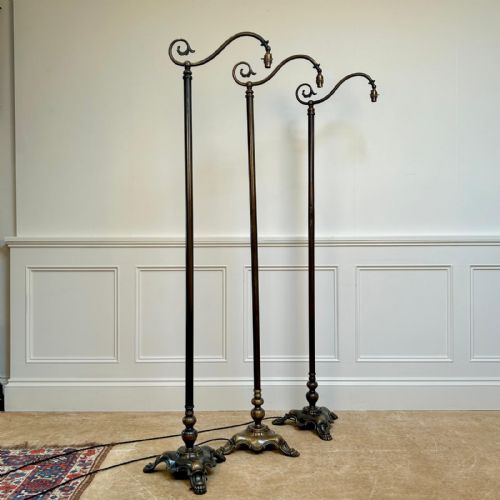
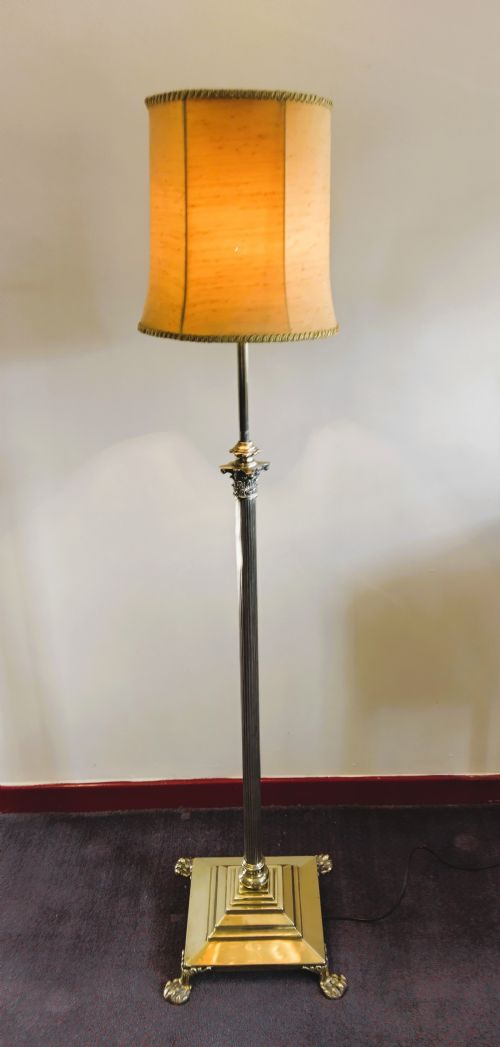
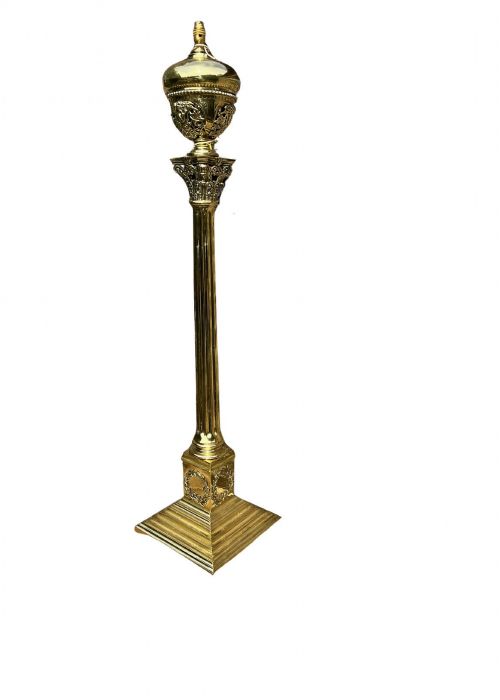


Brass Standard Lamp Base
These brass standard lamp base pieces bring height and steady illumination to a room, built to anchor traditional and period interiors.
Brass Standard Lamp Base
A brass standard lamp base provides the structural support and heavy foundation for tall interior lighting, designed to stand directly on the floor. When you search for a brass standard lamp base, you encounter a range of heavy metal stands meant to hold fabric or glass shades at height. These items originate from periods spanning the Victorian era through the mid twentieth century, with Edwardian and early twentieth century examples appearing frequently.
The selection includes floor lamps, standard lamps, and converted oil lamps that once burned fuel before conversion to electricity. Many pieces feature adjustable heights, telescopic mechanisms, or rise and fall functions that allow the column to extend. You will find forms ranging from plain turned columns to ornate neoclassical revival designs with Corinthian capitals or floral openwork bases.
How They Were Made
Maker construction relies heavily on cast and turned brass, often combined with heavy iron bases or weighted interiors to maintain balance at height. Surviving examples incorporate materials such as glass stems, marble inserts, silver plate, and copper alongside the primary brass structure. Techniques include casting ornamental foliage and classical motifs, turning smooth columns on a lathe, and engineering telescopic inner tubes for height adjustment.
Surface finishes vary from polished bright brass to patinated metal that has darkened naturally over decades of use. Joinery typically involves threaded rods, screws, and heavy cast fittings that secure the upright column to the tripod or stepped base without wobbling.
Listings for this phrase include examples from the Victorian, Edwardian, and Art Nouveau periods, alongside mid twentieth century pieces.
What Varies in Quality
Quality reveals itself in the weight of the casting and the stability of the base, distinguishing heavy, solid construction from lighter, more flexible metalwork. Finer examples display crisp detailing in neoclassical acanthus leaves, fluted columns, and Corinthian capitals rather than soft, worn casting marks. The precision of the telescopic adjustment mechanism also separates standard production items from superior pieces designed for smooth, reliable movement.
Materials beyond plain brass, such as integrated silver plate, decorative glass components, or solid marble sections, indicate higher production ambitions. The overall proportion and balance of the column relative to the width of the tripod or stepped base determine how well the piece holds a tall shade.
The Brass Standard Lamp Base Glossary
- Standard Lamp
- A tall floor lamp designed to stand independently in a room and illuminate an area from above. These items carry the wiring and shade while relying on a heavy base for balance.
- Telescopic
- An adjustable column design featuring an inner shaft that slides up and down within an outer tube. This mechanism allows the overall height of the lamp to be altered.
- Corinthian
- A classical architectural order characterised by ornate capitals decorated with carved acanthus leaves. This style appears frequently on the upper columns of formal floor lamps.
- Tripod Base
- A three-legged support structure designed to distribute weight evenly and prevent tipping. This configuration is common on heavy brass and cast iron floor stands.
- Bouillotte
- A style of lamp originally designed for card playing, featuring an adjustable metal shade mounted on a central pillar. These pieces often incorporate candle arms or single vertical sockets.
Brass Standard Lamp Base: Frequently Asked Questions
How do I wire an old lamp base?
Rewiring requires running modern flexible cable up through the hollow central channel of the brass column to the lamp holder at the top.
It is advisable to have a qualified electrician inspect or rewire vintage metal bases to ensure they meet current safety standards.
Are these bases heavy enough for large shades?
Most antique standard lamp bases were engineered with heavy cast brass, iron weightings, or wide tripod feet specifically to support large fabric shades safely.
Checking the width of the base and the overall weight distribution ensures the lamp remains stable when extended to its full height.
How do I identify a Victorian lamp base?
Victorian examples often display heavy cast construction, Corinthian columns, or oil lamp reservoirs that were later adapted for electrical fittings.
Stylistic cues such as heavy patinated brass, classical revival motifs, and robust telescopic mechanisms point toward nineteenth century manufacture.