

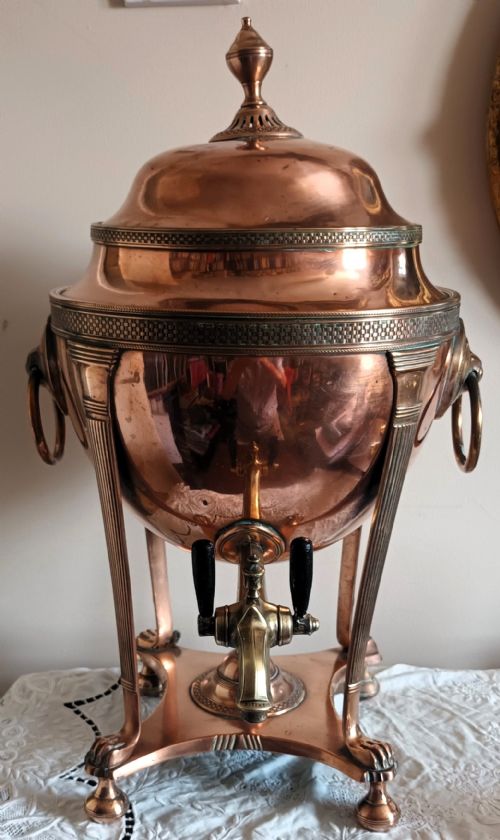
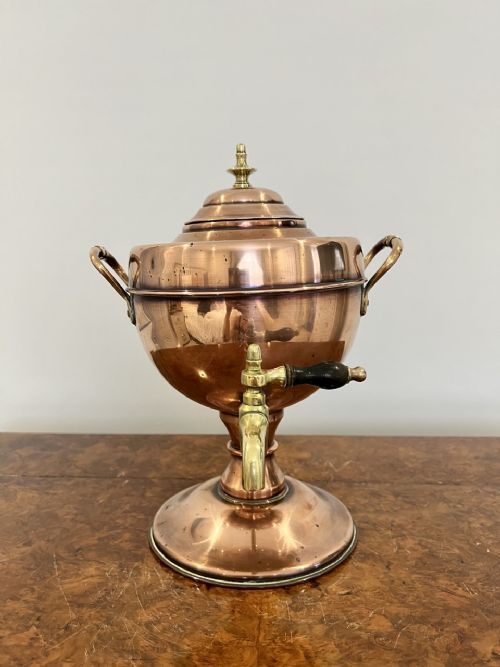
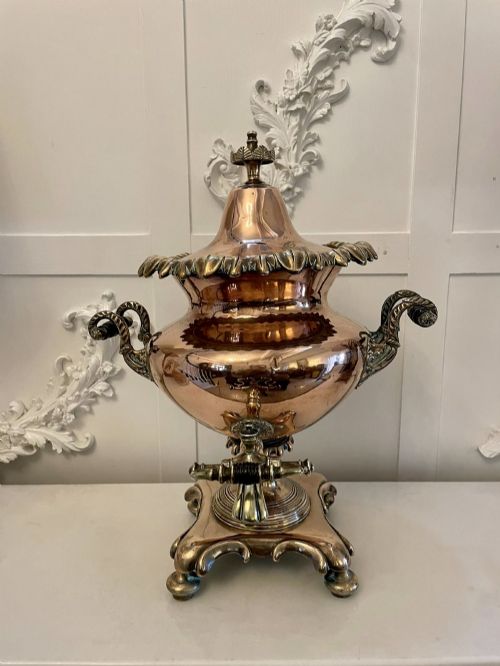
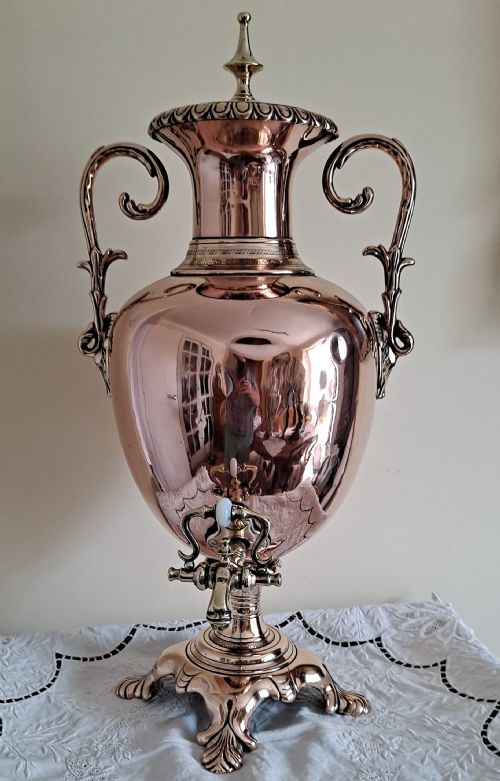


Brass Spigot Tea Urn
A brass spigot tea urn is a masterclass in metalwork and hospitality, built to hold hot water for the drawing room table.
Brass Spigot Tea Urn
A brass spigot tea urn is a heavy vessel designed for heating and dispensing water, combining utilitarian function with striking domestic display. When you search for this phrase, you are looking at substantial pieces formed primarily from copper and brass, occasionally incorporating bell metal or bronzed copper.
The versions you are most likely to meet on this page span the Georgian, Regency, and Victorian eras, running from roughly eighteen hundred through the nineteenth century. These objects frequently appear under descriptions as samovars or water urns, reflecting their primary nineteenth-century and Georgian domestic uses.
Most examples hail from English workshops, showing the classic vessel shapes associated with George III, Regency, and Victorian design periods. The inclusion of original fittings and distinct handles or bases defines the typical profile of these pieces.
How they were made
These vessels rely heavily on sheet copper and brass, shaped meticulously by hand and joined with durable seams to withstand boiling water. Makers incorporated brass for spigots and mounts, creating a robust contrast against the warm tone of the copper bodies.
Details such as ebonised wood, bone, and ceramic appear on handles and finials to insulate against heat and provide a refined grip. Certain iterations utilise bell metal for its sonorous quality and strength, while others feature a bronzed copper finish for a darker, more formal appearance.
Brass Spigot Tea Urn Retail Price Guide 2026
Typical asking prices for brass spigot tea urn among the pieces listed under this phrase on Sellingantiques today, from the lower quarter to the upper quarter. They describe what is for sale here now, not the wider market.
Some nineteenth-century hosts kept bone and ebonised wood handles on their urns purely to save their fingers from screaming at tea time.
What varies in quality
The standard of a tea urn depends heavily on the crispness of its chasing, the weight of the metal utilised, and the integrity of its original fittings. Superior examples display ornate detailing that remains sharp and intentional rather than worn or muddy from heavy past cleaning.
Proportion and silhouette separate the ordinary from the exceptional, alongside the survival of components like original wooden handles, bone insulators, and functional brass spigots. Pieces retaining their complete matching hardware command a different level of appreciation among collectors.
The Brass Spigot Tea Urn Glossary
- Samovar
- A heated metal container traditionally used to boil and heat water in Russia and throughout European domestic spaces.
- Spigot
- A small tap or nozzle fitted near the base of the urn to control the flow of hot water.
- Bell metal
- A hard alloy used for bells and specific vessel components, prized for its resonant properties and durability.
- Ebonised wood
- Timber treated to resemble dense, dark ebony, often utilised for insulating handles and decorative finials.
- Bronzed copper
- Copper treated with a chemical finish to achieve a dark, patinated bronze appearance.
Brass Spigot Tea Urn: Frequently Asked Questions
What is a brass spigot tea urn?
A brass spigot tea urn is a large metal vessel designed to hold and dispense hot water for tea preparation during the Georgian and Victorian periods.
These pieces combine functional water heating with decorative metalwork, serving as centrepieces for formal hospitality.
How were tea urns used?
Tea urns sat on tea tables or sideboards, filled with boiling water to top up individual teapots as guests required.
The integrated brass spigot allowed for easy dispensing without needing to lift the heavy, water-filled vessel.
How do I date a tea urn?
Dating relies on stylistic markers from the Georgian, Regency, and Victorian eras, alongside construction techniques and materials.
George III and Regency pieces tend to show neoclassical lines, whereas Victorian examples often incorporate heavier, more ornate detailing.
Are original fittings important?
Original fittings such as spigots, handles, and finials significantly contribute to the integrity and historical value of the piece.
Makers frequently used wood, bone, or ceramic for these elements to prevent heat transfer during use.
What metals are used in these urns?
The primary body is typically constructed from sheet copper or bronzed copper, complemented by brass spigots, handles, and mounts.
Some exceptional examples also incorporate bell metal for added strength and distinct tonal qualities.