

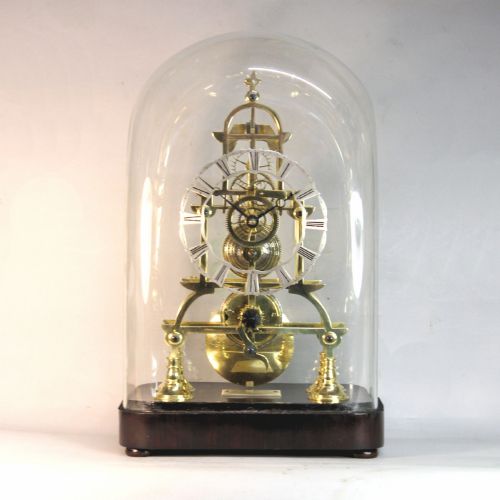


Brass Skeleton Clock Dome
These brass skeleton clock dome pieces offer exposed gear trains beneath protective glass covers, combining mechanical transparency with domestic elegance.
Brass Skeleton Clock Dome
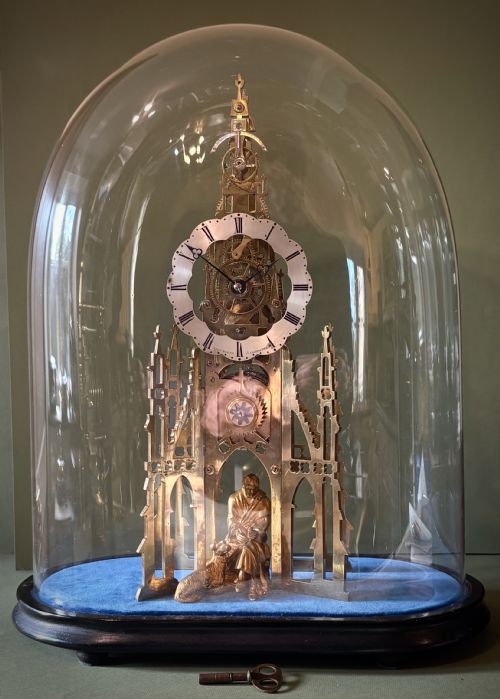
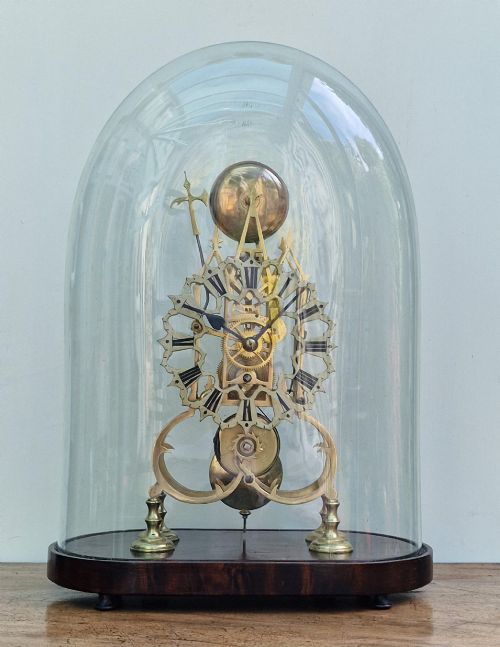
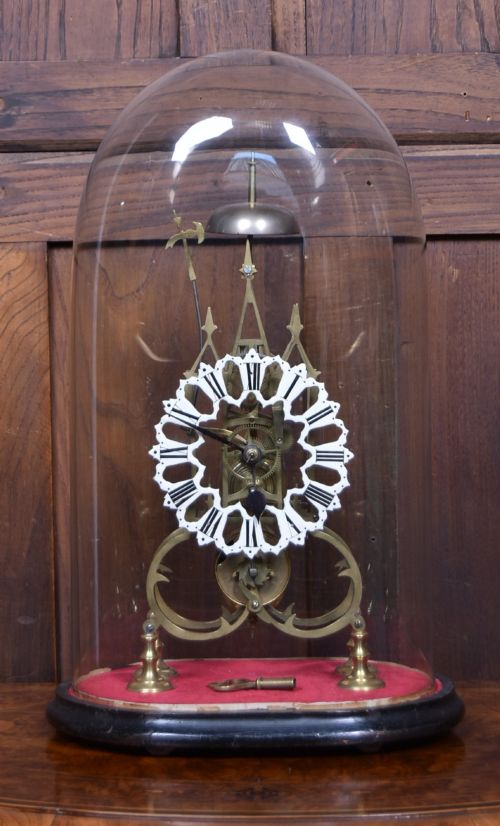
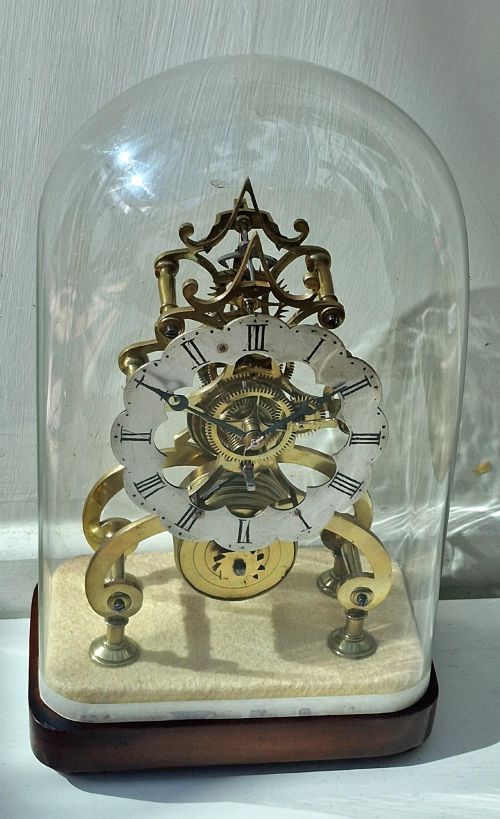
A brass skeleton clock dome brings together an open-framework timepiece and its original or associated glass cover, protecting the intricate brass mechanism from dust while displaying the movement from every angle. You encounter these most frequently in Victorian and 1920 forms, ranging from traditional fusee mantel clocks to electric movements housed beneath blown or drawn glass shades.
The objects span English and French workshops of the nineteenth and early twentieth centuries, incorporating styles from Victorian Gothic to Art Deco. Many sit upon wooden bases, including mahogany and ebonised wood, sometimes lined with velvet to cushion the glass dome and elevate the brass frame above the surface.
Distinguishing quality in mechanism and housing
The sophistication of the movement largely dictates the standard of the piece, with double fusee or passing strike mechanisms representing a higher tier of horological ambition than simple timepieces. Six-spoke wheel work and finely pierced brass plates demonstrate superior craftsmanship from the workshop.
The presence of an original glass dome and matching base heavily influences the integrity of the ensemble, as replacement covers alter the historical proportion. The precision of the brass finishing, the crispness of the wheel cutting, and the quality of the mounting base separate standard production from exceptional examples.
Brass Skeleton Clock Dome Retail Price Guide 2026
Typical asking prices for brass skeleton clock dome among the pieces listed under this phrase on Sellingantiques today, from the lower quarter to the upper quarter. They describe what is for sale here now, not the wider market.
Listings incorporate Victorian, Edwardian, and 1920s periods, using brass, glass, mahogany, marble, steel, ebonised wood, and velvet.
Richard Winter of Chieveley·Maurice and Marcel Moulin Favre-Bulle·Thwaites of London·Allen Colyer
The Brass Skeleton Clock Dome Glossary
- Skeleton clock
- A time-keeping device designed with open brass plates so the gear train and escapement remain fully visible from the exterior. These pieces often lack a traditional dial face, using skeletonised chapters instead.
- Fusee
- A conical pulley used in spring-driven clocks to equalise the declining power of the mainspring as it unwinds. This mechanism ensures consistent force is delivered to the gear train.
- Dome
- A blown or drawn glass cover shaped to sit over a mantel clock and protect the delicate brass mechanism from dust and atmospheric moisture. It typically rests on a dedicated wooden or marble plinth.
- Passing strike
- A horological complication where the clock strikes the bell or gong once on the hour or half-hour without playing a full sequence. It adds a subtle auditory element to the visual display of the moving gears.
- Torsion clock
- A timepiece controlled by a suspended pendulum that rotates back and forth in a twisting motion rather than swinging. Also known as a year clock, it often requires winding only once every twelve months.
Brass Skeleton Clock Dome: Frequently Asked Questions
What is a brass skeleton clock dome?
A brass skeleton clock dome is an exposed-movement timepiece housed beneath a protective glass cover, designed to display the intricate mechanical gear train.
These pieces combine functional horology with sculptural transparency, resting upon wooden or marble bases that often incorporate velvet linings.
How do you clean a glass dome safely?
Glass domes require careful removal from their bases using two hands, keeping them clear of the delicate brass clock mechanism underneath.
Use a soft cloth and mild glass cleaner on the exterior, ensuring the interior is completely dry before placing the cover back over the timepiece.
What powers a vintage skeleton clock?
Many traditional examples rely on a spring-driven fusee mechanism that requires periodic winding with a matched key.
Later twentieth-century versions incorporate electric movements, such as Bulle systems, which utilise electrical currents to drive the time-keeping mechanism.
How do I date a skeleton clock?
Dating relies on examining the style of the brass plate cutouts, the presence of fusee chains, and the design of the base or dial.
Victorian pieces often feature Gothic architectural influences, while 1920s examples frequently introduce electric components alongside traditional brass frameworks.