


Brass Scientific Thermometer
A brass scientific thermometer is a precision instrument of natural philosophy, sought after for accurate observation and striking mechanical form.
Brass Scientific Thermometer
When you search for a brass scientific thermometer, you encounter instruments created to measure atmospheric and ambient conditions across the Georgian, Victorian, and Edwardian periods.
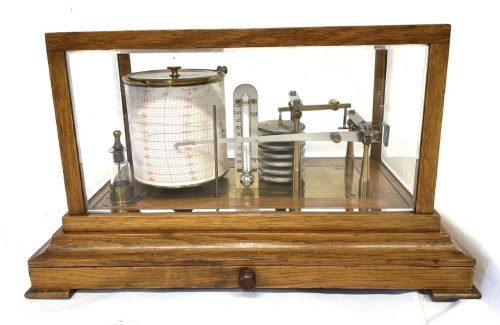
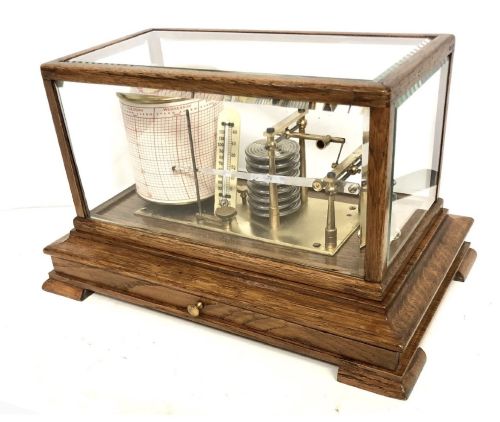
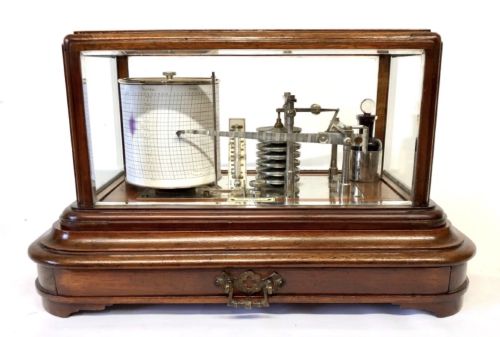
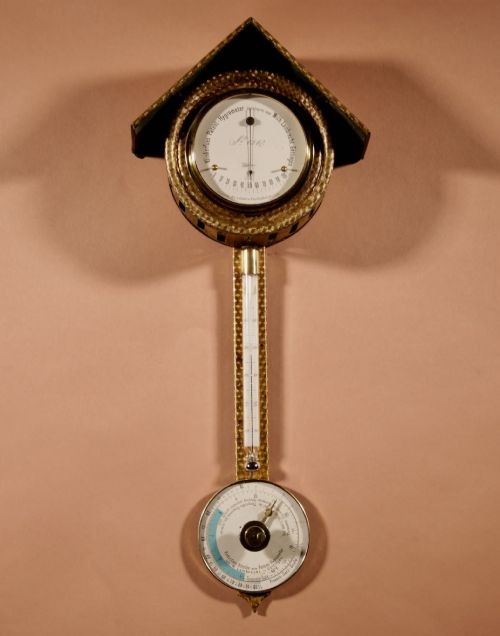
The selections on this page encompass standalone desk thermometers, hot bed thermometers, and more complex weather stations incorporating barographs, hygrometers, and thermoscopes.
Makers housed these instruments in timber cases of mahogany, oak, and rosewood, integrating exposed brass scales and glass tubes that reveal the mechanics of early meteorology.
How they were made
The construction of these pieces relies on cast and turned brass components paired with blown glass tubes containing mercury or spirit, mounted onto engraved paper or metal scales.
Cabinetmakers built protective housings using dense timbers such as mahogany, rosewood, and oak, frequently incorporating bevelled glass panels and fitted chart drawers.
Makers applied precision division to the metal scales, securing movements with steel fittings and brass fixings designed to withstand sustained usage in scientific and domestic settings.
Makers designed specific thermometers to monitor the warmth of plant roots in Victorian greenhouses, bringing science to the cucumber frame.
What varies in quality
The distinction between ordinary and exceptional pieces rests upon the precision of the engraved scales and the reputation of the instrument maker named on the dial.
Superior examples demonstrate meticulous cabinet work, utilising finely grained mahogany or rosewood with intact architectural mouldings and original bevelled glass.
Quality also resides in the survival of the original mercury column and legible paper dials, untouched by restoration or replacement.
Negretti & Zambra London·Short & Mason London·Patrick Adie of London·George Dollond of London·Watkins & Hill
The Brass Scientific Thermometer Glossary
- Barograph
- A self-recording barometer that plots atmospheric pressure onto a revolving paper chart over a weekly period. This mechanical device provides a continuous visual record of weather fluctuations.
- Hygrometer
- An instrument utilised for measuring the humidity or moisture content of the air. Versions often include wet and dry bulb configurations.
- Thermoscope
- An early device indicating changes in temperature without providing a calibrated numerical scale. These pieces reveal the experimental nature of early scientific instrument design.
- Aneroid barometer
- A barometer that measures atmospheric pressure through the expansion and contraction of an elastic metal box, operating without liquid. This invention allowed for more compact and portable weather instruments.
- Stick barometer
- A tall, vertical barometer where the mercury column is exposed against a graduated scale. These instruments represent some of the earliest domestic pressure gauges.
Brass Scientific Thermometer: Frequently Asked Questions
How do I read a mercury thermometer safely?
Examine the engraved scale alongside the glass tube to locate the top of the mercury column against the calibrated divisions. Ensure the instrument remains upright to prevent separation of the liquid column.
Handle the timber case gently and avoid exposing the instrument to sudden temperature extremes that might stress the vintage glass.
Where were these instruments placed originally?
Many desk thermometers and barographs sat upon library tables or office desks in affluent Victorian and Edwardian homes. Larger weather stations were mounted on walls or placed in specialised agricultural settings such as hot beds.
Living with them today involves placing them away from direct sunlight and strong drafts to preserve the timber and paper components.
How do I distinguish Georgian from Victorian instruments?
Georgian pieces often feature simpler mahogany banjo bodies with minimal stringing and straightforward scroll pediments. Victorian instruments frequently display heavier rosewood veneers, more elaborate brass bezels, and complex combinations with barographs or hygrometers.
Examining the style of the engraved lettering on the brass dial also helps determine the manufacturing period.
Can these antique thermometers still function accurately?
Many surviving examples retain their working capacity and continue to register ambient temperature or atmospheric pressure reliably. Calibration may drift over decades, but the mechanical principles remain sound.
Displaying them requires stable indoor conditions to protect the delicate internal linkages and paper scales from excessive moisture.