

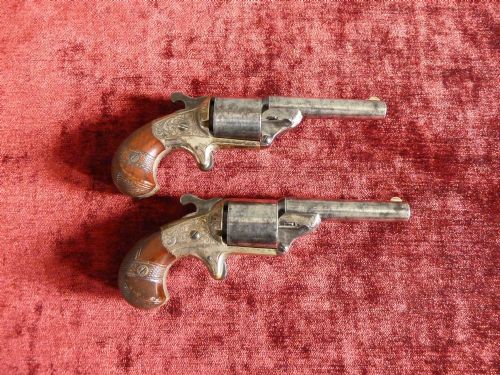
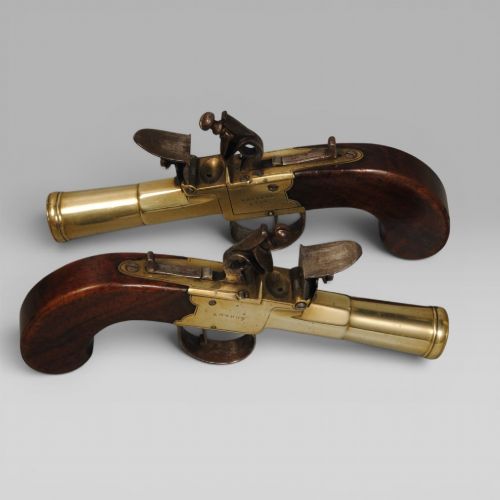


Brass Pocket Pistol
These brass pocket pistol examples are compact historical sidearms valued for their engineering and portability.
Brass Pocket Pistol
A brass pocket pistol represents a category of small historical firearms designed for personal defence during the eighteenth and nineteenth centuries. These concealable arms appear in forms such as turn-off, boxlock, and overcoat designs across eighteenth-century and nineteenth-century periods. A buyer exploring this phrase encounters compact mechanisms intended to fit into pockets, greatcoats, or carriage compartments.
The specimens seen on this page span Georgian, Victorian, and Napoleonic eras, reflecting diverse civilian and military uses. Originating primarily from English workshops, these pieces combine metal barrels with timber grips like walnut and oak. Each item demonstrates the adaptation of firearm technology for everyday carry by officers, gentlemen, and travellers.
Materials and construction methods
Makers constructed these sidearms utilising cast brass for barrels and frames, which resisted corrosion better than iron in damp conditions. Timber stocks, predominantly shaped from walnut or oak, were fitted to the metal actions with brass or steel furniture. Engraving often decorated the brass surfaces, adding ornamentation alongside functional strength.
Internal mechanisms relied on steel for springs, locks, and triggers to ensure reliable ignition under tension. Early examples employed flintlock ignition systems, while later nineteenth-century pieces utilised percussion caps or rimfire technology. Craftspeople integrated these diverse materials into compact proportions suited for concealment.
Brass Pocket Pistol Retail Price Guide 2026
Typical asking prices for brass pocket pistol among the pieces listed under this phrase on Sellingantiques today, from the lower quarter to the upper quarter. They describe what is for sale here now, not the wider market.
Listings feature pieces spanning the eighteenth and nineteenth centuries, incorporating brass, walnut, steel, oak, and velvet materials across Georgian and Victorian styles.
Assessing quality and finish
Quality in these firearms is evident in the crispness of the metal engraving and the precision of the action's fit into the timber stock. Finer pieces display signed maker details on the lockplate, demonstrating accountability from established workshops. Superior examples retain original finishes on both the brass components and the wooden grips without excessive restoration.
The integration of the mechanism dictates the level of craftsmanship, with smoother trigger pulls and tighter tolerances marking superior production. Workshop provenance, such as London or provincial signatures, influences the standing of individual specimens. Original accessories, when present, elevate the completeness of the piece.
La Motte·Thomas Henshaw·I Parr·John Rimes·J Robinson
The Brass Pocket Pistol Glossary
- Flintlock
- An ignition mechanism that uses a piece of flint striking a steel frizzen to create sparks for gunpowder ignition. This system dominated firearm design throughout the eighteenth century before being superseded.
- Turn-off
- A barrel design that unscrews from the breech to allow direct loading of the ball and powder. This feature eliminates the need for a ramrod in compact pocket arms.
- Boxlock
- A firearm action where the lock mechanism is enclosed within a single forged metal frame, often integral with the breech. This configuration provides a clean profile and robust construction.
- Percussion cap
- A small metal cup containing priming compound placed on a nipple to ignite the main charge when struck by the hammer. It replaced the flintlock system during the nineteenth century.
- Bore
- The interior diameter of the firearm barrel through which the projectile travels. Measurements in the evidence reference specific sizing standards like forty bore.
Brass Pocket Pistol: Frequently Asked Questions
What defines a brass pocket pistol?
A brass pocket pistol is a small, concealable firearm featuring a brass barrel or frame designed for personal protection during the eighteenth and nineteenth centuries. These sidearms were sized to fit inside a pocket or greatcoat.
They encompass various ignition systems, including flintlock and percussion mechanisms, produced by British and continental gunsmiths.
How were these pistols used historically?
Owners carried these compact arms for personal defence during travel, particularly by mail coach inspectors, officers, and gentlemen. Their small size allowed discreet carriage in pockets or holsters.
They served as a last line of security in an era before modern policing, suited for close-range encounters.
How do I care for a brass pocket pistol?
Preserving these firearms requires maintaining a stable environment with low humidity to protect both the metal components and the wooden stock. Avoid harsh chemical cleaners on the brass surfaces to retain historical patina.
Light application of specialist oil keeps steel parts stable without harming adjacent timber or velvet linings.
How do I distinguish eighteenth and nineteenth century models?
Eighteenth-century specimens typically utilise flintlock ignition systems, ornate brass casting, and distinct turn-off barrel configurations. Makers often signed these directly on the lockplate.
Nineteenth-century variants frequently incorporate percussion caps or pinfire and rimfire mechanisms, reflecting evolving industrial manufacturing methods and changing military standards.