

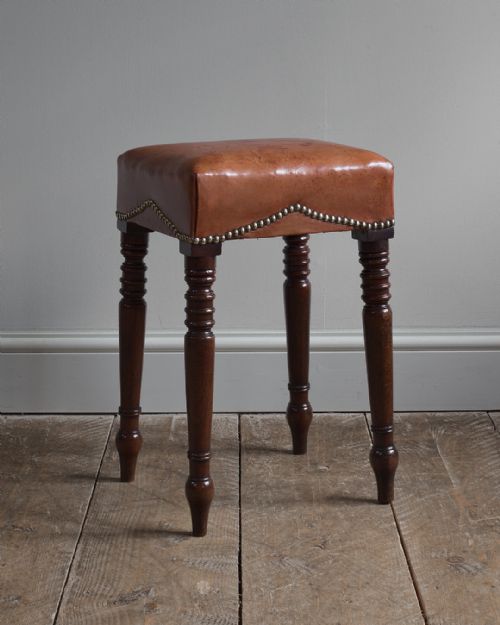
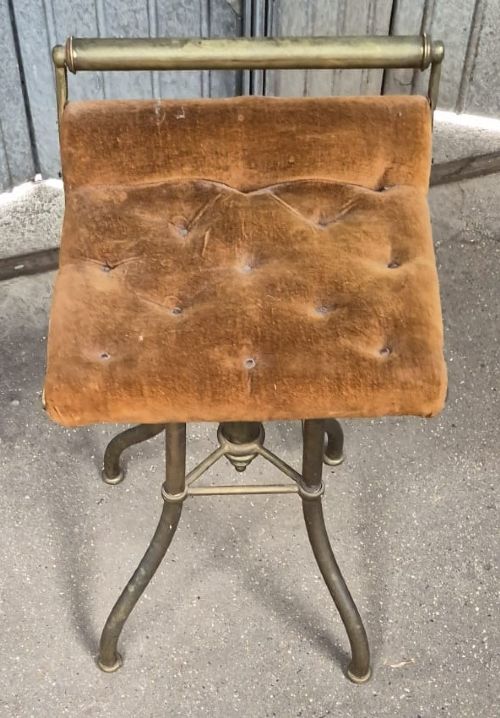


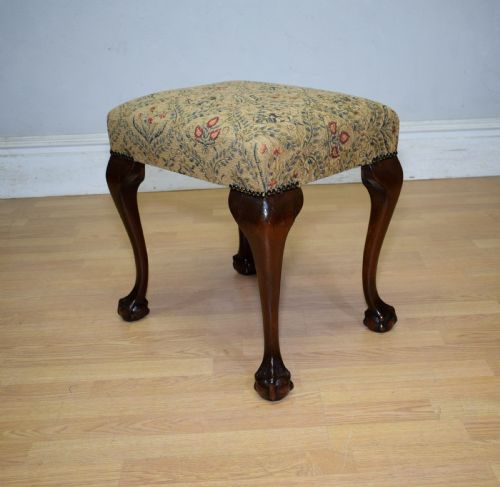
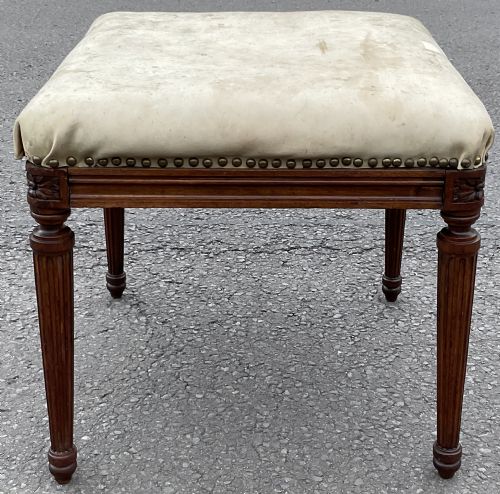


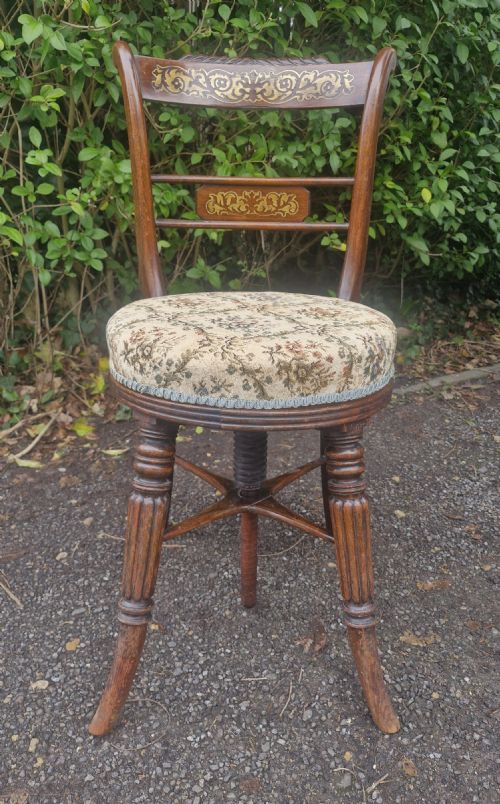
Brass Piano Stool
These brass piano stool designs combine solid mahogany, rosewood, and castors to support musicians and collectors alike with steady elegance.
Brass Piano Stool
When you search for a brass piano stool, you are looking at seating designed for keyboard players that integrates metal framing or inlay into its timber construction. These pieces range from swivel music chairs and X-framed rosewood benches to deep-buttoned Victorian footstools mounted on castors.
The versions you are most likely to meet on this page hail from the Victorian era and the nineteenth century, alongside earlier Regency interpretations. Mahogany forms the backbone of these listings, often paired with brass inlay or structural brass frames.
Makers such as Jas Shoolbred produced notable examples, while other pieces remain anonymous yet display fine craftsmanship in their rosewood and mahogany frames. Upholstery varies from green leather and velvet to wool tapestry and plain fabric.
How they were made
Cabinet makers built these frames using dense hardwoods like mahogany and rosewood, frequently incorporating brass stringing and inlay into the timber surfaces. Patent swivel mechanisms and steel components allowed music stools to adjust for the player.
Upholstery techniques involved deep buttoning and traditional stuffing over webbing, finished with velvet, wool tapestry, fabric, or leather. Brass castors were fitted to the feet to permit easy movement across the floor.
Brass Piano Stool Retail Price Guide 2026
Typical asking prices for brass piano stool among the pieces listed under this phrase on Sellingantiques today, from the lower quarter to the upper quarter. They describe what is for sale here now, not the wider market.
What varies in quality
The refinement of the timber and the precision of the brass inlay set the higher tier apart from standard workshop output. Finely figured rosewood and crisp mahogany carving indicate superior cabinet work.
The complexity of the mechanism, such as a patent music chair adjustment or an X-frame construction, dictates the mechanical sophistication of the piece. Original upholstery materials like green leather or wool tapestry also influence the integrity of the surviving object.
Jas Shoolbred
The Brass Piano Stool Glossary
- Regency
- A stylistic period spanning the early nineteenth century defined by classical restraint and polished rosewood surfaces.
- Victorian
- A nineteenth-century period associated with robust mahogany construction, deep buttoning, and heavy castors.
- X-Framed
- A structural form where the legs cross in an X shape, providing rigid support to rosewood benches.
- Brass Inlay
- Thin strips of brass set flush into mahogany or rosewood surfaces to create decorative geometric patterns.
- Patent Music Chair
- An adjustable seating form patented in the nineteenth century to serve musicians at the keyboard.
Brass Piano Stool: Frequently Asked Questions
What is a brass piano stool?
A brass piano stool is a nineteenth-century seat for keyboard players featuring brass frames, inlay, or castors.
These pieces use mahogany or rosewood and often include adjustable swivel mechanisms.
How do I date a music stool?
Dating relies on timber choices like rosewood and mahogany, alongside style markers from the Regency and Victorian periods.
Patent mechanisms and brass inlay techniques also help assign pieces to the nineteenth century.
What materials are used?
Listings show frames built from mahogany and rosewood combined with structural brass and steel.
Seats are upholstered in green leather, velvet, fabric, or wool tapestry.
Are they comfortable for daily use?
Many examples feature deep-buttoned upholstery and adjustable heights designed originally for long practice sessions.
Solid timber frames and sturdy castors make them practical for modern seating.