



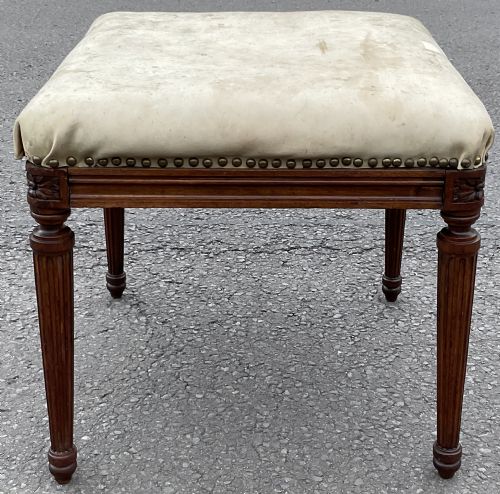


Brass Piano Seat
A brass piano seat brings elegant metalwork and sturdy timber together to support musicians in style.
Brass Piano Seat
A brass piano seat is a functional music stool designed for keyboard players, appearing across Regency, Victorian, and late nineteenth century periods. These seating pieces combine durable timber frames with metal accents, serving players at the instrument.
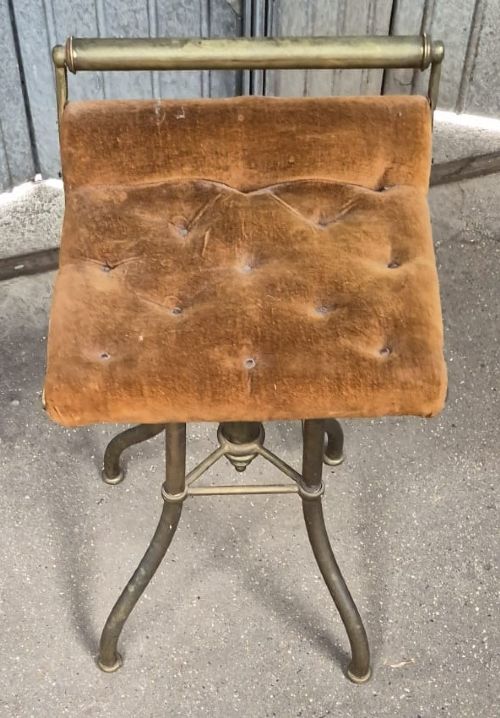
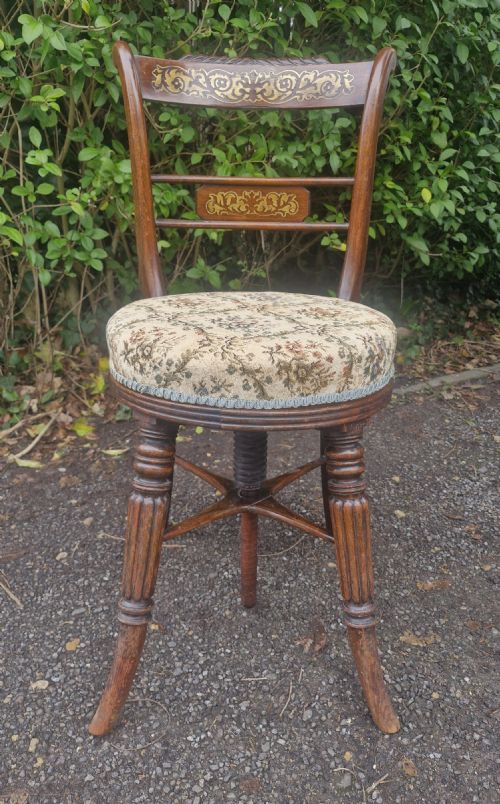
The most common examples on this page are mahogany and rosewood music stools and benches featuring brass inlay, brass frames, or patent mechanical adjustments. Makers utilised timber such as oak alongside velvet, leather, and fabric upholstery to finish the tops.
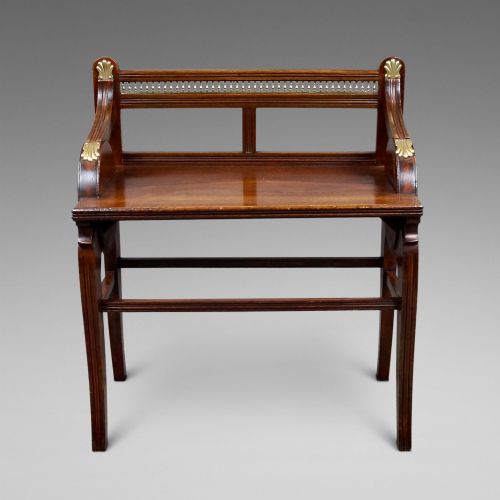
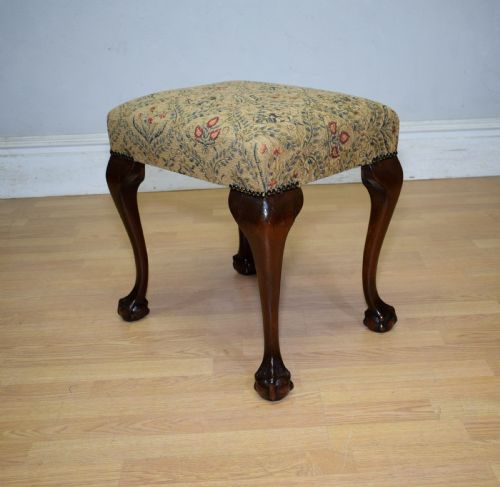
Beyond standard music stools, buyers encounter dressing stools, X-framed chairs, and Chippendale style stools sharing similar period materials. These forms range from simple upholstered seats to adjustable patent music chairs intended for the salon or parlour.
Materials and construction
Frames are constructed from dense hardwoods like mahogany and rosewood, sometimes utilising simulated rosewood finishes alongside oak and structural brass or steel elements. Woodworkers shaped these timbers into sturdy benches, X-frames, and chairs designed to endure regular sitting and adjusting.
Metalwork forms a defining characteristic, with brass deployed for decorative inlay, structural frames, and mechanical piano stool mechanisms. Artisans integrated these brass components flush into the timber surfaces or built exposed metal frames paired with steel parts.
Upholstery completes the seat tops, employing materials such as green leather, velvet, and various woven fabrics stretched over padding. These soft surfaces were secured to mahogany or rosewood frames to provide comfort during extended practice.
Brass Piano Seat Retail Price Guide 2026
Typical asking prices for brass piano seat among the pieces listed under this phrase on Sellingantiques today, from the lower quarter to the upper quarter. They describe what is for sale here now, not the wider market.
Green leather and plush velvet await the dedicated pianist, ready for hours of scales or a dramatic pause.
Assessing quality and execution
Quality separates standard production items from finer pieces through the precision of the brass inlay and the selection of timber figure. Superior examples display crisp metalwork set cleanly into rich mahogany or rosewood rather than simple painted decoration.
The sophistication of the mechanical parts defines the upper tier of music stools, particularly in patent designs allowing height adjustment. Smooth operation of internal brass and steel mechanisms indicates superior manufacturing standards during the nineteenth century.
Jas Shoolbred
The Brass Piano Seat Glossary
- Regency
- A British design period spanning the early nineteenth century, known for classical influences and contrasting timber inlays. Pieces from this era often feature refined brass detailing.
- Victorian
- The period of the nineteenth century covering the reign of Queen Victoria, encompassing diverse revival styles and heavy timber construction. Music stools from this era frequently utilise mahogany and upholstered velvet.
- X-Framed
- A seating structure formed by intersecting diagonal timbers creating an X shape when viewed from the side. This classical form provides inherent stability to stools and benches.
- Patent
- A designation indicating a mechanical invention protected by official registration, commonly found on adjustable music chairs. These pieces utilise clever brass and steel engineering to alter seat height.
Brass Piano Seat: Frequently Asked Questions
What is a brass piano seat?
A brass piano seat is a nineteenth century music stool or bench incorporating brass framing or inlay alongside timber structures like mahogany and rosewood. These pieces were built to support musicians while complementing period parlour decor.
They combine practical seating with decorative metalwork, often featuring upholstered tops in leather or velvet. Some examples include patent mechanisms for height adjustment.
How do I identify a Regency music stool?
Regency music stools are distinguished by early nineteenth century classical design elements, including precise brass inlay set into rosewood or mahogany. These pieces reflect formal aesthetic standards of the period.
They often appear alongside simulated rosewood finishes and balanced proportions tailored for the piano or harp.
Were these seats only used for pianos?
While primarily designed as music stools for keyboard instruments, similar frames served harpists and functioned as dressing stools in bedrooms. The adjustable mechanisms accommodated different instrumental postures.
Their sturdy construction and decorative qualities made them versatile small seats throughout the home.
What woods were used for these seats?
Cabinetmakers utilised dense hardwoods including mahogany and rosewood, occasionally employing oak for internal framing. Simulated rosewood finishes also appear on certain period examples.
These timbers provided the structural strength needed to support brass inlay and mechanical seating components.