

Brass Pendulum Table Clock
A brass pendulum table clock brings steady movement and polished metal into a room, keeping time with a slow, visible swing.
Brass Pendulum Table Clock
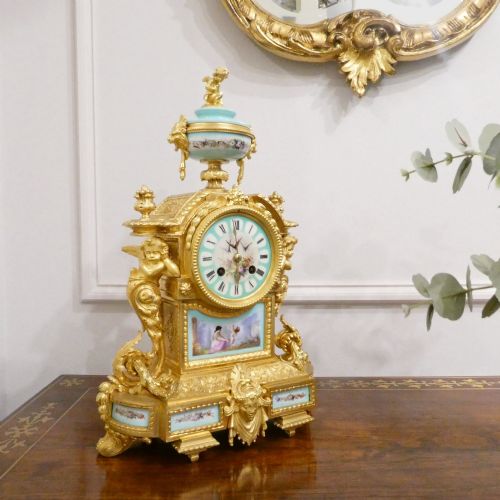
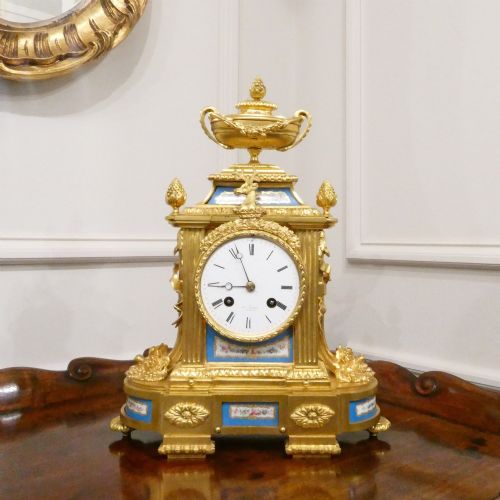
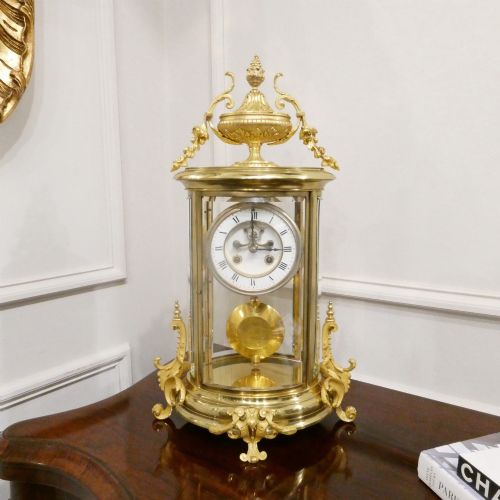
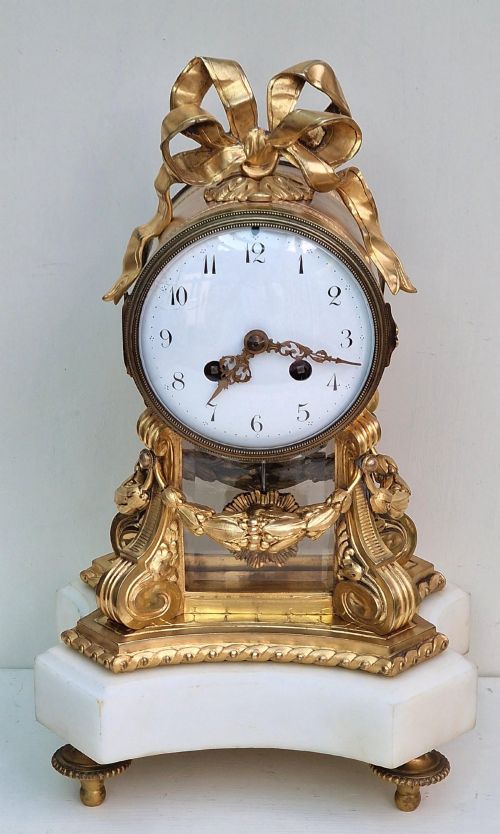
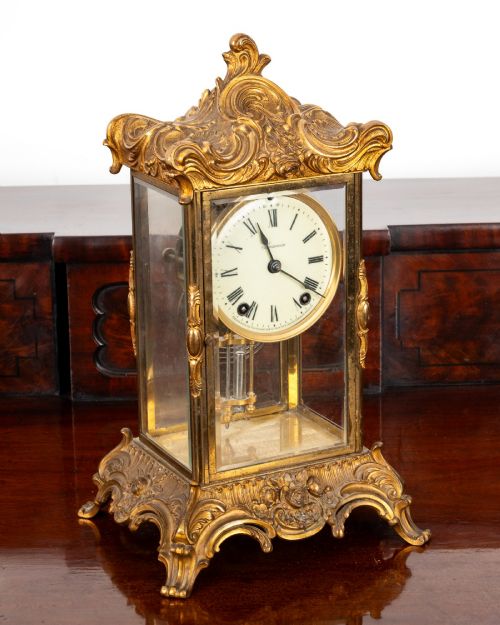
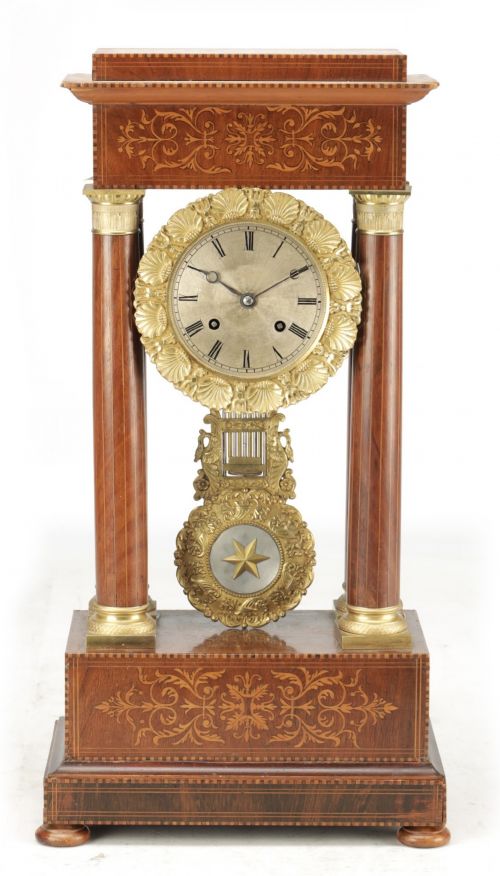
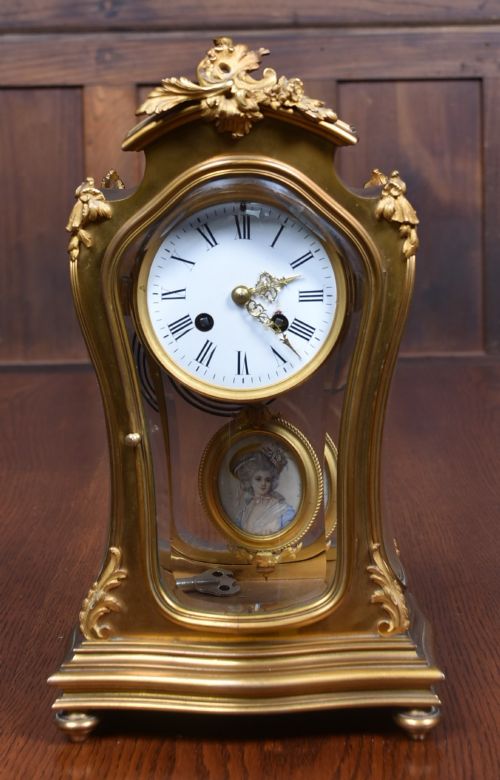
A brass pendulum table clock stands on a mantelpiece, shelf, or desk, housing a mechanical movement driven by a spring or weight. These timepieces range from heavy architectural gilt bronze cases to delicate glass-walled designs that reveal the internal escapement.
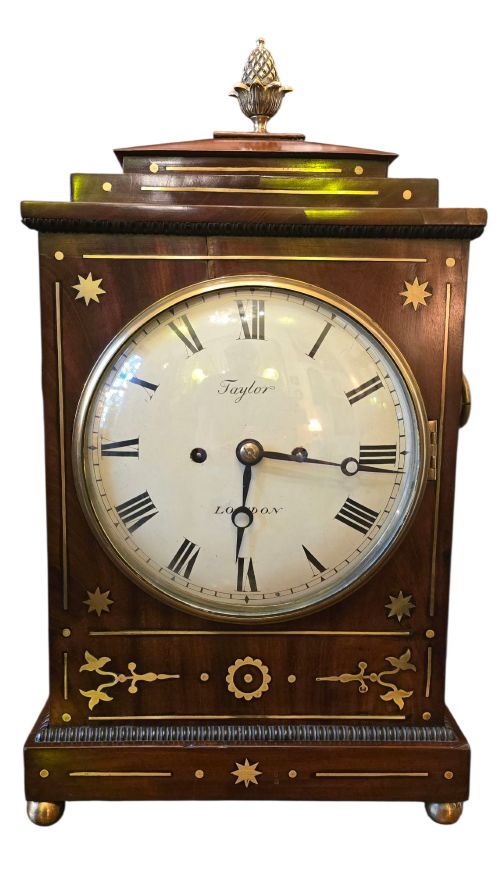
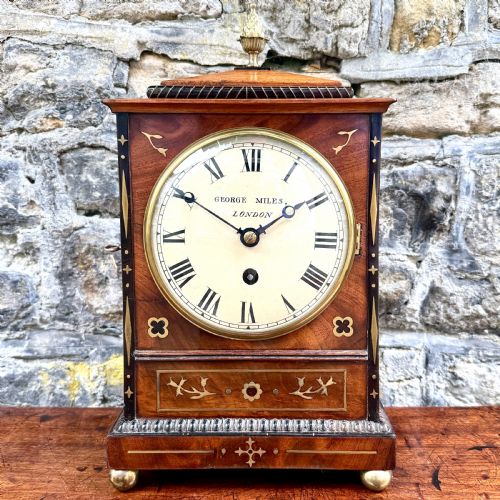
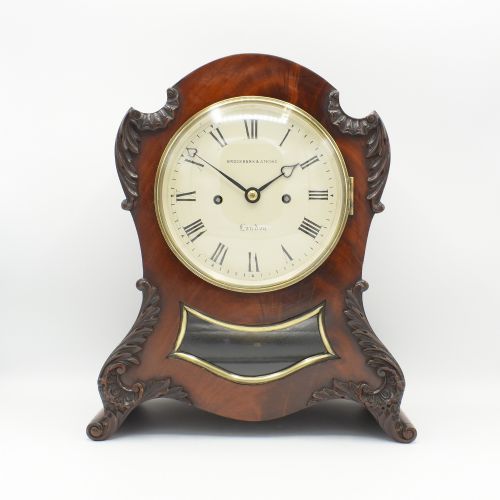
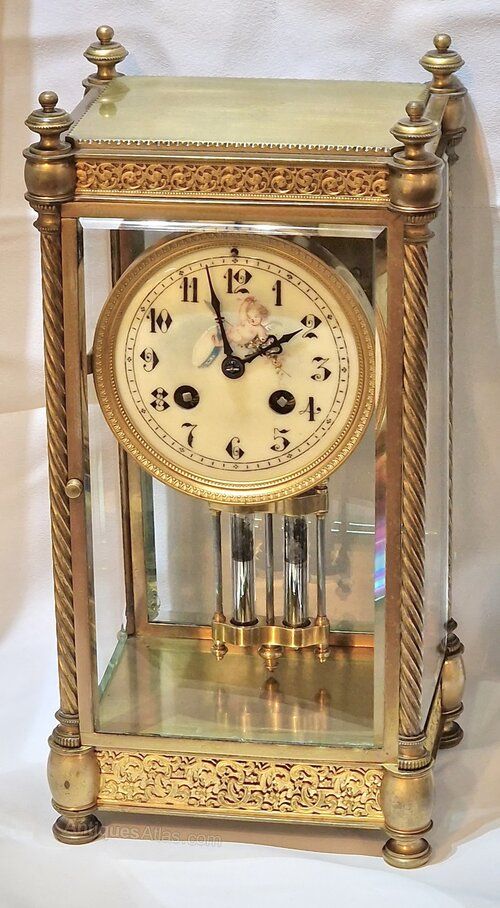
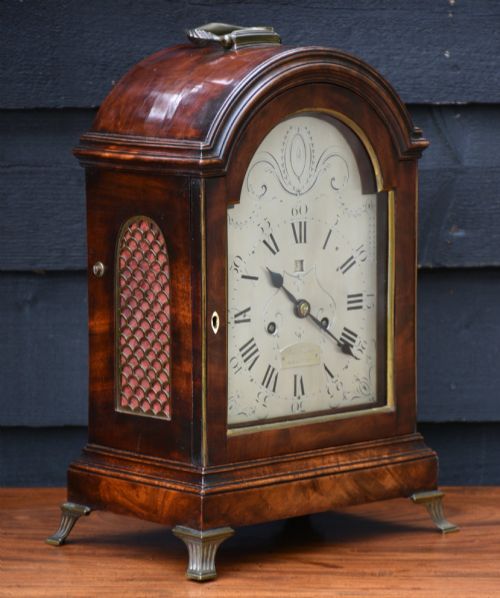
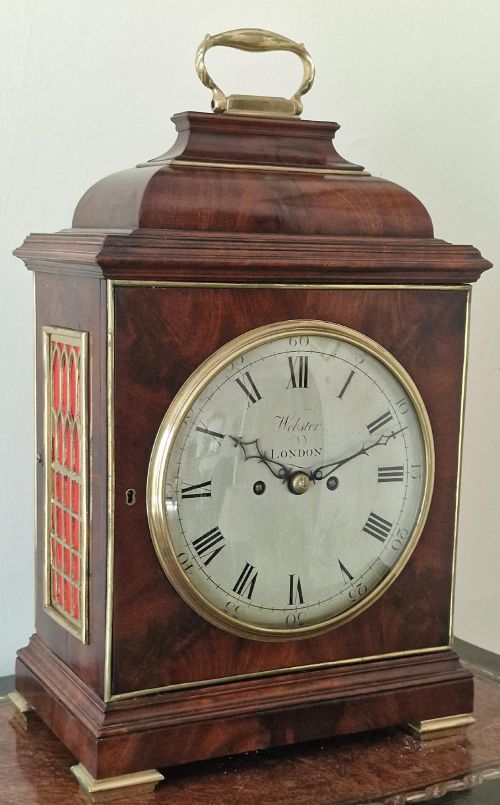
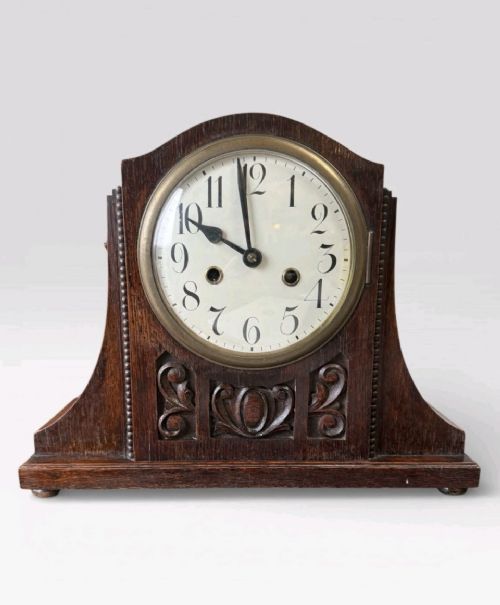
The selections available here lean heavily towards French nineteenth-century production, particularly four-glass models and ornate revival styles. Alongside these continental pieces, traditional British bracket clocks in mahogany demonstrate alternative joinery and dial layouts.
Distinguishing quality in horology
Superior examples separate themselves through the crispness of the cast bronze ornament and the hand-finished precision of the internal movement components. Maker-signed backplates and intricate escapement designs indicate higher workshop standards.
Case materials also dictate overall standard, with heavy fire-gilt surfaces and undamaged bevelled glass panels outlasting thin lacquered brass plating and crude timber veneers.
Listings span from the Georgian period through the Victorian era and into the early twentieth century, incorporating mahogany, brass, porcelain, and marble.
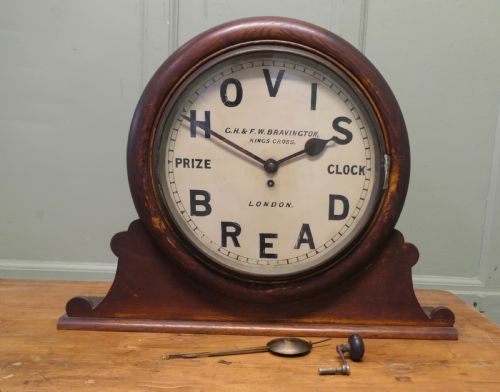
Henry Marc·Samuel Marti·Brockbanks And Atkins·G H And F W Bravington·Webster·Barwise·Ansonia·Maurice And Marcel Moulin Favre Bulle·Rodier·Le Roy·Mappin And Webb·Delettrez·Japy Freres·Thomas Moss·Tiffany
The Brass Pendulum Table Clock Glossary
- Four glass clock
- A mantel clock enclosed by four bevelled glass panels held within a brass frame, allowing an unhindered view of the swinging pendulum and movement.
- Bracket clock
- A portable table clock, traditionally housed in a wooden case with a handle or flat top, designed to sit upon a matching bracket or desk.
- Fusee
- A conical pulley used in mechanical clocks to maintain an even pull on the movement as the mainspring unwinds.
- Ormolu
- Gilded bronze produced by applying a mercury and gold amalgam to cast bronze, then heating to drive off the mercury.
- Dial
- The face of the clock upon which the hours and minutes are marked by hands.
Brass Pendulum Table Clock: Frequently Asked Questions
How do I wind a mechanical table clock?
Most mechanical clocks use a dedicated winding key inserted into holes on the dial to tension the internal springs. Turn the key gently until resistance increases, taking care not to overwind the movement.
Ensure you match the key size correctly to avoid damaging the arbors. Pendulum clocks should be set ticking evenly after winding to maintain proper beat.
What is a four glass clock?
A four glass clock is a mantel timepiece constructed with glass panels on the front, back, and both sides. This design exposes the movement and pendulum to view from every angle.
Originating largely in nineteenth-century France, these pieces often feature mercury-filled pendulums designed to compensate for temperature changes.
How do I date a brass mantel clock?
Dating relies on stylistic clues, maker signatures stamped on the movement backplate, and case materials. French nineteenth-century pieces often bear foundry cachets or exhibition medals.
British bracket clocks frequently display maker names on the dial face and engraved backplates, providing direct links to operational years.
Where should I place a pendulum clock?
Pendulum clocks require a stable, level surface such as a heavy mantelpiece or sturdy table to keep the beat even. Avoid placing them in areas subject to excessive vibrations or direct sunlight.
Air currents and temperature fluctuations near radiators can also affect the delicate balance of wood cases and mechanical oils.