



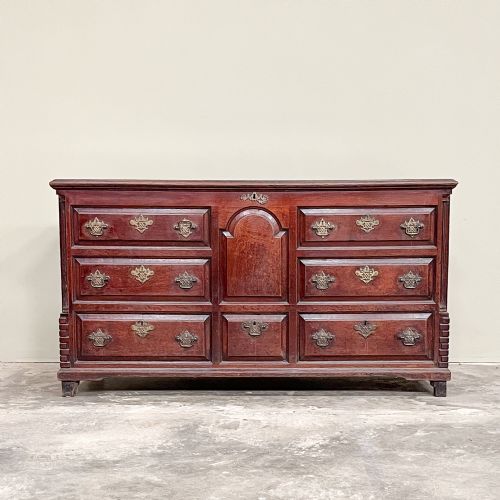


Brass Mount Bed
A brass mount bed brings substantial presence to a room through heavy metal detailing set against timber or painted woodwork.
Brass Mount Bed
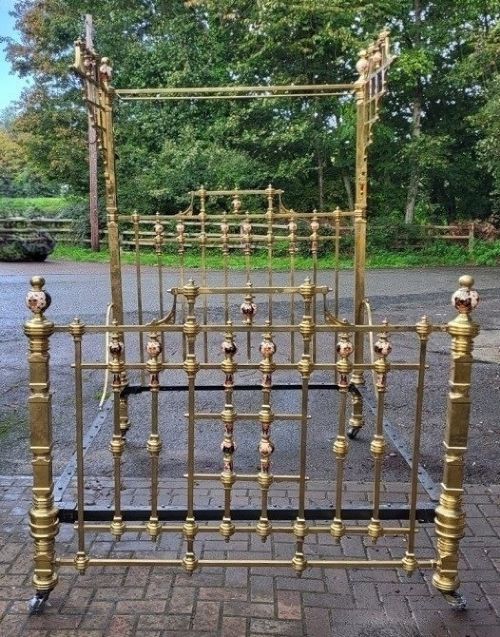
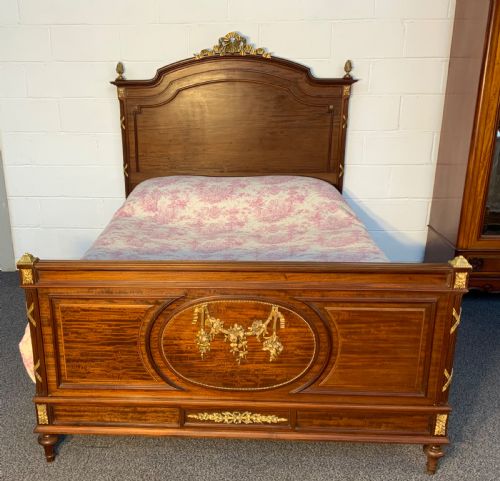
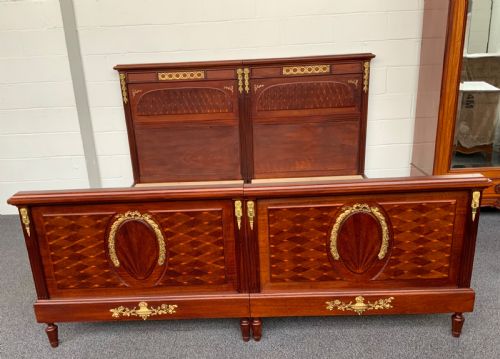
A brass mount bed combines substantial wooden frames with metallic accents, spanning styles from Victorian half testers to Edwardian walnut designs. Buyers seeking a brass mount bed will frequently encounter French frameworks incorporating detailing, embellishments, or mounts alongside mahogany, walnut, and painted surfaces.
The selection ranges across several periods including the nineteenth century and the Edwardian era, alongside related forms such as daybeds and mule chests. These items serve as central bedroom centrepieces, uniting structural timber with contrasting metallic highlights.
Materials and construction
Construction relies on solid timbers and veneers including mahogany, plum pudding mahogany, walnut, and oak, paired with painted wooden finishes and iron elements. Structural integrity is matched by decorative application, using cast and polished brass details fixed directly to wooden headboards and footboards.
Surface treatments vary from ebonised finishes and natural wood grains to painted woodwork, with gilt brass components adding bright reflective highlights against dark or muted backdrops.
Brass Mount Bed Retail Price Guide 2026
Typical asking prices for brass mount bed among the pieces listed under this phrase on Sellingantiques today, from the lower quarter to the upper quarter. They describe what is for sale here now, not the wider market.
Plum pudding mahogany brings a speckled texture that looks remarkably like a heavily fruited dessert baked inside the timber grain.
Assessing quality and execution
Quality rests on the depth of timber selection and the precision of the metal mounts, distinguishing standard production from exhibition pieces. Superior examples integrate cabinetry and metalwork seamlessly, where the weight of the mahogany or walnut supports intricate brass detailing without structural compromise.
Willian Trotter
The Brass Mount Bed Glossary
- Half tester
- A bed type featuring a partial canopy extending from the headboard rather than covering the full length of the frame. This form provides a commanding silhouette while leaving the foot of the bed open.
- Mule chest
- A storage chest combining drawers beneath a primary lift-lid compartment, frequently constructed from oak during earlier periods. It represents a traditional precursor to bedroom storage integration.
- Neoclassical
- A design style drawing inspiration from classical antiquity, visible in symmetrical proportions and restrained decorative mounts. It appears on nineteenth-century French frames.
- Veneer
- A thin layer of superior wood applied over a secondary timber base to create decorative grain patterns. Plum pudding mahogany is a notable example seen in these pieces.
Brass Mount Bed: Frequently Asked Questions
What periods do these beds come from?
The listings span from the early eighteenth century through the Victorian and Edwardian eras up to the early twentieth century. Most examples cluster in the nineteenth and early twentieth centuries.
French stylistic influences predominate alongside British cabinetmaking traditions, encompassing both mahogany frames and painted wooden constructions.
How do I identify a French style bed?
French beds are typically characterised by distinctive proportions, curved headboards, and applied brass detailing or embellishments. They often feature richly grained veneers such as mahogany or walnut.
These frames emphasise decorative presence through matched bedside cabinetry and classical styling cues.
Are daybeds included in this category?
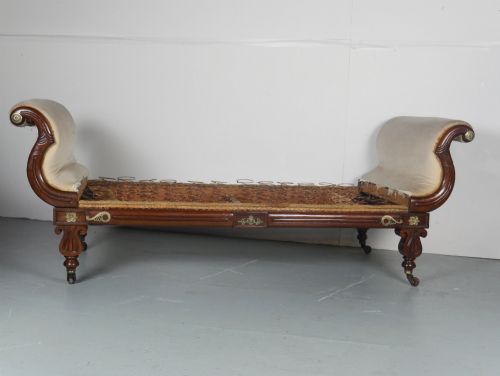
Daybeds and chaise longues appear alongside traditional bed frames and mule chests within the broader selection. These alternative forms share period construction methods and decorative timberwork.
They offer versatile seating and lounging options while maintaining the same material palette of wood and metal.
What woods are used in these frames?
Construction materials include mahogany, plum pudding mahogany, walnut, oak, and painted wooden surfaces. Iron and ceramic components also appear in supporting structural roles.
Metal elements are consistently rendered in brass or gilt brass to contrast with the dark or painted timber bodies.