





Brass Lion Paw Feet
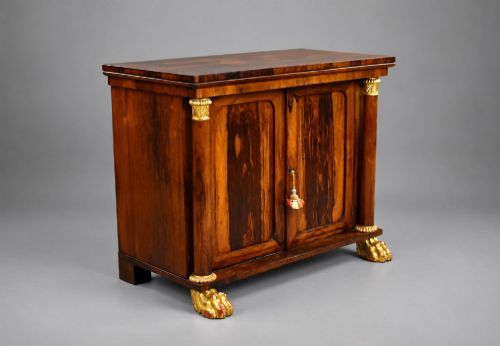
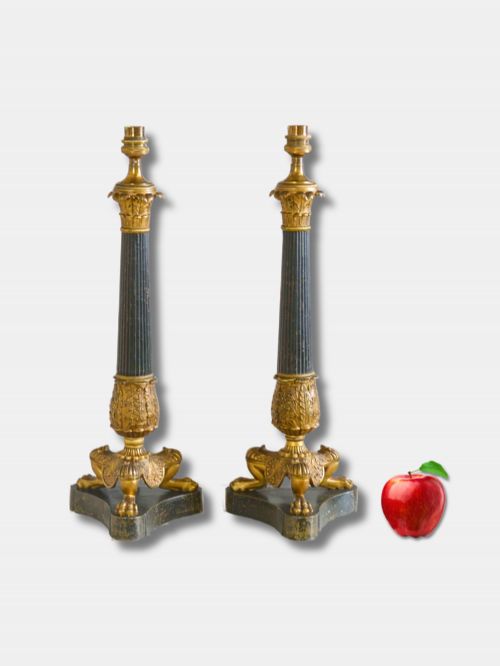
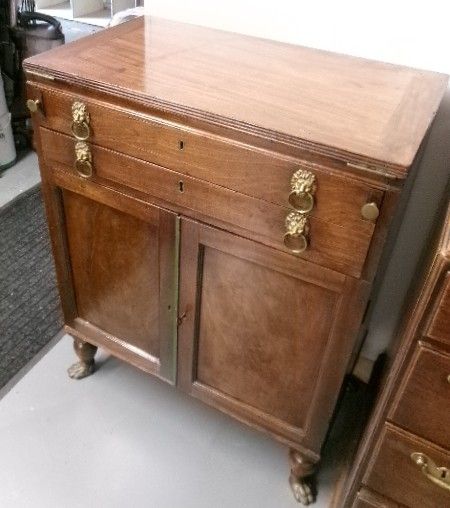
Brass lion paw feet anchor heavy mahogany writing desks, French ormolu column lamps, and coal buckets with undeniable presence.
Brass Lion Paw Feet
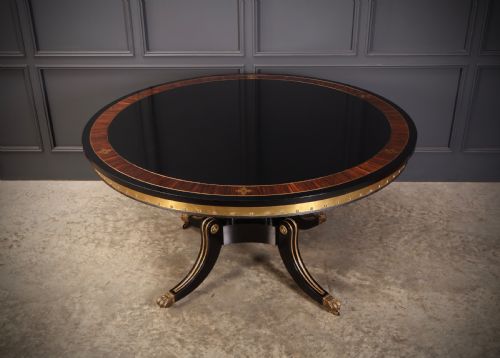
Brass lion paw feet appear on heavy timber furnishings and cast metal vessels spanning the eighteenth, nineteenth, and early twentieth centuries. These hardware mounts transform the base of a piece, lifting mahogany writing desks, centre tables, and wine coolers clear of the floor with sculptural authority.
The versions most commonly met on this page belong to the Regency, Georgian, and Victorian periods, often paired with dense woods like mahogany and ebonised timber. Alongside furniture supports, the search phrase leads directly to lighting and fireplace metalwork, including ormolu column lamps, planters, and coal scuttles.
Makers across British, French, and Dutch traditions utilised these cast mounts to signal neoclassical grandeur or domestic utility. From French empire revival table lamps to Dutch jardinieres, the paw foot unites disparate functional objects under a single decorative vocabulary.
How they were made
Foundry workers cast brass, ormolu, and patinated bronze into detailed claws and fur textures, frequently finishing the metal with fire-gilding or polish. These cast elements were then fastened securely to the corners and legs of heavy furniture or formed the primary base for decorative metalware.
Cabinet makers joined these metal mounts to dense cabinet woods including mahogany, ebonised wood, and wood veneer, often incorporating brass inlay work into the surrounding surfaces. Copper body construction also appears alongside brass components in utilitarian coal buckets and scuttles.
Brass Lion Paw Feet Retail Price Guide 2026
Typical asking prices for brass lion paw feet among the pieces listed under this phrase on Sellingantiques today, from the lower quarter to the upper quarter. They describe what is for sale here now, not the wider market.
Listings feature mahogany, ormolu, patinated bronze, and marble combined with brass lion paw feet.
What varies in quality
The refinement of the metal casting dictates the visual success of the piece, separating crisp, hand-chased fur and claw definition from soft, summary moulding. Superior ormolu and brass retain deep articulation that catches light, while lesser examples appear flat and indistinct.
Integration between the metal foot and the host material reveals the standard of manufacture. Top tier examples demonstrate seamless alignment where timber or bronze meets the brass mount, maintaining structural integrity and proportional balance.
The Brass Lion Paw Feet Glossary
- Ormolu
- Gilded bronze produced by applying an amalgam of gold and mercury to a bronze base and heating it until the mercury vaporised. This technique creates a rich, enduring golden surface seen on French lamps and mounts.
- Ebonised wood
- Timber treated with stain or dye to imitate expensive ebony. It provides a dark, high-contrast background that makes bright brass paw feet stand out.
- Jardiniere
- An ornamental pot or stand designed to hold plants or flowers. These vessels often incorporate brass bodies and feet for domestic display.
- Sofa table
- A small rectangular table traditionally placed in front of a sofa, featuring drop leaves on either side. These tables frequently rest on pedestal bases supported by brass paw feet.
Brass Lion Paw Feet: Frequently Asked Questions
What periods do these pieces come from?
The listings span the eighteenth, nineteenth, and early twentieth centuries, covering Georgian, Regency, and Victorian eras alongside French and Dutch traditions.
Dates range from eighteenth century items up to early twentieth century pieces, showing how the design motif persisted across distinct historical design movements.
How do I care for brass feet?
Maintain the metal with a soft dry cloth and avoid harsh chemical cleaners that strip historical surface patination. Gentle dusting preserves the natural ageing of the brass and bronze components.
Protect the surrounding wood veneers from moisture when cleaning adjacent surfaces, ensuring both the metal mounts and timber frames remain stable.
Where were these metal mounts used?
Foundry workers cast these lion paw designs for both fine cabinet work and heavy fireplace equipment. They appear beneath writing desks, centre tables, and wine coolers.
Makers also utilised them on decorative lighting fixtures, including column table lamps, as well as utility vessels like coal scuttles and jardinieres.
How do I distinguish French and British styles?
French pieces often utilise bright ormolu and patinated bronze within empire revival aesthetics, focusing on classical architectural column forms and rich gilding.
British and Dutch examples lean towards heavy mahogany furniture and robust brass metalware, prioritising domestic utility alongside formal neoclassical design.