


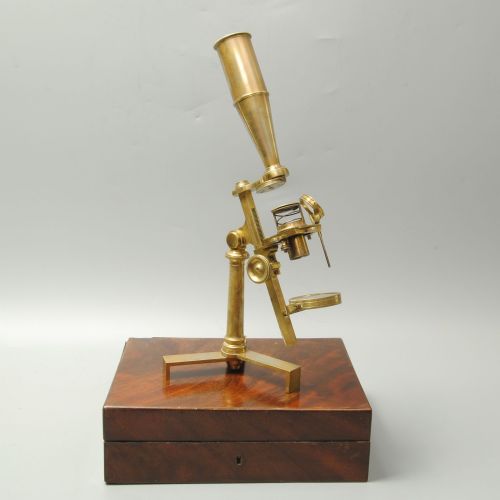


Brass Laboratory Instrument
A brass laboratory instrument brings tactile scientific history into the room, valued for its ingenious mechanics and polished metal finish.
Brass Laboratory Instrument
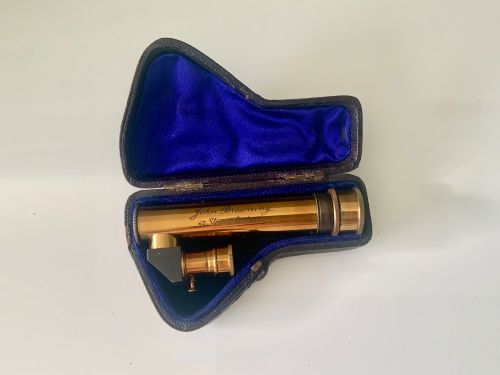
When you search for a brass laboratory instrument, you are examining a diverse collection of historical scientific apparatuses spanning the eighteenth century to the mid-twentieth century. These items include microscopes, galvanometers, spectroscopes, and precision scales designed for research, demonstration, and medical use. You are most likely to meet Victorian and Edwardian examples housed in fitted wooden cases.
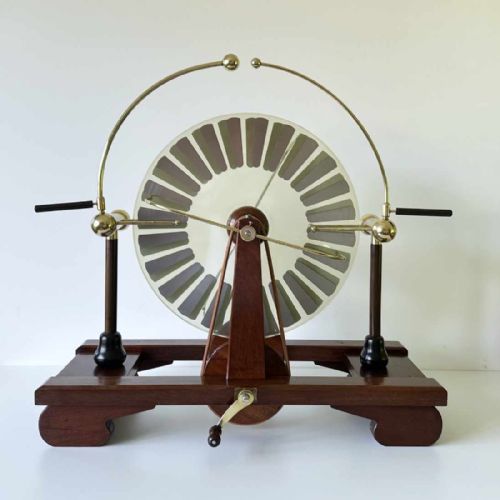
The objects take various functional forms, from delicate thermoscopes and thread testers to large electrostatic machines and induction coils. Makers utilised brass predominantly, often paired with glass, mahogany, velvet, and iron components to ensure stability and precision during experimentation. Each piece reflects the specific scientific inquiry of its period, whether optics, electricity, or chemistry.
Materials and construction
Makers constructed these instruments primarily from cast and turned brass, chosen for its durability, resistance to corrosion, and capacity to be machined to tight tolerances. Components were frequently hand-finished, polished, and lacquered to protect the metal from tarnishing in active laboratory environments.
Support structures and storage boxes were typically fashioned from dense hardwoods such as mahogany or boxwood, occasionally lined with velvet or leather to secure delicate glass elements. Iron and rubber also appear where structural strength or insulation was required for electrical apparatuses.
Brass Laboratory Instrument Retail Price Guide 2026
Typical asking prices for brass laboratory instrument among the pieces listed under this phrase on Sellingantiques today, from the lower quarter to the upper quarter. They describe what is for sale here now, not the wider market.
Early experimenters relied on velvet-lined wooden boxes to keep stray electrical sparks and delicate glass tubes from colliding during carriage rides.
Assessing quality in scientific antiques
Quality in these scientific tools depends upon the precision of the mechanical engineering and the crispness of any engraved maker signatures or scale graduations. Finer pieces demonstrate superior casting clean-up, smooth focusing or rotating actions, and robust dovetail-jointed fitted cases.
The presence of original associated components, trade papers, and well-preserved optical or glass parts elevates an example significantly. Pieces that retain their original lacquering and structural integrity without modern replacement parts represent the higher standard of survival.
John Browning Strand London·G. Adam of Paris·H Hughes & Son London·Watkins & Hill·Swift & Son·Heinrich Daniel Ruhmkorff
The Brass Laboratory Instrument Glossary
- Spectroscope
- An optical device used to measure properties of light over a specific portion of the electromagnetic spectrum. It typically utilises prisms and fine slits to disperse light into visible spectral lines.
- Galvanometer
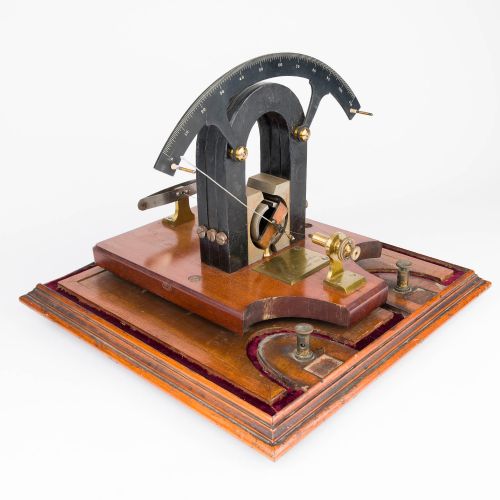
- An electromechanical instrument used for detecting and measuring small electric currents. The D'Arsonval design employs a coil of wire in a magnetic field to register current deflection.
- Thermoscope
- An early type of thermometer that shows changes in temperature without necessarily measuring absolute values. Boxwood versions rely on the expansion and contraction of materials.
- Geissler tube
- A sealed glass cylinder containing rarefied gas used by nineteenth-century researchers to demonstrate electrical discharge phenomena. When high voltage is applied, the gas glows with characteristic colours.
- Induction coil
- An electrical device used to produce high-voltage pulses from a low-voltage direct current source. Heinrich Daniel Ruhmkorff improved this apparatus to generate powerful sparks.
Brass Laboratory Instrument: Frequently Asked Questions
How do I date a brass microscope?
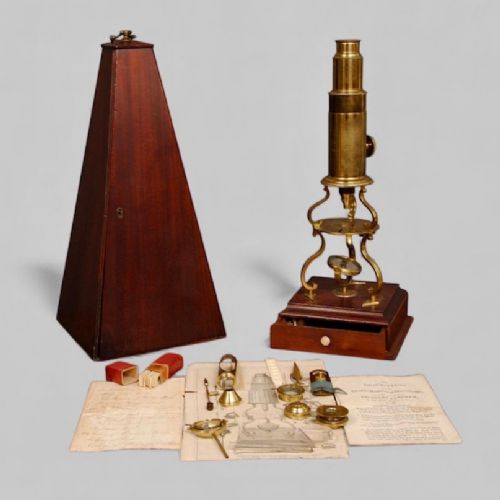
Dating a microscope involves examining the optical tube design, the shape of the brass base, and the presence of any engraved maker signatures or patent dates. Victorian and Edwardian examples often display distinct structural shifts from pillar stands to horseshoe bases.
Associated trade papers or fitted mahogany cases can also provide documentary evidence that narrows down the decade of production.
Were these instruments used in schools?
Many of the surviving apparatuses served dual purposes in both professional research laboratories and educational demonstration halls. Makers produced robust items such as induction coils and electrostatic machines specifically for classroom physics lectures.
Institutional sign-writing or trade labels occasionally indicate where an instrument spent its working life before entering the collector market.
How should I clean antique brass?
Preserving the original aged patina is generally preferred by collectors over aggressive polishing that removes historical wear and maker marks. Dusting with a soft brush and applying a gentle microcrystalline wax can protect the metal without stripping its character.
Harsh chemical brass cleaners should be avoided because they eliminate the natural oxidation accumulated over centuries.
Can these scientific instruments still function?
Some mechanical and optical devices remain fully operational, such as beam scales, thread testers, and certain compound microscopes. Electrical apparatuses like Wimshurst machines or induction coils require specialist knowledge and caution if tested due to high voltages.
Most buyers appreciate them primarily as historical display objects rather than tools for active experimentation.