



Brass Inlay Tray
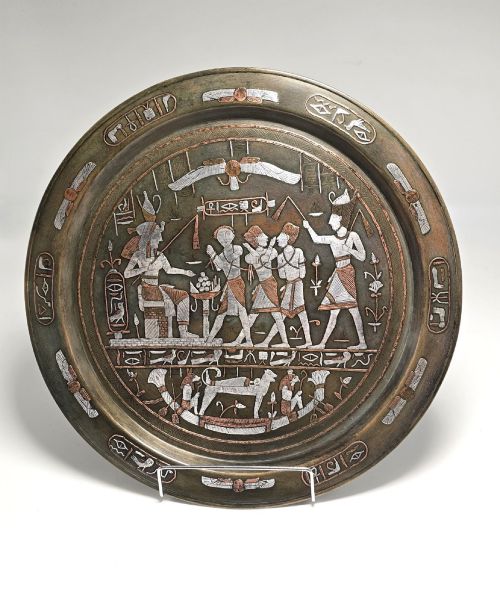
These brass inlay tray pieces range from Victorian mahogany servers to Egyptian Cairo Ware chargers, offering tactile utility and period craftsmanship for the home.
Brass Inlay Tray
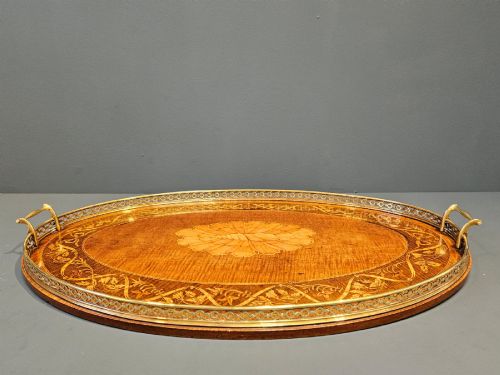
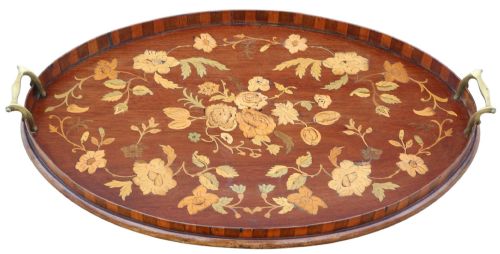
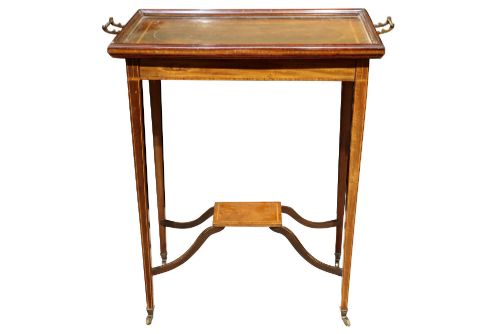
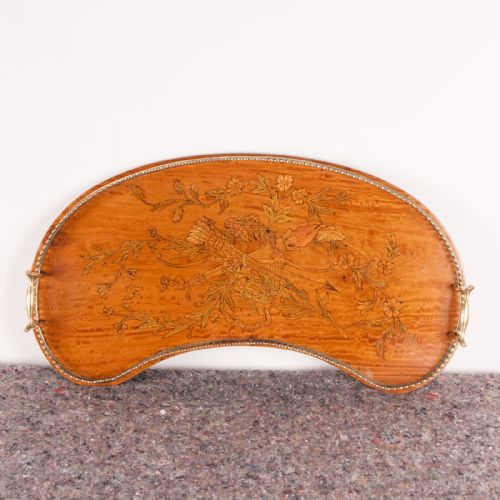
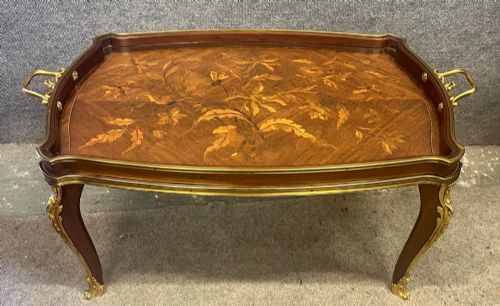
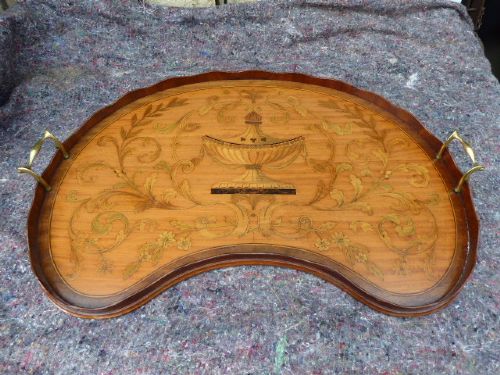
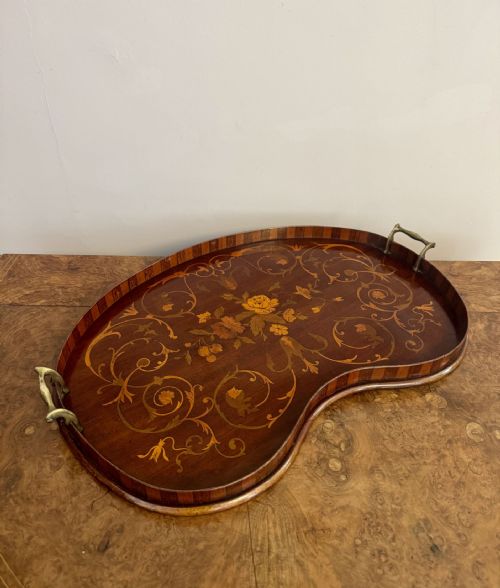
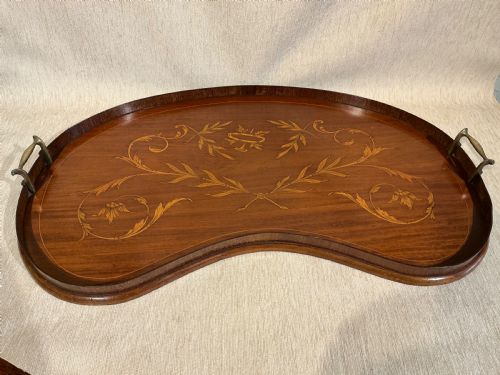
A brass inlay tray encompasses serving platters, tea trays, and desk accessories found across Victorian, Edwardian, and Georgian periods. The most frequent examples on this page are mahogany serving trays and kidney-shaped tea trays ornamented with marquetry and metalwork.
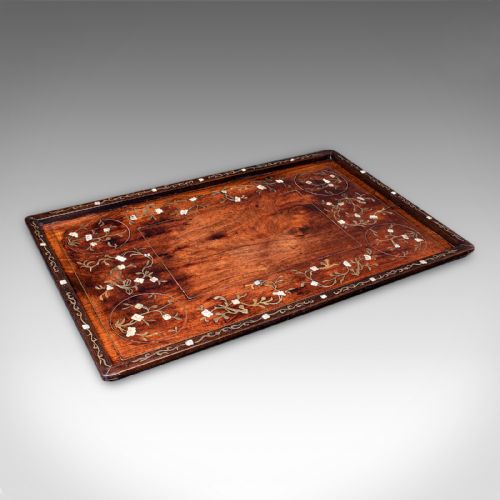
Makers utilised various timber grounds including satinwood, rosewood, and teak, often pairing them with brass, copper, or silver inlay. These items function as portable serving surfaces or decorative wall chargers.
Origins span English cabinetmaking workshops alongside Middle Eastern Cairo Ware and Anglo-Indian production. Buyers encounter both utilitarian afternoon tea trays and decorative display plates.
How They Were Made
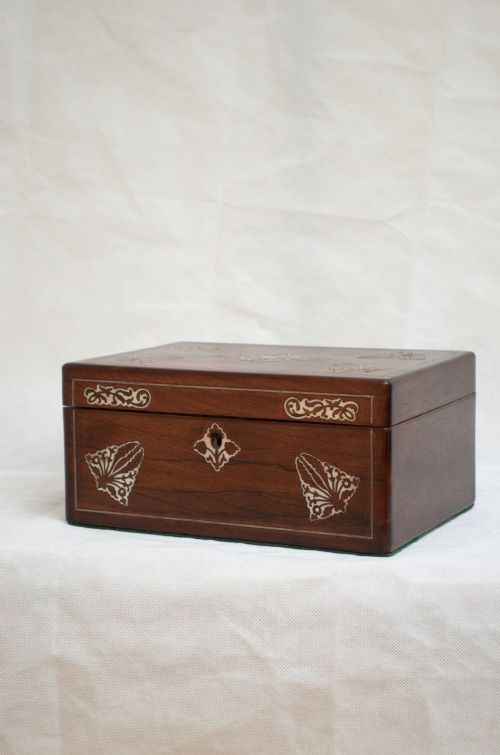
Craftsmen built timber foundations in mahogany, satinwood, and rosewood, incorporating contrasting veneers and marquetry motifs. Metal elements in brass, copper, and silver were hand-inlaid into recesses carved into the wood or patinated metal surfaces.
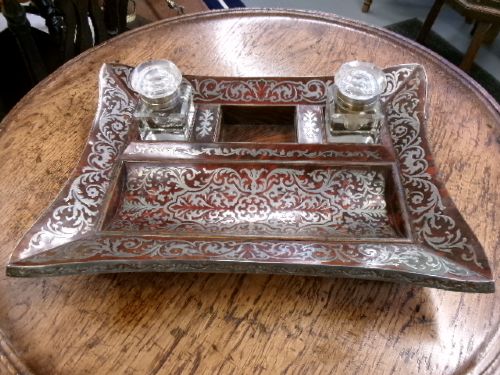
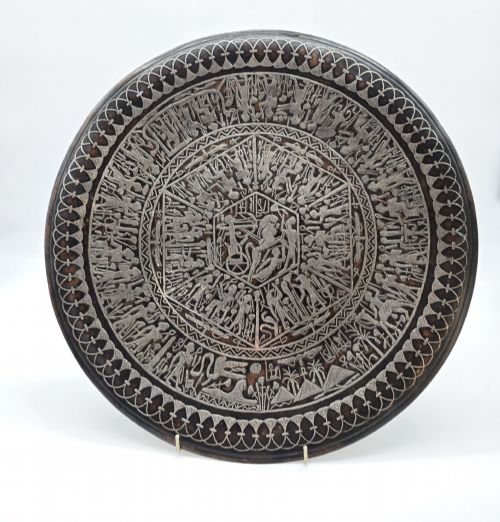
Techniques such as Boulle work combine tortoiseshell grounds with brass inlay, while Cairo Ware pieces utilise intricate silver and brass wire inlays upon dark patinated metal. Joinery relies on traditional cabinetmaking methods suited to handles, galleries, and raised rims.
Brass Inlay Tray Retail Price Guide 2026
Typical asking prices for brass inlay tray among the pieces listed under this phrase on Sellingantiques today, from the lower quarter to the upper quarter. They describe what is for sale here now, not the wider market.
Materials recorded across these listings include mahogany, satinwood, rosewood, brass, copper, silver, and tortoiseshell.
What Varies in Quality
The refinement of the marquetry and the precision of the metal inlay determine the standing of a piece. Superior examples exhibit crisp botanical or geometric patterns flush with the surrounding timber or metal ground.
The choice of secondary timbers and the structural integrity of handles and raised edges separate standard production from masterwork execution. Fine proportion in kidney-shaped or oval forms dictates visual balance.
Edwards and Roberts
The Brass Inlay Tray Glossary
- Marquetry
- Decorative veneer work forming pictures or patterns by assembling small pieces of wood, shell, or ivory. It provides the detailed surface ornamentation seen on Edwardian and Victorian trays.
- Cairo Ware
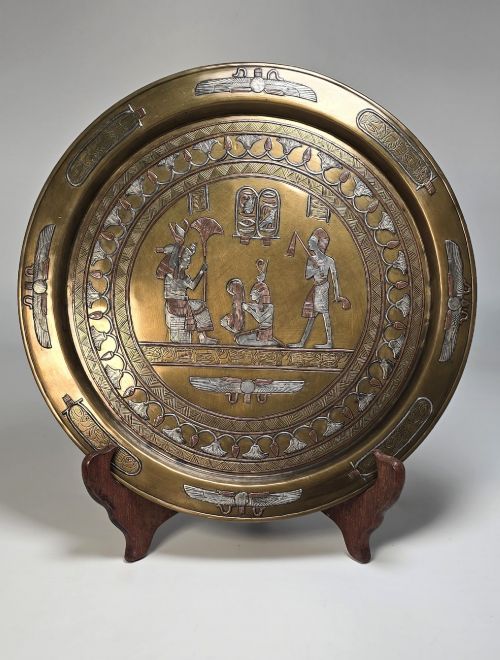
- Metalware produced in Egypt during the late nineteenth century featuring intricate silver and brass inlay on patinated copper or bronze. These items were popular during the Grand Tour period.
- Boulle work
- A style of marquetry consisting of tortoiseshell and brass inlay developed in France and replicated in later desk accessories. The technique creates a striking contrast between the dark ground and the bright metal.
- Etagere
- A set of open shelves or trays mounted on a frame for displaying small objects or serving. This form appears in combination with inlaid tray tops on table stands.
- Sheraton Revival
- An English design style of the late nineteenth and early twentieth centuries drawing inspiration from eighteenth-century neoclassical furniture. Pieces feature delicate satinwood, marquetry, and mahogany construction.
Brass Inlay Tray: Frequently Asked Questions
How are these trays cleaned?
Dust surfaces gently with a dry, soft cloth to protect vulnerable timber veneers and delicate metal inlays.
Avoid liquid polishes or abrasive cleaners that can damage patinated brass or lift historical adhesives.
Can these trays still serve tea?
Many sturdy mahogany and teak examples remain functional for carrying afternoon tea or glassware.
More delicate satinwood or antique Cairo Ware pieces function better as stationary decorative displays.
What defines Cairo Ware?
Cairo Ware items consist of patinated copper or bronze vessels and chargers decorated with dense silver and brass wire inlay.
Produced around the late nineteenth century for the European export market and Grand Tour travellers.
How do I date an inlaid tray?
Examine the underlying timber, handle design, and construction methods alongside prevailing decorative styles such as Georgian, Victorian, or Edwardian.
Inlay materials and techniques also provide chronological markers pointing toward specific periods of manufacture.