

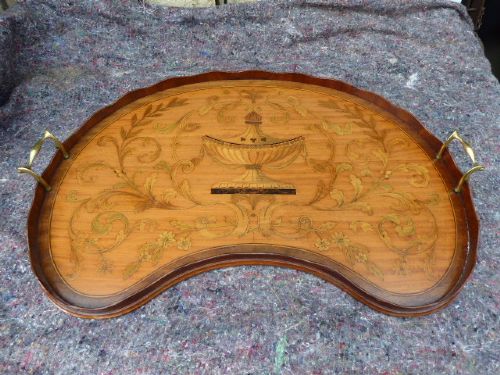
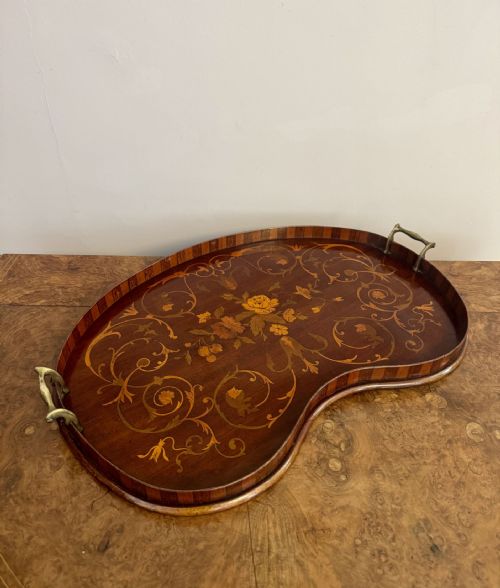
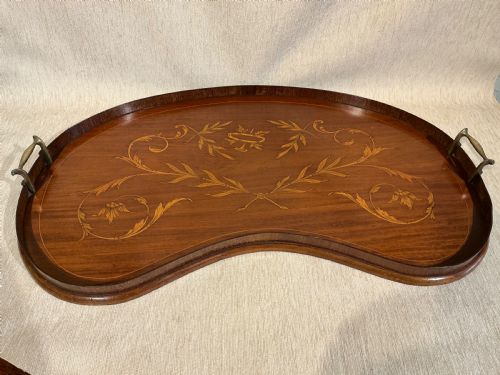
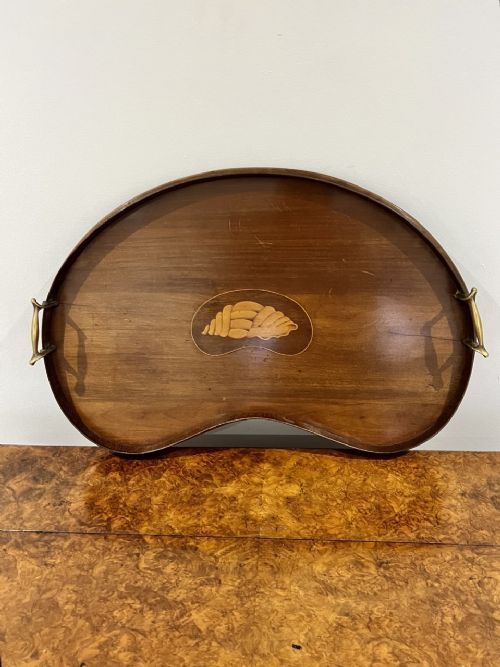


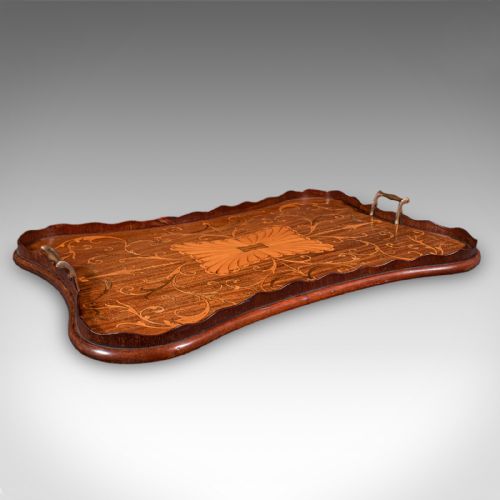


Brass Inlaid Serving Tray
A brass inlaid serving tray brings enduring elegance to the table, combining polished timber and gleaming metalwork in a functional piece.
Brass Inlaid Serving Tray
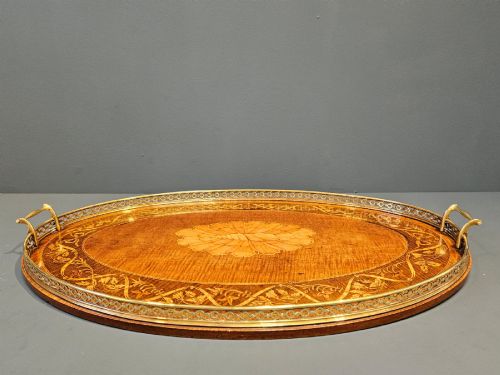
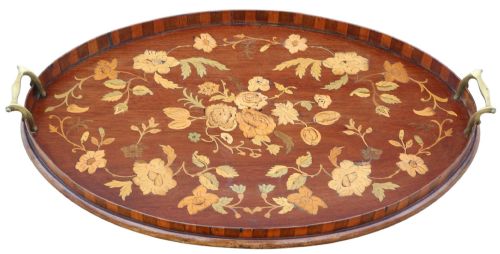
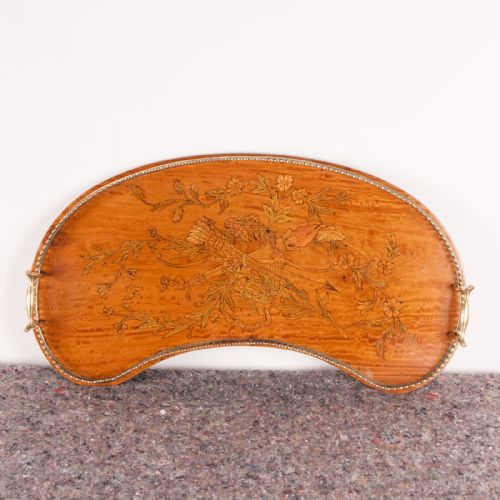
When you search for a brass inlaid serving tray, you are looking at serving pieces produced across several distinct eras, most notably the Victorian and Edwardian periods. These items range from oval mahogany tea trays to kidney-shaped satinwood examples, reflecting the changing domestic tastes of their times.
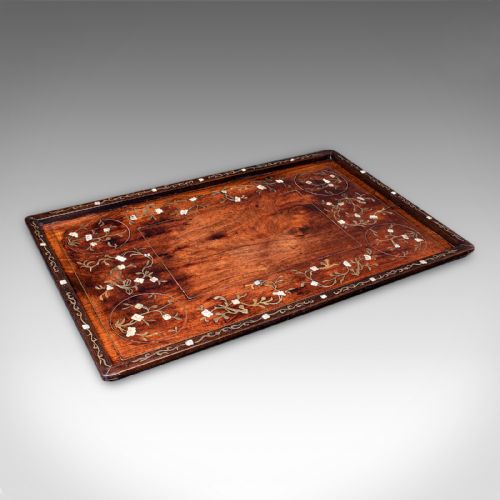
The versions you are most likely to meet on this page include mahogany and satinwood trays featuring delicate inlay work and occasional brass galleries. Alongside standard serving trays, the selection incorporates colonial Anglo-Indian teak pieces and Georgian examples designed for afternoon tea.
Makers and workshops of the nineteenth and early twentieth centuries applied these decorative techniques to various forms, including trays mounted on stands. The unifying element across these objects remains the integration of brass inlay within timber bases.
Assessing quality and craftsmanship
Quality in these pieces depends heavily on the precision of the timber selection and the execution of the inlay work. Finer examples display tightly fitted marquetry, smooth satinwood or mahogany grains, and securely anchored brass elements without gaps.
The structural integrity of the raised edges and handles also distinguishes standard items from superior pieces. Trays that retain their original timber patina and tight joints represent the upper end of the range.
Brass Inlaid Serving Tray Retail Price Guide 2026
Typical asking prices for brass inlaid serving tray among the pieces listed under this phrase on Sellingantiques today, from the lower quarter to the upper quarter. They describe what is for sale here now, not the wider market.
Listings feature woods such as mahogany, satinwood, teak, and burr yew combined with brass inlay.
Edwards and Roberts
The Brass Inlaid Serving Tray Glossary
- Marquetry inlay
- Decorative patterns formed by fitting small pieces of veneer into a prepared wooden surface. This technique allows for complex pictorial or geometric designs across the tray base.
- Brass gallery
- A low pierced or solid metal railing fitted around the edge of a tray. It prevents items from sliding off during service.
- Kidney-shaped tray
- A serving tray curved inwards on one side to sit comfortably against the carrier. This form appears frequently in Edwardian satinwood and mahogany pieces.
- Afternoon tea slide
- A specialised form designed for serving tea and light refreshments in domestic settings. These items often incorporate sturdy wooden handles and integrated galleries.
- Satinwood
- A lustrous, yellowish timber prized for its fine grain and reflective surface. It was heavily utilised during the Edwardian period for decorative occasional trays.
Brass Inlaid Serving Tray: Frequently Asked Questions
What periods do these trays come from?
The pieces span the Georgian, Victorian, and Edwardian eras, with many examples originating around nineteen hundred. Earlier items tend to utilise solid mahogany, while later versions often feature satinwood and detailed marquetry.
Design characteristics shift across these periods, moving from restrained Georgian utility to the more decorative aesthetics of the Edwardian years.
How were these trays used originally?
These trays served primarily for carrying tea ware, glasses, and decanters within formal households. Afternoon tea service relied heavily on such pieces to transport cups and saucers from the kitchen to the drawing room.
They also functioned as display surfaces on side tables and etageres when not actively carrying refreshments.
How should I live with and care for a wooden tray?
Keep wooden serving trays away from direct sunlight and excessive moisture to protect the timber and brass inlay. Regular dusting with a soft, dry cloth helps maintain the polished surface without damaging the veneer.
Avoid placing wet items directly on antique surfaces to preserve the original polish and prevent water marks.
How do I distinguish between Victorian and Edwardian examples?
Victorian trays frequently feature darker woods like mahogany with robust brass fittings and straightforward serving shapes. Edwardian pieces often showcase lighter satinwood, kidney-shaped profiles, and intricate marquetry inlay.
Reviewing the timber choice and the style of the inlay usually clarifies the approximate period of manufacture.