



Brass Inlaid Pier Cabinet
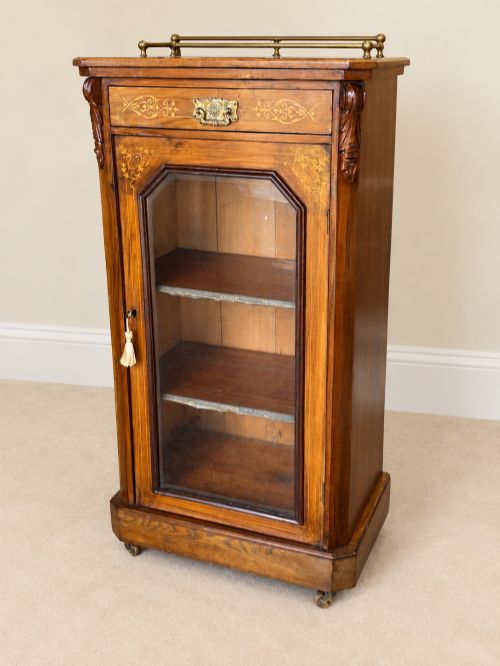
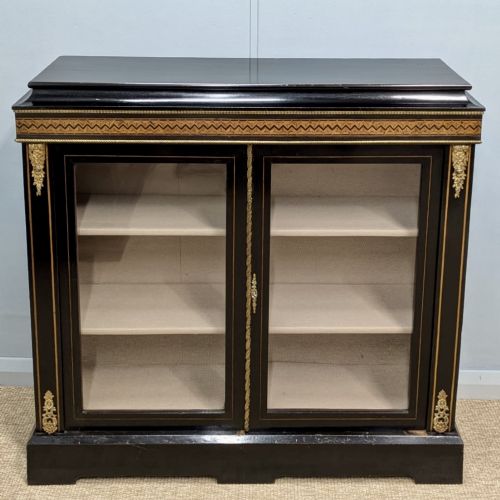
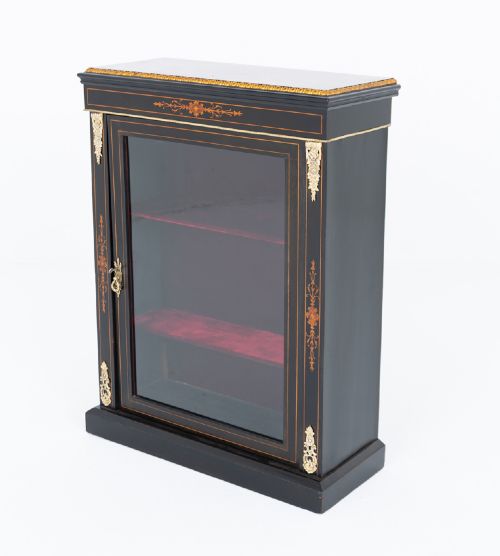
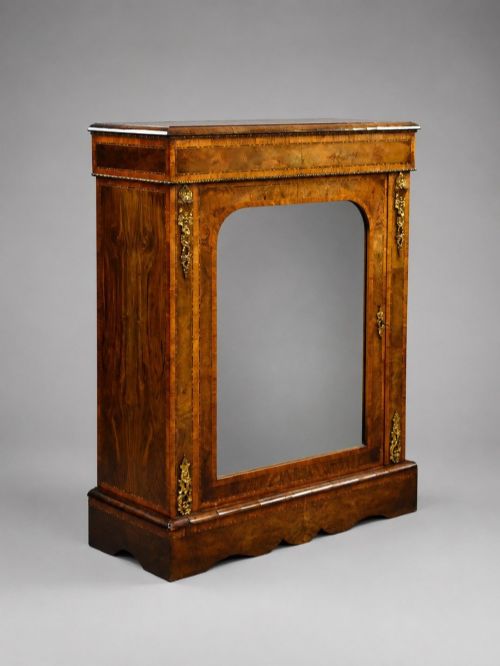
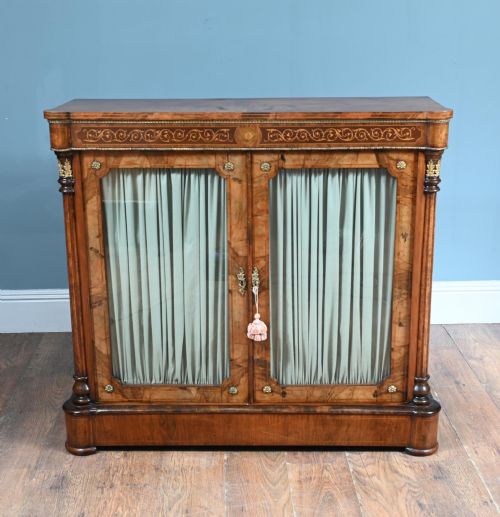
A brass inlaid pier cabinet stands against a wall as a focal point, designed to display treasured possessions while adding elegance to a room.
Brass Inlaid Pier Cabinet
A brass inlaid pier cabinet is a specialised low cabinet built to fit the narrow wall space between windows, known historically as the pier. The versions met on this page belong predominantly to the nineteenth century, including the Regency period and the Victorian era, alongside French Napoleon III designs.
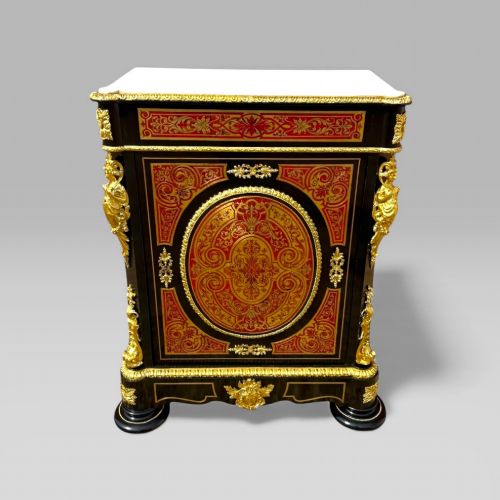
These pieces function primarily as display furniture or side cabinets, often featuring glass doors to showcase collections. Workshops of the nineteenth century produced them in varied timber forms, ranging from rosewood and walnut to ebonised wood.
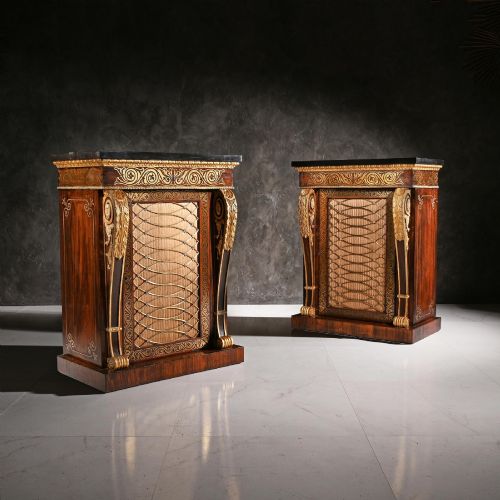
Buyers encounter both single cabinets and matched pairs, with some examples incorporating marble tops or open shelving for books and ornaments. The form remains tied to formal nineteenth-century interior arrangements, where symmetry and surface display were paramount.
What Varies in Quality
Quality rests upon the precision of the brass inlay and the richness of the timber grain selected by the maker. Superior pieces exhibit tight, seamless integration of metal into wood without visible gaps or excessive filler.
The sophistication of the secondary materials, such as genuine tortoiseshell panels, fire-gilded ormolu mounts, and figured walnut veneers, distinguishes standard production from elite workshop output. Structural integrity, particularly the alignment of doors and the original state of the glass panels, dictates the standing of an individual cabinet.
Brass Inlaid Pier Cabinet Retail Price Guide 2026
Typical asking prices for brass inlaid pier cabinet among the pieces listed under this phrase on Sellingantiques today, from the lower quarter to the upper quarter. They describe what is for sale here now, not the wider market.
Louis Constantin Le Gaigneur
The Brass Inlaid Pier Cabinet Glossary
- Pier cabinet
- A low cabinet designed specifically for the wall space between two windows. These pieces often feature glazed doors for display purposes.
- Boulle work
- An elaborate form of marquetry utilising brass and tortoiseshell, developed in France and revived during the nineteenth century. This technique creates a rich, patterned surface of contrasting metallic sheen and dark organic material.
- Ormolu
- Gilded bronze used for decorative mounts and furniture trim. It provides a bright metallic accent against dark woods.
- Ebonised
- Wood treated with a dark stain or finish to resemble ebony. This treatment was popular in nineteenth-century cabinet making to create a dramatic dark ground for brass inlay.
- Marquetry
- Decorative veneer patterns formed by fitting together pieces of various woods, metals, or shells. Craftsmen used this technique to create intricate geometric or floral designs across cabinet doors.
Brass Inlaid Pier Cabinet: Frequently Asked Questions
Where should I place a pier cabinet?
These cabinets suit narrow wall spaces, hallways, or living rooms where floor space is limited. Their shallow depth allows them to sit flush against walls without obstructing movement.
Posing them beneath a mirror or between windows reflects their historical placement in nineteenth-century drawing rooms.
How do I care for brass inlaid wood?
Maintain stable room humidity to prevent the wood from shrinking and loosening the brass inlay. Avoid excessive moisture during cleaning.
Dust gently with a soft cloth and apply specialist wax sparingly to nourish the timber without harming the metal surfaces.
Are these cabinets suitable for book storage?
Certain variations include open shelving or bookcase configurations alongside enclosed display space. They accommodate moderate collections of volumes.
Heavier folios require sturdy internal shelving, so check the interior configuration of the specific cabinet before loading.
What distinguishes Regency from Victorian examples?
Regency pieces often utilise figured rosewood with restrained brass line inlay, reflecting neoclassical tastes of the early nineteenth century. They display clean architectural proportions.
Victorian and Napoleon III pieces frequently embrace heavier ebonised finishes, elaborate Boulle work, and ormolu mounts, showing a more ornate aesthetic.