


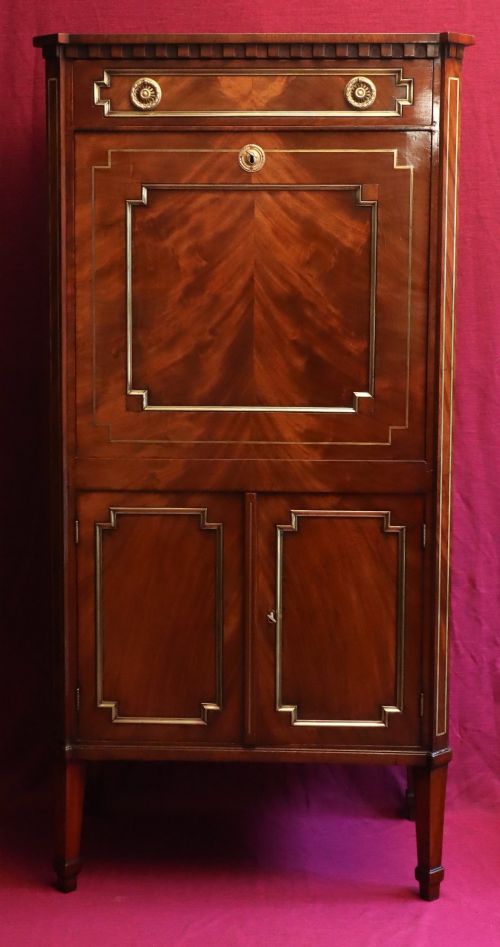


Brass Inlaid Escritoire
A brass inlaid escritoire brings refined writing storage into the room, combining secure compartments with decorative metalwork.
Brass Inlaid Escritoire
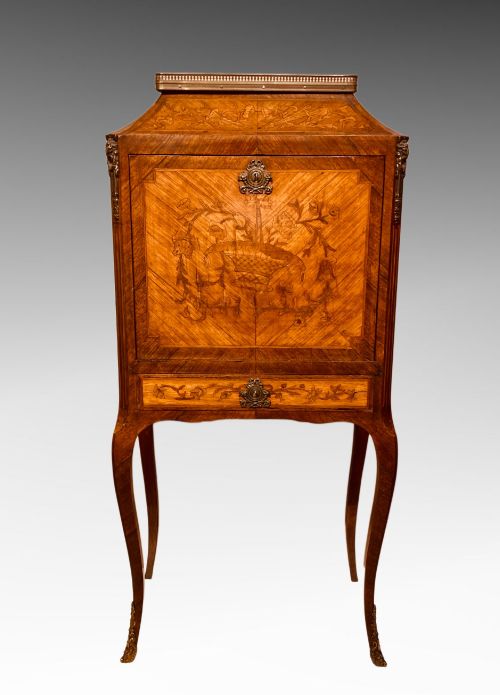
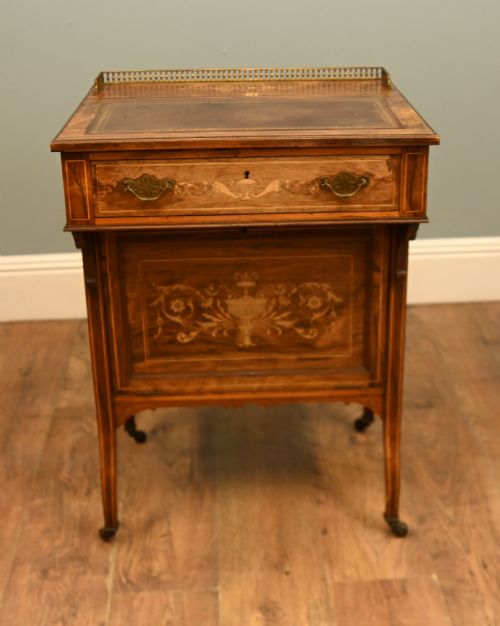
When you search for a brass inlaid escritoire, you encounter dedicated writing furniture designed for correspondence and private paperwork. These pieces combine drop-front writing surfaces or concealed compartments with decorative metal detailing set into timber surfaces.
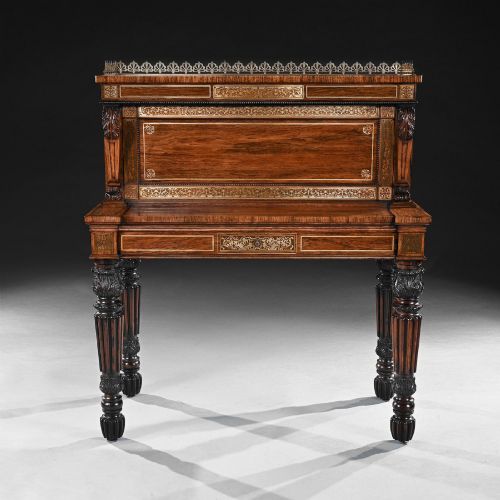
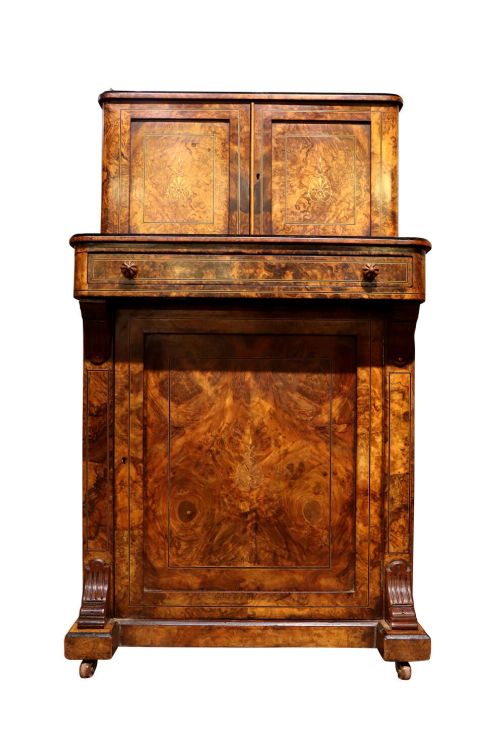
The versions most commonly met on this page span the nineteenth century, including Regency, Victorian, and French revival designs. Makers constructed these writing cabinets from rich woods like rosewood, mahogany, and burr walnut, often incorporating fitted interiors.
Forms range from compact bureau de dame and bonheur du jour pieces to larger cylinder desks and writing tables. Each example serves as both a functional writing desk and an ornamental cabinet for the home.
How they were made
Cabinet makers utilised dense hardwoods such as mahogany, rosewood, and walnut as the primary foundation for these writing cabinets. Artisans frequently selected burr walnut for its distinctive grain pattern, applying veneers over sturdy timber carcases.
Brass inlay and ormolu mounts were meticulously channelled and fitted into the polished wooden surfaces to create geometric or floral motifs. Interiors often incorporated fitted leather writing surfaces alongside small drawers and pigeonholes.
Brass Inlaid Escritoire Retail Price Guide 2026
Typical asking prices for brass inlaid escritoire among the pieces listed under this phrase on Sellingantiques today, from the lower quarter to the upper quarter. They describe what is for sale here now, not the wider market.
Desk drawers occasionally conceal tiny secret compartments designed for hidden love letters.
What varies in quality
The refinement of the brass inlay work and the choice of timber figure largely determine the distinction between standard and superior pieces. Finer writing furniture displays precise metal fitting flush with the surrounding wood grain.
Internal complexity and secondary timbers also signal superior construction. Desks featuring fully fitted drawers, leather writing inserts, and secondary woods like mahogany throughout indicate higher craftsmanship.
Gillows Oxford Street Workshop
The Brass Inlaid Escritoire Glossary
- Escritoire
- A writing cabinet featuring a fall-front desk surface that conceals pigeonholes and small drawers.
- Ormolu
- Gilded bronze mounts and decorative trimmings applied to the exterior of nineteenth-century furniture.
- Marquetry
- Decorative woodwork where different coloured veneers are fitted together to create pictorial patterns.
- Bonheur du jour
- A light ladies writing desk originating in France, typically featuring a small cabinet or superstructure on top.
- Cylinder desk
- A writing desk characterised by a curving quarter-circle wooden shutter that rolls back to reveal the writing surface.
Brass Inlaid Escritoire: Frequently Asked Questions
What is a brass inlaid escritoire?
A brass inlaid escritoire is a nineteenth-century writing cabinet featuring a drop-front or sliding surface for correspondence. These pieces combine secure storage compartments with decorative metalwork set into timber.
Craftsmen built them using dense woods like mahogany, rosewood, and walnut. They serve as both functional writing desks and decorative furniture for the home.
How were these desks used?
Owners utilised these writing cabinets for penning letters, managing household accounts, and storing private documents. The drop-front or sliding surfaces provided a stable writing platform.
Internal compartments and small drawers kept stationery and ink organised. Many pieces also functioned as display furniture in formal rooms.
How do I live with one?
Position your escritoire away from direct sunlight and heat sources to protect the polished wood and delicate brass inlay. Regular dusting with a dry cloth keeps the surface maintained.
Use the internal compartments for modern stationery or small keepsakes. The drop-front surface should be treated with care when opened for writing.